Businesses often outgrow their ecommerce platforms long before they realize it. The architecture behind your online store can determine how quickly your business adapts to change. Choosing the wrong commerce architecture today can limit innovation for years.
Many enterprise brands face a choice between all-in-one platforms and modular configurations. This detailed guide explains monolithic vs composable architecture choices. You will learn how both designs function so you can build a stable technology roadmap.
What Is Monolithic Commerce?
Monolithic Commerce represents the traditional design for an online store. In this model, the Frontend user interface and the Backend database operate as a single combined application. Every feature is tied together within one shared codebase.
The system handles everything from product displays to checkout checkout rules simultaneously. This unified design means that altering your layout can risk breaking your inventory logic. The code is deeply linked together.
Traditional platform designs rely on this framework. Classic instances of Adobe Commerce (Magento) and Salesforce Commerce Cloud use this unified structure. They provide an all-in-one software package to run your daily sales operations.
The typical deployment model involves installing the software on a single server cluster. You manage updates through a centralized code deployment pipeline. While this setup simplifies initial setup, it creates structural rigidity as your transactional volume expands. You can learn more about managing these core retail structures by exploring Magento development services for enterprise needs.
What Is Composable Commerce?
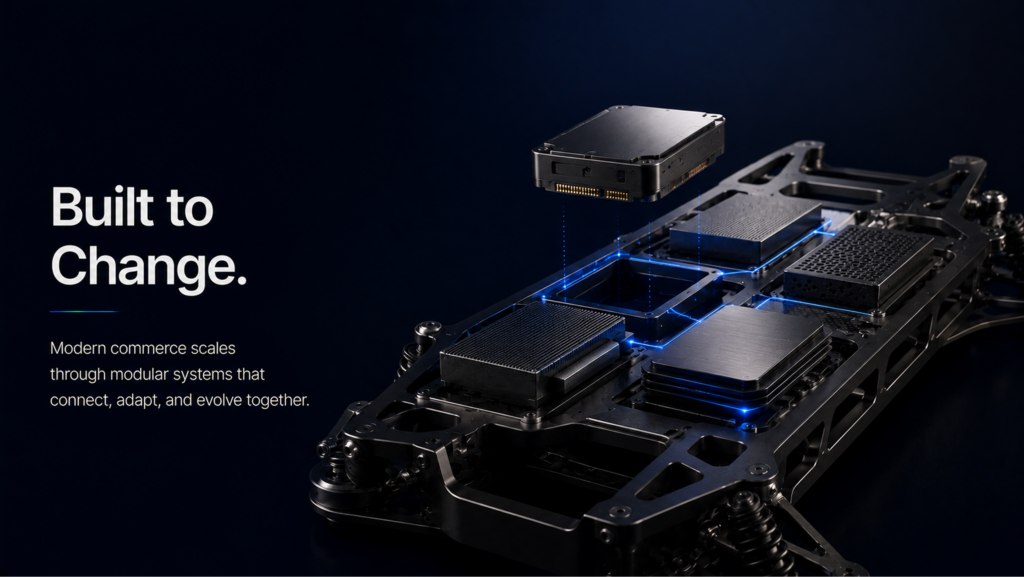
Composable Commerce is a modern architectural approach that selects best-of-breed commerce components. Instead of relying on a single vendor, you assemble separate systems to handle specific tasks. One software handles your shopping cart while an independent tool manages product text.
This approach relies heavily on the MACH Alliance framework. MACH stands for Microservices, API-first, Cloud-native, and Headless designs. These four principles dictate how modern digital tools should connect and communicate.
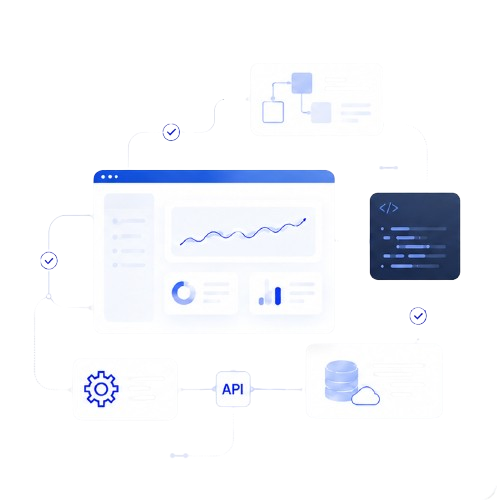
An API-first architecture uses lightweight endpoints to send data between your chosen systems. Cloud-native infrastructure ensures the software runs entirely on scalable cloud networks. This means you do not have to manage physical server hardware yourself.
The core database runs via independent Microservices rather than a single database engine. You combine tools from vendors like CommerceTools, Elastic Path, or BigCommerce. A modern Frontend framework like Vue Storefront handles the public visual presentation layer. This creates a flexible, modular commerce ecosystem.
Monolithic Vs Composable Commerce: Key Differences
The operational differences between these two layouts impact your long-term engineering velocity. Selecting a system requires reviewing multiple technical layers. The table below outlines the core differences between the two architectural frameworks.
| Architectural Category | Monolithic Commerce Architecture | Composable Commerce Architecture |
| Core Architecture | Unified single codebase layout | Modular best-of-breed setup |
| Design Flexibility | Limited by pre-packaged templates | Total layout design freedom |
| System Scalability | Requires scaling the entire stack | Scales individual services independently |
| Page Speed | Dependent on backend database weight | Fast execution via static rendering |
| Development Speed | Fast initially, slows down over time | Slower initial setup, fast updates later |
| Site Maintenance | Heavy version upgrades required | Continuous micro-updates per tool |
| Customization | Requires complex code overrides | Simple replacement of modular blocks |
| App Integrations | Dependent on platform app stores | Universal connections via open APIs |
| Platform Hosting | Single on-premise or cloud server | Distributed multi-vendor cloud hosting |
| Total Lifetime Cost | Predictable entry fees, high tech debt | Higher upfront build, lower scaling cost |
| Data Security | Single point of defensive focus | Security isolated across components |
| Omnichannel Status | Requires complex custom plugins | Native data delivery to any screen |
Advantages Of Monolithic Commerce
All-in-one frameworks remain highly valuable for many business configurations. Their structured nature offers clear operational efficiencies.
Faster Initial Setup
Monolithic platforms allow retail teams to launch a store quickly. The theme system, shopping cart, and database tools are already pre-configured to work together. You do not need to spend months linking separate tools via custom API code.
Simpler Management
Managing your daily sales operations happens inside a single administrative dashboard. Your marketing staff can edit blog posts, update inventory, and view reports without switching software. This reduces the learning curve for non-technical employees.
Lower Initial Cost
The upfront engineering fees for a monolith e-commerce build are relatively modest. You buy a pre-packaged solution and customize it using standard plugins. You avoid paying multiple separate software licensing bills every month.
Suitable Business Types
This setup fits smaller retail brands and mid-market companies perfectly. Businesses with standard sales workflows do not need the complexity of modular systems. It allows teams to focus on customer acquisition rather than software engineering.
Advantages Of Composable Commerce
Modular infrastructure provides massive operational advantages for complex retail environments. Separating your tools unlocks unmatched business speed.
Independent Services
Every tool in a composable system runs completely separate from the others. If your content management system (CMS) experiences a bug, your checkout system keeps processing orders safely. This isolation protects your daily transactional revenue.
Faster Innovation
Your developers can build and launch new user features without redeploying the entire backend database. This speeds up your creative testing cycles significantly. You can roll out modern visual layouts ahead of your market competitors.
Greater Flexibility
You are never locked into a single software vendor’s roadmap. If your search tool becomes outdated, you can swap it for a better alternative without rebuilding the website. You build a custom Digital Experience Platform (DXP) that matches your exact operational goals.
Better Scalability
Cloud-native microservices scale up automatically during sudden traffic spikes. If a viral marketing campaign floods your site, only the viewing server expands its capacity. Your payment backend remains stable and responsive without extra manual oversight.
Easier Integrations
An API-first layout makes connecting external corporate software straightforward. You can link enterprise warehouse systems and advanced marketing tools directly to your store network. This ensures data flows across your brand ecosystem cleanly.
Omnichannel Experiences
A composable design delivers product data to any digital touchpoint easily. You can send inventory updates to mobile apps, smart watches, and retail signs from one source. This provides a unified brand experience across every channel.
Monolithic Commerce Vs Composable Commerce For Different Business Sizes
Your technical infrastructure must match your actual corporate structure. Review how both setups perform across different operational scales.
Small Businesses
Smaller shops do not possess the engineering teams required to manage modular software. A basic monolithic layout provides every tool needed to sell items online. It keeps your technology overhead predictable and manageable.
Mid-Market Companies
Growing brands often reach the limits of basic templates. Website speed can slow down as you install more operational plugins. If you prefer a managed layout that scales, exploring options like Shopify Plus provides a solid middle path before moving to full modularity.
Enterprise Organizations
Large corporations deal with high traffic volumes and complex international rules. They benefit heavily from modular systems that prevent software lock-in. Using headless commerce development services helps enterprise groups build fast, reliable digital storefronts.
B2B Commerce
Wholesale commerce demands highly unique buyer portals and custom contract pricing. Traditional platforms often require heavy, fragile code modifications to support these business rules. Implementing modern enterprise B2B commerce solutions via modular tools keeps your underlying systems clean and performant.
Global Brands
Global businesses must display distinct languages and manage localized inventory across multiple countries. Composable setups let you connect localized frontend designs to a single global backend. This keeps your international operations running efficiently.
When Should You Move From Monolithic To Composable Commerce?
Recognizing when a traditional setup is blocking your market growth is vital. Legacy software eventually creates performance barriers that lower your total digital sales.
A major indicator is when simple design updates take weeks to deploy due to backend code fears. Frequent database slowdowns during holiday sales also signal a need for cloud-native microservices. If your team spends more time fixing bugs than building features, your technical debt is too high.
Managing multiple brand storefronts across different regional domains is another clear sign to migrate. Before starting an architectural shift, review a detailed ecommerce migration checklist to plan your project stages. You will also need a clear strategy for your ecommerce api integration workflows.
Common Misconceptions About Composable Commerce
Industry technical trends often generate confusion among digital executives. Reviewing these common myths ensures an objective technology assessment.
Composable Replaces Headless Commerce
Headless systems separate the frontend presentation layer from the backend database. Composable commerce takes this further by breaking the backend into multiple independent services. Headless design is simply one part of a complete composable layout.
Every Business Needs Composable Architecture
Modular systems require significant engineering skill and multiple software subscriptions. Smaller companies with straightforward retail workflows are often better off using traditional platforms. Do not buy complex architecture if a simpler tool solves your business problem.
Composable Is Always Cheaper
While you avoid major upgrade projects later, managing multiple software bills adds up quickly. You must pay for individual search tools, cart systems, and content management platforms. Budget for ongoing developer resources to monitor your connected systems.
Monolithic Commerce Is Obsolete
Traditional unified systems are more advanced than ever before. Modern platforms handle substantial transactional volume and offer strong cloud hosting options. They remain an excellent choice for businesses prioritizing simplicity.
Composable Is Easier To Build
Assembling an ecosystem from scratch requires deep technical knowledge. Your solution architects must design clean API workflows between every single vendor tool. The initial development pipeline takes longer than launching a template store.
How Headless Commerce Fits Into Composable Commerce
Understanding monolithic vs headless architecture layouts helps clarify modern engineering options. Headless design acts as the foundational step toward building a modular retail platform.
Both approaches focus on separating your systems to increase your overall flexibility. A headless build focuses specifically on separating the visual display from the commerce engine. You can read a thorough breakdown of this process in our guide on headless vs traditional ecommerce.
Composable commerce expands this concept across your entire backend stack. It replaces the single backend engine with separate cloud-native tools. You can start with a headless layout and gradually replace backend features over time.
This gradual approach reduces your initial implementation risks. It allows your team to modernize your technology stack without disrupting daily sales operations. You select the exact tools that match your operational challenges.
Which Commerce Architecture Should You Choose?
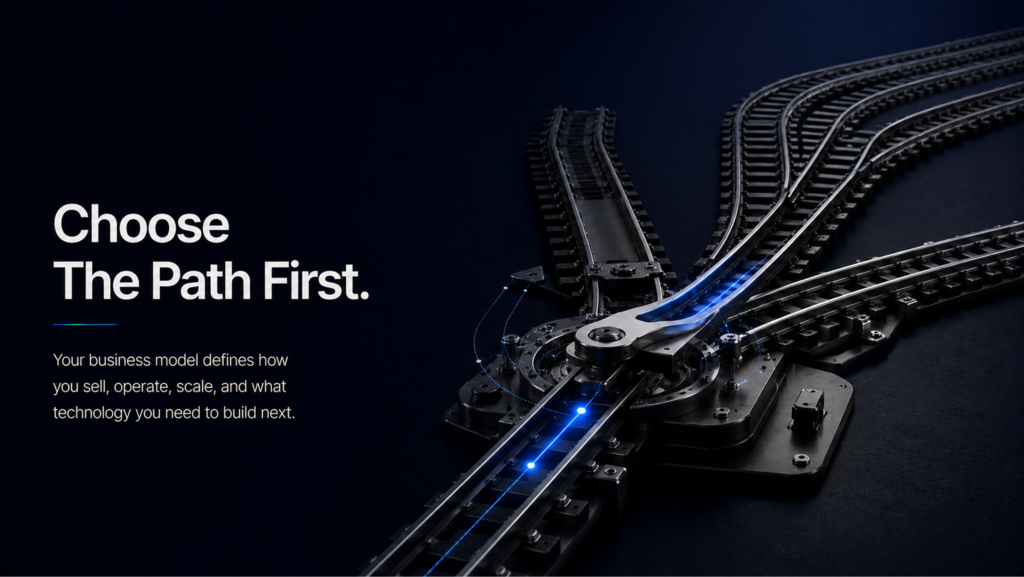
Use this structured decision framework to evaluate your current technology path. This checklist helps match your business goals with the correct software structure.
Decision Checklist
- Do you have an internal team of software engineers?
- Does your current platform slow down during peak sales events?
- Do you need to push product data to multiple non-web devices?
- Are your software licensing fees rising faster than your revenue?
- Does your marketing team require unique layout designs?
Architecture Recommendation Matrix
- Select Monolithic If: Your primary goals are a fast market launch, simple administrative dashboards, and low initial software engineering overhead.
- Select Composable If: You operate a high-volume enterprise brand, require unique user experience designs, and need to integrate multiple legacy corporate systems.
Architecture Selection Matrix
| Business Scenario | Recommended Layout | Primary Selection Reason |
| Standard retail shop under $5M revenue | Monolithic Commerce | Keeps technology costs and management simple |
| Rapidly growing multi-brand store | Headless Monolith | Adds frontend speed while keeping a simple backend |
| Enterprise brand with complex legacy ERPs | Composable Commerce | Integrates separate software systems via open APIs |
| International B2B wholesale platform | Composable Commerce | Supports unique pricing rules across global regions |
Frequently Asked Questions
What is the difference between monolithic and composable commerce?
Monolithic commerce uses a single unified codebase to handle both frontend displays and backend database tasks. Composable commerce breaks the store down into separate, independent applications connected via open APIs.
What are the main benefits of monolithic vs composable architecture?
Monolithic architecture offers faster initial launch times and simpler all-in-one management dashboards. Composable layouts provide superior website speed, independent system scaling, and complete freedom from software vendor lock-in.
What role does a monolithic vs composable dxp play in retail?
A traditional monolithic DXP forces you to use one vendor’s built-in content and marketing tools. A composable DXP lets you connect your preferred modern content management system directly to your commerce backend using flexible cloud APIs.
Is composable commerce appropriate for smaller retail brands?
Generally no because modular systems introduce extra development complexity and multiple software licensing fees. Smaller companies usually achieve better business value by utilizing all-in-one traditional ecommerce platforms.
How do microservices function inside a modular store setup?
Microservices break down large database tasks into tiny, independent software applications. For example, your site search, checkout processing, and customer loyalty programs each run on separate cloud systems without interfering with each other.
Final Takeaways
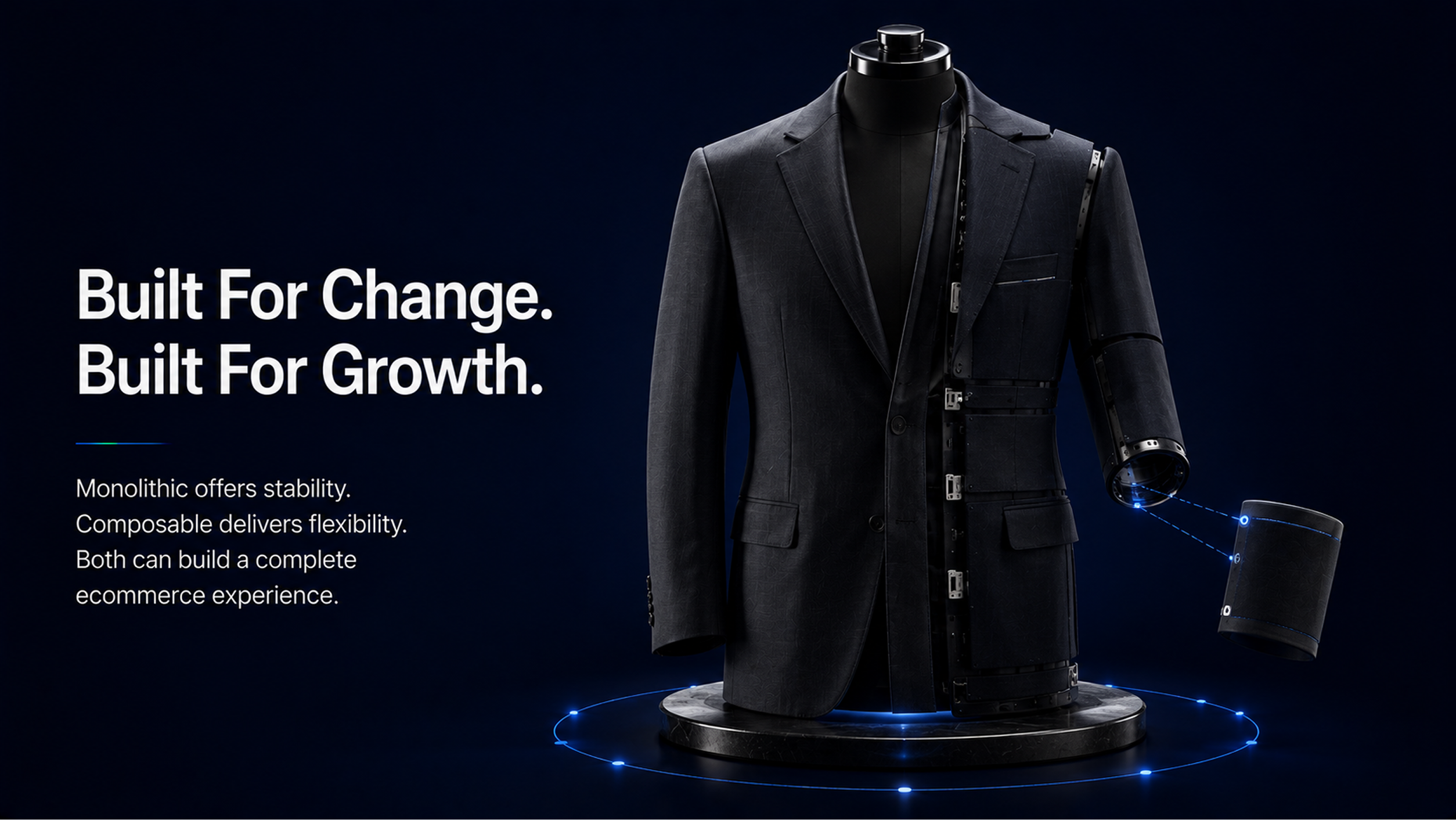
Selecting between monolithic vs composable commerce designs sets your long-term digital growth speed. Traditional monolithic setups remain an exceptional choice for brands seeking low operational complexity and quick market deployment. Composable commerce provides the ultimate scalability, platform speed, and operational agility required by modern global enterprises. Base your architectural selection on your actual engineering resources rather than industry design trends.
Analyze your current system bottlenecks and list your core software integration requirements before committing to a technical roadmap. Designing a flexible modern storefront demands clear structural planning and stable data connections. Contact GYB Commerce today to consult with our solution architects about evaluating, modernizing, or building your enterprise commerce infrastructure.