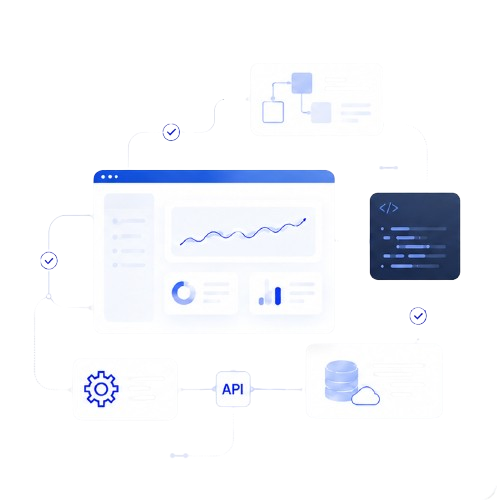
The technology behind a successful ecommerce business extends far beyond the online storefront customers see. Modern ecommerce platforms are no longer single applications. They are connected ecosystems of highly specialized technologies. Building a scalable online business starts with choosing the right technology stack.
Using a single rigid software block restricts your ability to adapt to fast market changes. Disconnected backend tools cause massive delays in warehouse shipping and inventory tracking. Modern retail demands a network of agile, integrated systems that share real-time data flawlessly.
This guide breaks down every core layer of modern digital commerce architecture. You will discover how different software systems connect, how infrastructure choices impact site speed, and how to select the best components. This knowledge prepares your brand for sustainable, long-term technical growth.
What Is An Ecommerce Tech Stack?
An ecommerce tech stack is the complete collection of software tools and programming languages used to run an online store. Every digital retail business relies on one to manage product displays, process payments, and route shipping data safely. It differs from a basic ecommerce platform because it includes external databases and cloud infrastructure layers.
Your tech stack dictates how fast your website loads and how securely it processes credit cards. It connects your visual frontend templates directly to your backend corporate financial ledgers. The core layers work together to create a seamless buying experience for the consumer.
Building the right foundation prevents expensive system crashes during peak holiday sales. A flexible technology stack allows developers to swap out outdated software tools without rebuilding the entire website. This structural freedom keeps your digital brand highly competitive over time.
The Core Layers Of A Modern Ecommerce Tech Stack
A functional commerce architecture divides software into specialized functional zones. This separation allows engineers to organize complex data flows cleanly.
Customer Experience Layer
This frontend layer controls everything the buyer sees and interacts with directly. It includes the website design, mobile applications, and interactive product grids. High performance in this layer ensures a smooth, engaging shopping journey.
Commerce Layer
The backend commerce engine handles the core transactional rules. It processes shopping cart additions, calculates regional taxes, and manages complex checkout logic. This layer acts as the mathematical brain of your retail operation.
Business Operations Layer
This tier connects enterprise management tools like accounting software and warehouse trackers. It synchronizes your physical supply chain directly with your digital storefront. This automation prevents manual data entry errors entirely.
Infrastructure Layer
The infrastructure hosts all your application code and database files. It relies on cloud networks, load balancers, and databases to keep the store online securely. A strong infrastructure layer absorbs heavy traffic spikes effortlessly.
Analytics Layer
Analytics tools monitor user behavior and system performance continuously. This layer generates deep business intelligence reports to guide corporate decision making. It highlights hidden revenue opportunities and flags technical bottlenecks.
Frontend Technologies
The frontend represents the digital face of your retail brand. Your technology choices here directly influence customer conversion rates.
Traditional Storefronts
Traditional setups use pre-built templates provided directly by the core ecommerce platform. They are simple to launch but offer limited design flexibility for growing brands. The code is tightly coupled with the backend database.
Headless Frontends
Headless architecture detaches the visual interface completely from the backend database. Developers use frameworks like React or Vue to build highly custom, ultra-fast web pages. This approach requires specialized headless commerce development services to execute properly.
Progressive Web Apps (PWAs)
A progressive web app delivers a fast, app-like experience directly within a standard web browser. PWAs allow consumers to browse products offline and receive push notifications natively. They improve mobile conversion rates without requiring an app store download.
Mobile Commerce
Mobile commerce interfaces focus entirely on smartphone usability and touch navigation. These layouts feature large buttons, simple navigation menus, and digital wallet payment options. Optimizing for mobile speeds up the checkout process significantly.
Backend Commerce Systems
The backend engine processes the complex mathematical logic required to complete a digital transaction. It acts as the central hub of your tech stack for ecommerce website operations.
Ecommerce Platforms
The core platform provides the foundational database for your retail operations. It manages basic rules for pricing, discounts, and user account creation. Selecting the right foundation requires reviewing a detailed ecommerce platform guide first.
Shopping Cart
The digital cart holds product data temporarily while a user continues browsing. It must calculate real-time subtotals, apply promotional codes, and add regional shipping fees accurately. A glitchy cart is the primary cause of abandoned orders.
Checkout
The checkout sequence securely collects billing information and shipping addresses. A streamlined checkout minimizes form fields to reduce cart abandonment rates. It routes sensitive credit card data directly to the payment gateway safely.
Order Processing
Order processing systems confirm payment success and route the purchase details to the warehouse. They trigger automated email receipts and update internal financial ledgers. This software ensures fulfillment teams receive accurate packing instructions instantly.
Inventory Management
This tool updates available stock metrics instantly across all active sales channels. Real-time syncing prevents buyers from purchasing items that are physically out of stock. It protects your brand reputation from fulfillment failures.
Product Catalog
The catalog database organizes all item variants, SKUs, and complex pricing tiers. It feeds this structured data to the frontend so customers can view accurate product information. Clean catalog architecture supports fast internal site searches.
Enterprise Business Systems
Large corporations require heavy software tools to manage complex global logistics. These systems integrate directly with your central commerce engine.
ERP
An Enterprise Resource Planning system manages core corporate accounting and procurement duties. It serves as the master financial ledger for all enterprise ecommerce activity. ERP systems automate corporate invoice generation and track overall profitability.
CRM
A Customer Relationship Management platform stores detailed buyer profiles and support ticket histories. Marketing teams use this data to build highly personalized email campaigns. A strong CRM builds long-term loyalty and repeat purchase habits.
PIM
Product Information Management software acts as a central repository for technical product specifications. It distributes accurate product descriptions and imagery to multiple digital storefronts simultaneously. This ensures absolute consistency across your entire brand network.
OMS
An Order Management System orchestrates the complete lifecycle of a customer purchase. It routes digital orders to the closest physical warehouse facility to speed up delivery times. It also manages complex return material authorizations smoothly.
WMS
Warehouse Management Systems monitor physical box movements across regional distribution centers. They guide forklift operators and automate shipping label generation. Connecting a WMS guarantees your online store displays exact warehouse availability.
APIs And Commerce Connectivity
Application programming interfaces connect all these isolated systems together. They act as digital bridges that pass secure data payloads instantly.
REST APIs
REST APIs use standard HTTP requests to fetch or update data blocks. They are highly reliable and represent the industry standard for connecting web applications. Most third-party plugins rely on REST endpoints to share data.
GraphQL APIs
GraphQL allows developers to request very specific data fields instead of downloading entire database profiles. This targeted data fetching improves page loading speeds dramatically. It is especially useful for rendering complex headless storefront designs.
Webhooks
Webhooks are automated messages sent from one system to another when a specific event occurs. They push real-time shipping updates from a carrier directly to your storefront automatically. This event-driven model removes the need for constant server polling.
API Gateway
An API gateway manages all incoming and outgoing data traffic across your network. It routes requests to the correct microservices and blocks malicious spam traffic. It serves as a strict traffic cop for your digital architecture.
Authentication
Authentication protocols verify the exact identity of the software application trying to access your database. This step prevents unauthorized external servers from stealing corporate data. It typically involves exchanging secure digital access tokens.
Authorization
Authorization defines what an authenticated application is actually allowed to do. It ensures a shipping app can read order addresses but cannot alter your financial records. This restricts data access using the principle of least privilege.
Infrastructure That Powers Modern Ecommerce
Your software must live on a reliable physical or virtual network. Modern infrastructure distributes processing weight to prevent total system crashes.
Cloud Infrastructure
Cloud networks host your database files across distributed remote servers. This elastic setup allows your hardware capacity to expand automatically during traffic surges. Addressing these technical limits early helps you bypass major ecommerce scalability challenges safely.
Containers
Containers package software code and its dependencies into single, isolated units. This isolation ensures the application runs exactly the same way on any server environment. Containers make deploying complex architectural updates incredibly safe.
Docker
Docker is the leading platform used to build and deploy these digital software containers. It simplifies the deployment process for complex microservice architectures. Developers use Docker to build secure, repeatable code environments rapidly.
Kubernetes
Kubernetes acts as a management system that orchestrates thousands of Docker containers automatically. It restarts failed containers and scales resources up or down based on live traffic demands. It keeps massive enterprise stores highly available around the clock.
CDN
A Content Delivery Network stores cached copies of your product images on servers around the world. It delivers these files to buyers from the closest geographical location to improve loading speeds. A CDN is mandatory for brands selling globally.
Load Balancing
A load balancer distributes incoming website visitor traffic evenly across multiple active servers. This even distribution prevents any single server node from crashing under heavy pressure. It maintains a fluid checkout experience during viral marketing events.
Databases
Your tech stack requires both SQL and NoSQL databases to store information properly. Relational SQL databases manage strict financial records while NoSQL handles flexible product catalogs. Blending both types ensures optimal data retrieval speeds.
Redis
Redis is a lightning-fast caching tool that stores frequently requested data in active server memory. It serves product pages to visitors instantly without querying the main database repeatedly. This caching layer reduces massive strain on your primary servers.
Message Queues
Message queues organize non-urgent backend tasks into an orderly processing line. They handle background jobs like sending email receipts without slowing down the active checkout lane. This segregation protects your most critical transactional workflows.
Headless Vs Composable Technology Stacks
Choosing between different architectural frameworks determines your long-term engineering speed. Modern brands favor decoupled designs for maximum flexibility.
Traditional Architecture
Traditional monolithic systems bundle the frontend design and backend database into one rigid package. They are simple to launch but difficult to upgrade as your business scales. Changing one visual element risks breaking your backend logic.
Headless Commerce
Headless architecture separates the visual storefront from the commerce database completely. This allows developers to build custom user interfaces while relying on a stable backend engine. It offers complete creative freedom for digital design teams.
Composable Commerce
Composable commerce breaks the entire backend down into independent microservices. You select the best search tool, cart system, and payment gateway from completely different software vendors. This modular layout eliminates software vendor lock-in permanently.
MACH Principles
MACH stands for Microservices, API-first, Cloud-native, and Headless. Following these strict technical principles ensures your architecture remains fully modular and future-proof. MACH frameworks represent the pinnacle of modern enterprise scaling.
Which Stack Fits Which Business?
Small retailers thrive on traditional all-in-one platforms due to lower maintenance costs. Mid-market brands often adopt headless frontends to improve mobile loading speeds. Large enterprises require the total flexibility of composable systems to manage diverse global operations.
Security And Compliance Layers
Protecting sensitive customer payment data is a strict legal requirement. Your tech stack must include robust defensive protocols at every level.
PCI DSS
The Payment Card Industry Data Security Standard mandates strict rules for handling credit card information. Your checkout gateway must comply fully with these regulations to process transactions legally. Failure to comply results in massive corporate fines.
SSL
Secure Sockets Layer certificates encrypt the data flowing between a customer browser and your web server. This encryption stops hackers from intercepting private user passwords during transmission. Active SSL certificates also boost your search engine ranking scores.
Authentication
Strong consumer authentication rules require complex passwords and multi-factor verification steps. This stops malicious bots from executing automated account takeover attacks. Protecting user accounts preserves brand trust entirely.
Authorization
Internal authorization limits your employee access permissions based on their specific job roles. A marketing manager should never have access to raw backend database editing tools. This protects your data from internal administrative mistakes.
Data Encryption
You must encrypt all stored corporate data files using advanced cryptographic algorithms. Even if a server breach occurs, the stolen data remains completely unreadable to attackers. Encryption acts as your final line of digital defense.
Monitoring
Active security monitoring tools scan your network traffic for unusual data patterns constantly. Automated alerts notify your engineering group the moment a cyber threat emerges. Fast threat detection stops data breaches before they escalate.
How To Choose The Right Ecommerce Tech Stack
Selecting the best tech stack for ecommerce requires aligning software capabilities with your exact corporate goals. Use a structured framework to make objective technical decisions.
Business Goals
Define exactly what you want your platform to achieve over the next three years. If you need lightning-fast mobile speeds, prioritize a headless frontend framework immediately. Technology choices must always serve specific commercial targets.
Budget
Calculate the total cost of ownership across all software licenses and hosting fees. Custom composable setups require significantly higher upfront engineering budgets than standard platforms. Balance your capital investment against your projected revenue growth.
Team Capabilities
Assess the technical skills of your internal development team honestly. If you lack in-house programmers, avoid complex microservice architectures that require constant code maintenance. Choose managed SaaS platforms if you have limited technical resources.
Scalability
Review how easily the platform can handle sudden triple-digit traffic spikes. Ensure the underlying cloud infrastructure supports automated resource scaling rules natively. This guarantees your site will not crash during Black Friday sales.
Integrations
Verify that your chosen core engine connects easily with your existing legacy ERP tools. Weak integration paths force your staff to manually copy data between systems. Clean API endpoints eliminate these expensive administrative bottlenecks.
Future Growth
Your architecture must support your planned expansion into new international markets. It should accommodate diverse ecommerce business models without requiring a total system rebuild. Flexibility protects your initial software investment for decades.
Example Ecommerce Technology Stacks
Different organizational structures require completely different software combinations. Review these real-world ecommerce tech stack examples to guide your planning.
Startup Ecommerce Stack
A startup typically relies on a hosted SaaS platform combined with basic marketplace plugins. This layout keeps initial launch costs low and requires zero server maintenance. If a brand needs to launch quickly, exploring Shopify development services is highly effective.
Mid-Market Ecommerce Stack
Mid-sized brands upgrade to decoupled architectures using dedicated cloud hosting and specialized PIM tools. They integrate robust email marketing automation software to drive repeat sales. This stack balances high performance with manageable engineering costs.
Enterprise Ecommerce Stack
Global enterprises use fully composable MACH architectures connected via advanced API gateways. They rely on massive Kubernetes clusters to orchestrate hundreds of independent microservices simultaneously. This delivers absolute operational dominance at scale.
Marketplace Stack
A multi-vendor marketplace requires specialized payment splitting gateways and complex vendor management portals. The stack focuses entirely on processing thousands of concurrent external merchant updates securely. It relies heavily on customized background database routing.
B2B Commerce Stack
Wholesale portals require deep ERP integrations and highly dynamic pricing rule engines. The stack must support complex purchase workflows and corporate invoice generation easily. Businesses managing lease agreements often require highly specialized rental ecommerce development services to track calendar availability accurately.
Common Mistakes When Building An Ecommerce Tech Stack
Founders frequently make architectural errors that cripple their long-term growth. Avoid these technical oversights to protect your development budget.
Choosing Too Many Tools
Stacking dozens of unneeded software plugins slows your website down severely. Every new tool adds complex code weight that degrades your core page loading speeds. Keep your software architecture as lean as possible.
Ignoring Scalability
Selecting a rigid hosting environment guarantees your site will crash during your biggest holiday sales events. Always prioritize elastic cloud environments that scale resources automatically. Do not compromise on foundational server strength.
Weak Integrations
Using cheap middleware to connect incompatible systems creates frequent data synchronization errors. Your inventory levels will drift out of alignment, causing massive fulfillment headaches. Invest in clean, direct API connections instead.
Overlooking Security
Treating security as an afterthought exposes your brand to devastating digital data breaches. Security protocols must be engineered directly into the foundational database layer. Never assume default software settings are secure enough for enterprise retail.
Ignoring Operational Workflows
Building a sleek frontend while ignoring your warehouse management software slows down delivery times. Your tech stack must support your physical logistics teams perfectly. Digital commerce is useless if you cannot ship boxes efficiently.
Building For Today Instead Of Tomorrow
Selecting a platform that only meets your current sales volume forces an expensive migration project next year. Always choose software that comfortably supports your three-year growth projections. Planning ahead saves millions in technical debt.
Future Trends In Ecommerce Technology
The digital retail landscape evolves rapidly as new computing frameworks emerge. Understanding these shifts helps you build a future-ready corporate network.
AI Commerce
Artificial intelligence engines will soon automate highly personalized product recommendations in real time. These tools will dynamically adjust storefront pricing based on active market demand indicators. AI will eliminate manual catalog merchandising tasks completely.
MACH Architecture
The shift toward Microservices, API-first, Cloud-native, and Headless designs will become the enterprise standard. Rigid monolithic platforms will slowly phase out as brands demand modular flexibility. Enterprise teams will refuse to accept software vendor lock-in.
Event-Driven Commerce
Event-driven architectures use webhooks to trigger instant system actions based on user behavior. This creates a highly responsive, real-time shopping experience across all connected devices. It completely modernizes how databases communicate.
Edge Computing
Edge computing pushes data processing tasks to servers located physically closer to the end consumer. This geographical proximity reduces network latency and speeds up mobile page loading. It delivers incredible performance gains for global brands.
Composable Ecosystems
Vendors will offer pre-packaged composable modules that integrate instantly without heavy custom coding. This will lower the financial barrier to entry for mid-market brands seeking headless benefits. It democratizes advanced architectural tools for smaller companies.
Autonomous Commerce
Supply chains will utilize predictive analytics to execute autonomous procurement and inventory balancing tasks. Software will reorder low stock automatically without requiring human managerial approval. This automation removes human calculation errors from logistics planning.
Frequently Asked Questions
What Is An Ecommerce Tech Stack?
An ecommerce tech stack is the full collection of software tools, programming languages, and cloud infrastructure used to build and run an online store. It includes the frontend visual layer, the backend commerce engine, and all connected third-party integrations.
What Is The Best Tech Stack To Build An Ecommerce Website?
The ideal tech stack depends entirely on your business model and budget. A startup might use Shopify with basic plugins, while an enterprise brand requires a composable MACH architecture utilizing React frontends and cloud-native microservices.
How Do APIs Improve An Ecommerce Technology Stack?
APIs allow completely different software applications to communicate and share data in real time securely. They eliminate the need for manual data entry by automatically passing order details from the storefront to the warehouse fulfillment system.
Why Are Brands Moving Toward Headless Ecommerce Tech Stacks?
Brands adopt headless layouts to separate their frontend design from their backend database logic. This decoupling enables incredibly fast page load speeds on mobile devices and gives design teams total creative freedom without risking database stability.
How Much Does A Custom Ecommerce Tech Stack Cost?
Pricing varies drastically based on technical complexity and required data integrations. A basic hosted software setup requires small monthly fees, whereas building a fully custom enterprise composable architecture can require hundreds of thousands of dollars in initial development costs.
Final Takeaways
Building a modern ecommerce tech stack requires aligning specialized software tools to support your exact business workflows. A robust architecture separates the visual frontend from the backend commerce engine to maximize your engineering flexibility. By prioritizing cloud-native infrastructure, secure API connectivity, and scalable microservices, your brand can handle massive traffic surges without experiencing system failures. Selecting the correct combination of technologies ensures your digital storefront remains fast, secure, and ready for long-term global expansion.
Designing a high-performing digital architecture demands deep technical expertise and precise system mapping. If you need professional guidance to evaluate your current setup, modernize your infrastructure, or implement a fully composable framework, partner with a specialized development agency. Contact GYB Commerce today to consult with our enterprise solutions architects about designing an optimized technology stack that drives your digital retail growth safely.