

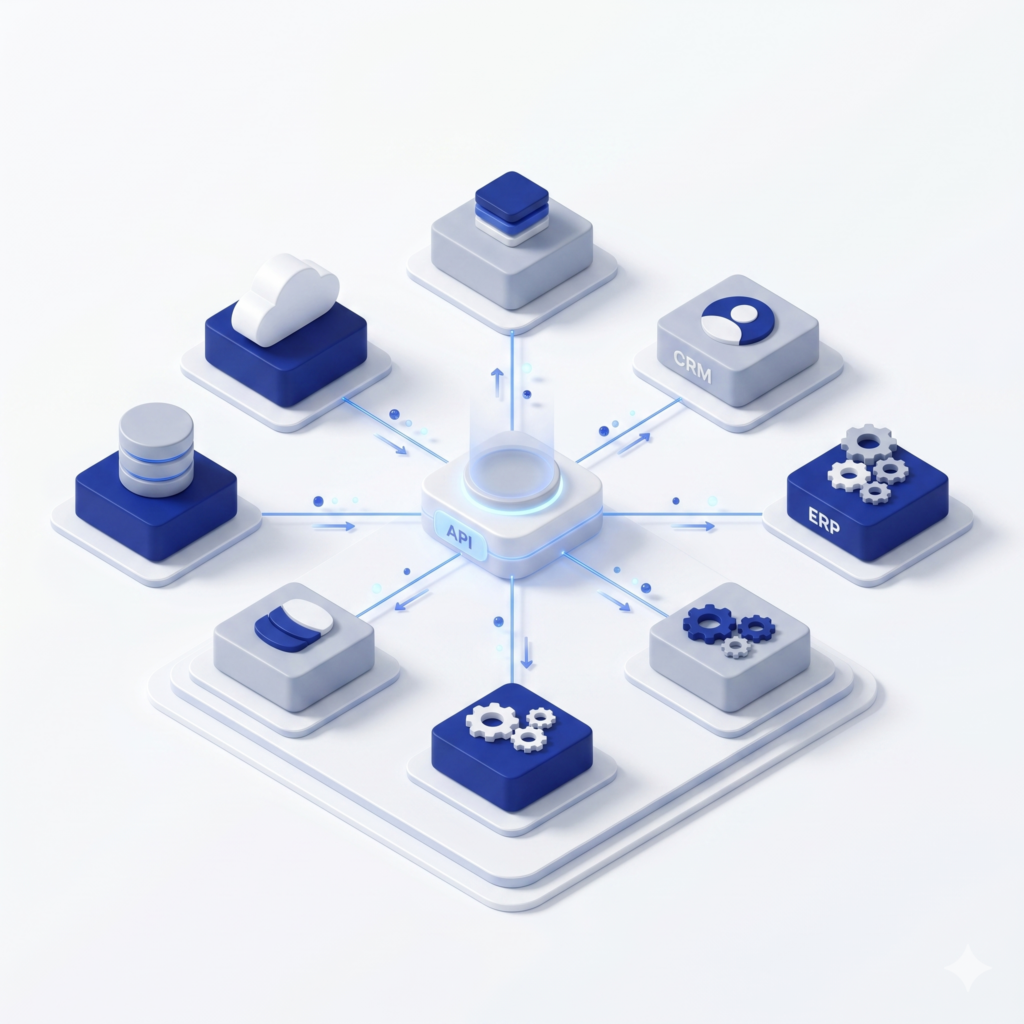



Connect Your Systems with Modern API Integration Services
Modern organizations rely on multiple applications across cloud platforms and enterprise systems, yet disconnected software often limits operational efficiency and data visibility. GYB Commerce delivers API integration services that connect applications, automate data exchange, and enable reliable communication across your digital ecosystem. Using REST APIs, GraphQL, webhooks, and modern middleware architecture, we design scalable integration frameworks that streamline workflows, synchronize business data, and improve system interoperability across platforms.
Understanding Application Programming Interfaces
API integration enables software systems to communicate through structured interfaces called application programming interfaces. These interfaces allow applications to exchange data, trigger actions, and coordinate processes across platforms.
Connecting Applications and Enterprise Systems
API integrations create communication channels between enterprise systems, SaaS applications, and cloud platforms. This connectivity allows organizations to share data efficiently while maintaining consistent system performance.
Technologies That Power API Integrations
Modern integrations rely on technologies such as REST APIs, GraphQL, SOAP APIs, JSON data structures, and webhooks. These technologies allow applications to exchange information securely and efficiently.
Enabling System Interoperability
API integrations enable systems to work together within complex digital ecosystems. By connecting applications through APIs, organizations can automate workflows, synchronize data, and improve operational visibility.
Custom API Integration Services
Custom API integrations allow organizations to build communication layers tailored to their existing systems and workflows. These integrations support scalable architecture while enabling reliable data exchange between applications.
Third-Party API Integration
Third-party API integrations connect external platforms with internal systems to automate workflows and expand functionality. Businesses can integrate payment systems, SaaS tools, analytics platforms, and operational software.
Enterprise System Integration
Enterprise system integration connects legacy platforms, internal tools, and modern cloud systems through structured APIs. This approach improves system interoperability while enabling real-time data synchronization across departments.
Cloud and SaaS API Integrations
Cloud API integrations connect SaaS applications and distributed platforms across modern technology ecosystems. These integrations enable automated workflows and consistent data synchronization between cloud services.
Connect platforms across your digital ecosystem.
CRM and Marketing Platform Integrations
CRM and marketing platforms generate large volumes of customer data that must move across multiple systems. API integrations connect tools such as Salesforce, HubSpot, and marketing automation platforms. These integrations synchronize customer profiles, campaign activity, and engagement data in real time. As a result, businesses maintain a unified view of customer interactions across applications.
ERP and Enterprise System Integrations
Enterprise resource planning systems manage operational data such as finance, procurement, and supply chain activities. API integrations connect ERP platforms with internal systems and cloud applications. When enterprise systems exchange data automatically, operational visibility improves across departments. This connectivity also eliminates manual data transfers between systems.
Payment Gateway API Integrations
Payment gateway integrations allow applications to process transactions and synchronize financial records across systems. APIs connect platforms such as Stripe or PayPal with ecommerce and financial systems. These integrations automate payment verification, transaction logging, and financial reporting. Businesses maintain accurate financial visibility across platforms.
Ecommerce Platform API Integrations
Ecommerce platforms rely on integrations to manage products, orders, inventory, and customer data. API integrations synchronize information between ecommerce platforms and enterprise systems. These integrations ensure consistent product data, order processing, and inventory visibility across systems. Businesses can maintain accurate operational workflows across digital channels.
API Integration Architecture and Technologies
Build integrations on modern and scalable technology foundations.
REST API and GraphQL Integrations
REST APIs enable structured communication between applications through standardized endpoints. These interfaces allow systems to exchange data efficiently. GraphQL enhances this capability by allowing applications to request specific datasets. This reduces unnecessary data transfers and improves system performance.
Microservices and Event-Driven Architectures
Microservices architecture separates applications into independent services connected through APIs. Each service can operate and scale independently. Event-driven architectures allow systems to respond to events in real time. This enables faster data synchronization across integrated platforms.
API Gateways and Middleware Architecture
API gateways manage API traffic, authentication, and request routing across integrated systems. They act as centralized entry points for API communication. Middleware architecture coordinates communication between services and applications. This ensures reliable data exchange across distributed platforms.
Security and Authentication for APIs
Secure integrations rely on authentication and encryption technologies that protect system communication. OAuth authentication and token based authentication restrict access to authorized systems. Encryption protocols secure data transmitted between applications. These security mechanisms protect sensitive information across API integrations.
Business Benefits of API Integration
Transform disconnected systems into a unified digital ecosystem.
Real-Time Data Synchronization
API integrations allow applications to exchange information instantly across systems. This ensures operational data remains consistent across platforms. Accurate synchronization prevents outdated records and reporting inconsistencies. Businesses maintain reliable data across their technology environments.
Automation of Business Processes
API integrations automate repetitive processes that normally require manual data transfers. Systems exchange information automatically once integrations are configured. Automation reduces operational delays and minimizes human errors. Teams can focus on strategic work rather than managing system connections.
Scalable System Architecture
API-driven systems allow organizations to expand technology environments without rebuilding core infrastructure. New applications can connect through APIs. This modular architecture enables businesses to scale digital ecosystems gradually. Systems remain stable while new platforms are introduced.
Improved System Visibility and Reporting
Connected systems provide unified visibility into operational data. APIs synchronize data across platforms to support centralized reporting. Decision makers gain insights into workflows, performance metrics, and operational activity. This visibility improves strategic decision making.
Faster Innovation Through Connected Systems
APIs allow developers to build new applications on top of existing systems. Organizations can expand digital capabilities without replacing legacy platforms. This flexibility accelerates product innovation and platform modernization. Businesses maintain adaptable technology ecosystems.
Integration Benefit
Real-Time Data Synchronization
Business Process Automation
Scalable Digital Architecture
Unified Data Visibility
Faster Product Innovation
Technical Capability
APIs enable instant communication between applications and enterprise systems
Automated data exchange between systems through API workflows
Modular API-driven system connectivity
Integrated platforms exchange operational data across systems
APIs allow developers to build services on existing infrastructure
Business Outcome
Accurate operational data across platforms and improved reporting reliability
Reduced manual tasks and faster operational processes
Technology environments that scale without major infrastructure changes
Centralized reporting and improved decision-making
Faster development of new applications and digital services
Our API Integration Process
A structured approach ensures reliable and scalable integrations.
System Architecture Assessment
Integration projects begin with a detailed analysis of existing systems and data flows. Engineers evaluate how applications currently exchange information. This assessment identifies integration points and technical constraints. It also defines data mapping and communication requirements..
Integration Strategy and Design
Architects design a structured integration roadmap that defines system communication patterns. This includes API endpoints, authentication methods, and data transformation rules. A well planned integration strategy ensures scalable and reliable system connectivity.
API Development and Implementation
Developers build APIs, connectors, and middleware components required for system connectivity. This may include REST APIs, GraphQL endpoints, or webhook integrations. During implementation, engineers configure data mapping and communication protocols between systems.
Testing and Validation
Testing ensures integrations exchange data accurately and maintain system performance. Engineers validate API responses and system behavior across environments. Security testing also verifies authentication and access controls.
Deployment and Monitoring
After validation, integrations are deployed within production environments. Monitoring tools track API performance, usage patterns, and system reliability. Continuous monitoring ensures integrations remain stable as system demands evolve.
Enterprise API Integration Use Cases
Enable system connectivity across modern business operations.
API Integrations for Enterprise Operations
Enterprise organizations rely on multiple systems to manage finance, operations, and internal workflows. API integrations connect enterprise applications so departments can exchange information automatically. These integrations ensure consistent operational data across business units. Organizations improve efficiency by eliminating disconnected software environments.
API Integrations for Ecommerce and Digital Platforms
Digital commerce platforms depend on integrations between storefronts, payment gateways, inventory systems, and logistics providers. APIs allow ecommerce platforms to synchronize product data, orders, and fulfillment processes across systems. This connectivity ensures customers receive accurate product information and reliable order processing. Businesses maintain consistent operational workflows across digital sales channels.
API Integrations for SaaS Platforms
SaaS products frequently rely on integrations with analytics tools, CRM systems, and third-party services. APIs allow SaaS applications to exchange information across digital ecosystems and support automated workflows. These integrations improve product functionality while expanding platform capabilities. SaaS companies use integrations to create connected software environments for customers.
API Integrations for Data and Analytics Platforms
Analytics platforms process large volumes of business data from multiple sources. API integrations allow data platforms to collect information from operational systems, applications, and cloud services. This connectivity enables businesses to build real time dashboards and reporting tools. Organizations gain deeper insights by connecting analytics platforms with operational systems.
Case Studies
API Integration
Real world integration projects that connected complex digital ecosystems.
Enterprise System Integration for Operations Automation
A professional services organization relied on multiple disconnected enterprise systems to manage operational workflows. GYB Commerce implemented API integrations that connected finance, CRM, and project management systems. The integration framework synchronized operational data across applications. As a result, the organization automated internal processes and improved reporting accuracy.
Ecommerce Platform Integration for Unified Commerce Operations
A digital commerce company required integrations between its ecommerce platform, payment systems, and logistics providers. GYB Commerce developed API connections that synchronized product catalogs, orders, and fulfillment data. These integrations ensured accurate inventory visibility and faster order processing. The company improved operational coordination across its digital commerce infrastructure.
SaaS Platform Integration for Data Synchronization
A SaaS software provider needed integrations between its application and multiple third-party analytics and CRM platforms. GYB Commerce implemented secure API integrations that enabled real time data synchronization. The integration architecture allowed the SaaS platform to exchange customer data across connected applications. This improved platform capabilities and enhanced product functionality.
Why Enterprises Choose GYB Commerce for API Integration Services
Architecture driven integrations built for scalable digital ecosystems.
Integration Architecture Built for Scalability
GYB Commerce designs integration architectures that support large scale digital environments. Our engineers build API frameworks that allow systems to communicate efficiently. This architecture first approach ensures integrations remain reliable as platforms expand. Businesses can introduce new systems without disrupting existing infrastructure.
Deep Expertise in Enterprise System Connectivity
Our teams integrate enterprise systems, cloud platforms, and SaaS applications across complex environments. This experience allows us to design integration frameworks that support high performance communication. Organizations rely on our expertise to connect operational platforms and digital ecosystems. Our integration services ensure systems exchange data reliably.
Secure API Integration Frameworks
Security plays a critical role in modern API integrations. GYB Commerce implements authentication mechanisms, encryption protocols, and secure API gateways. These frameworks protect sensitive data exchanged between applications. Businesses maintain secure digital infrastructure while enabling system connectivity.
Integration Ready Digital Ecosystems
Modern organizations rely on multiple platforms to operate their digital infrastructure. Our API integration services create connected ecosystems where applications exchange information seamlessly. This approach allows businesses to automate workflows and maintain reliable data synchronization across systems.
Continuous Integration Optimization and Support
API integrations must evolve as systems change and new platforms are introduced. GYB Commerce provides ongoing monitoring, optimization, and support for integration frameworks. Our teams ensure integrations remain stable while adapting to evolving technology environments.
What Clients Say About Working With Us
Frequently Asked Questions
Quick answers to the most common questions
What are API integration services?
API integration services involve connecting applications and systems through application programming interfaces. These integrations allow software platforms to exchange data and automate workflows across digital ecosystems.
Why are API integrations important for businesses?
API integrations allow organizations to connect systems, automate operations, and improve data visibility across platforms. This connectivity enables businesses to streamline processes and build more efficient digital environments.
What types of APIs are commonly used in integrations?
Modern integrations commonly use REST APIs, GraphQL APIs, SOAP APIs, and webhook based communication. These technologies allow applications to exchange data securely across systems.
Can API integrations connect legacy systems?
API integrations can connect legacy systems with modern cloud applications using middleware architecture and integration frameworks. This allows businesses to modernize infrastructure without replacing existing systems.
How long does an API integration project take?
The timeline for API integrations depends on system complexity and the number of platforms involved. Smaller integrations may take weeks, while enterprise integration frameworks may require longer implementation cycles.
How do API integrations ensure secure data exchange?
Secure integrations use authentication technologies such as OAuth, token based authentication, and encryption protocols. These mechanisms protect communication between systems and prevent unauthorized access.
Do API integration services include ongoing monitoring?
API integration services often include monitoring tools that track API performance, usage patterns, and system reliability. Continuous monitoring ensures integrations remain stable as system demands evolve.
Partner with Us for Comprehensive IT
We’re happy to answer any questions you may have and help you determine which of our services best fit your needs.
Your benefits:
- Client-oriented
- Independent
- Competent
- Results-driven
- Problem-solving
- Transparent
What happens next?
We Schedule a call at your convenience
We do a discovery and consulting meting
We prepare a proposal
Schedule a Free Consultation
Technologies that we use.
Ready to reduce your technology cost?
Our success stories
SEGO- Upgrade Your Life
SEGO Teams Up with GYB Commerce for a Digital Makeover Overview The modern man’s lifestyle can survive without the use of smartphones, and they have
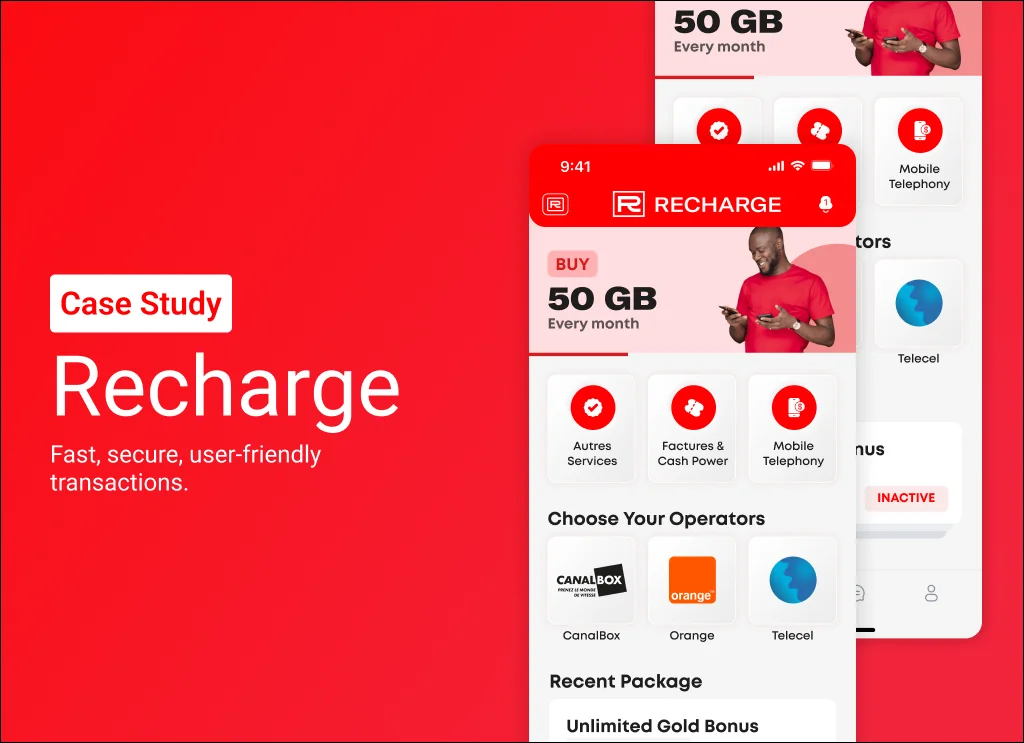
Recharge
Recharge App – Streamlining Mobile Top-Ups & Empowering Connectivity Overview Recharge App simplifies the process of topping up cellular network packages. It offers users an
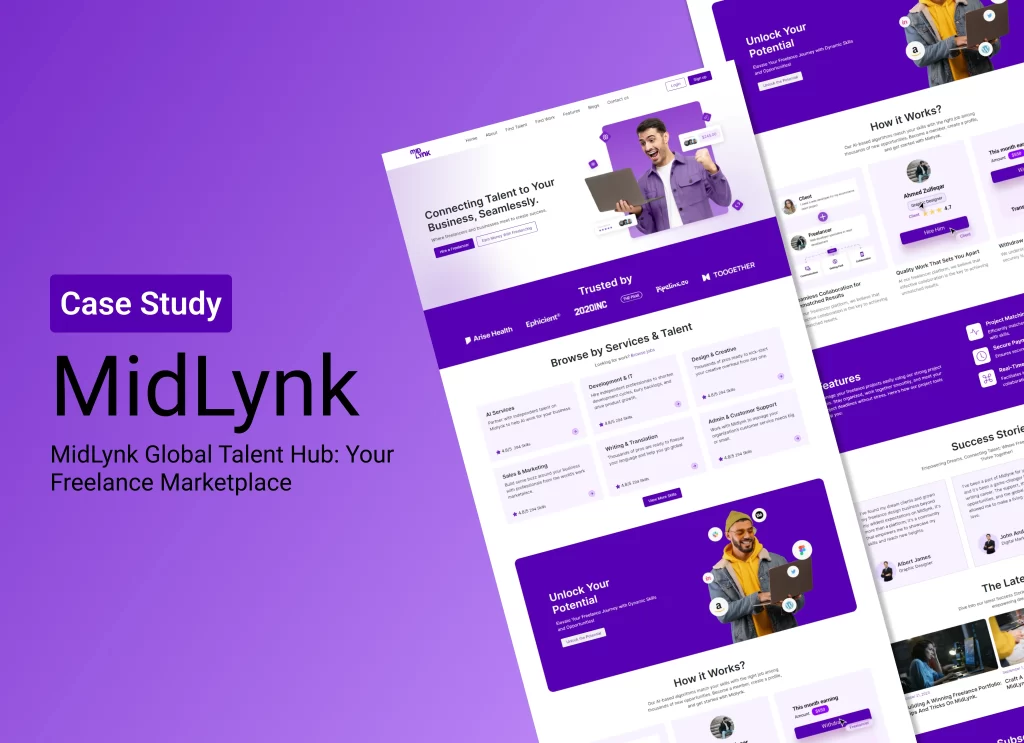
MidLynk – Your Freelance Marketplace
MidLynk – Connecting Talent with Endless Opportunities Overview MidLynk represents a transformative leap forward in the freelancing ecosystem, connecting clients and freelancers in a dynamic,

GYB Commerce blogs

CodeOps: A Smarter Way to Develop Software
Fundamentally, CodeOps is the concept of reusability applied to writing code, removing the burden of reinventing the wheel every time you write a line of

Meet Devin: Your New AI Companion in a World of Possibilities
Cognition has just launched Devin, a revolutionary AI software engineer, aiming to reshape how software development works. Devin’s arrival marks a new era in AI,

Choosing the Right Technology Partner: Key Headings to Consider
Finding the right technology partner for your agency may be a game-changer. But with so many alternatives available, how do you recognize which one is
Build a Connected Digital Ecosystem With API Integration Services!
API integration services from GYB Commerce enable organizations to connect enterprise systems, automate workflows, and synchronize data across modern digital platforms.