Growing ecommerce businesses often struggle because their systems operate independently instead of working together. Every order touches multiple departments. Disconnected systems slow everything down. Modern ecommerce success depends on more than great storefronts. It depends on connected business operations.
Disconnected enterprise resource planning and customer relationship management tools create major operational challenges. Staff must manually enter order details into accounting software and shipping logs. This manual work causes severe fulfillment delays and expensive data errors.
Integrating your corporate infrastructure provides the ultimate operational solution. This guide explains how to connect your core digital platforms properly. You will learn to automate complex workflows, improve inventory accuracy, and centralize your business data securely.
What Is ERP CRM Ecommerce Integration?
An ERP CRM ecommerce integration connects your main digital storefront to your backend corporate software. Enterprise Resource Planning systems handle your corporate finances and physical inventory. Customer Relationship Management software organizes your buyer communications and sales pipelines.
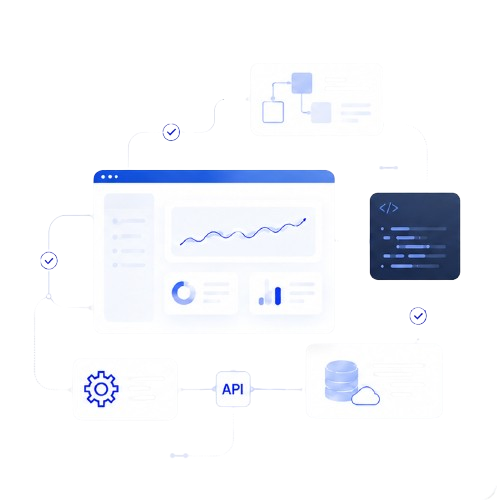
Connecting these platforms creates a single reliable source of truth for your business. Data moves seamlessly between systems via secure digital pathways known as APIs. Ecommerce platforms rely on this connectivity to process orders without human intervention.
Consider a simple business example. A buyer checks out on your website using their credit card. The order details flow instantly to the warehouse ERP for fulfillment and update the customer’s CRM sales profile automatically.
Understanding The Roles Of ERP, CRM, And Ecommerce Platforms
Each software platform performs a distinct operational duty. Clarifying these specific roles helps you map your data effectively.
What ERP Manages
Your ERP acts as the financial and logistical brain of your company. It handles complex procurement rules, warehouse tracking, and vendor management tasks. The system calculates exact product profit margins and manages your central corporate ledger.
What CRM Manages
A CRM system serves as the central hub for all consumer interactions. It stores complete customer profiles, support ticket histories, and marketing engagement logs. Sales teams use this tool to manage lead management pipelines and track long-term account health.
What The Ecommerce Platform Handles
Your digital storefront provides the visual public catalog for your buyers. It manages the digital shopping cart, processes secure payment gateways, and displays available inventory. Advanced storefronts rely on complex enterprise ecommerce features to handle high concurrent traffic volumes safely.
Why These Systems Need To Work Together
Operating these systems in isolation creates dangerous data silos across your organization. Without integration, your marketing team cannot see if a promoted item is out of stock. Connected systems ensure that every department operates using the exact same real-time information.
How ERP And CRM Integration Works
Bridging distinct software platforms requires specific technical pathways. Engineers use standard digital frameworks to connect these databases securely.
API-Based Communication
Application programming interfaces allow separate software programs to talk to each other. An API integration sends structured data requests between your storefront and your backend databases. These direct connections are highly secure and operate incredibly fast.
Middleware
Middleware functions as a software translation layer sitting between your core platforms. It takes data from your online store and formats it correctly for your older legacy ERP. This translation prevents data corruption when connecting very different software architectures.
Data Mapping
Data mapping defines exactly how fields match up between your connected systems. Your store might record a buyer’s name in one field, while your CRM uses two separate fields. Proper mapping ensures this information translates perfectly without manual editing.
Real-Time Synchronization
Real-time synchronization ensures your databases update instantly following a transaction. When an item sells, the ERP adjusts the inventory count and pushes the new number to the storefront immediately. This prevents overselling errors during busy holiday rushes.
Workflow Automation
Integrated systems allow you to build automated business rules across departments. You can configure a workflow that alerts your procurement team automatically when inventory drops below a specific threshold. This automation completely removes manual supply chain monitoring tasks.
Business Benefits Of ERP CRM Ecommerce Integration
Unifying your digital architecture provides massive organizational advantages. It streamlines your daily operations and protects your profit margins.
Centralized Business Operations
Integration pulls scattered corporate data into one unified management dashboard. Executives can view daily sales totals, warehouse costs, and marketing expenses in a single window. This centralization eliminates the need to cross-reference multiple spreadsheets.
Inventory Accuracy
Manual stock updates inevitably lead to human counting errors and frustrated buyers. Connected systems track product availability metrics with absolute mathematical precision. Accurate inventory forecasting prevents you from holding excess stock or running out of popular items.
Faster Order Processing
Integrated networks route customer orders directly to the warehouse floor in seconds. The system generates shipping labels and customs paperwork without administrative approval. This rapid automated processing dramatically improves your delivery turnaround speeds.
Better Customer Experience
Shoppers expect clear communication regarding their order status. Connected systems send automated tracking updates and personalized follow-up emails immediately. A smooth, transparent buying journey directly increases your long-term customer retention rates.
Improved Sales Visibility
Your sales representatives gain complete visibility into buyer habits through connected CRM dashboards. They can see a wholesale client’s past purchases and current browsing behavior. This deep context helps your team close larger contract deals.
Automated Workflows
Routine tasks consume thousands of expensive administrative hours every year. Integration automates invoice generation, tax calculations, and return material authorizations. Automating these repetitive workflows frees your staff to focus on strategic growth projects.
Better Decision Making
Accessing clean business intelligence allows corporate leaders to pivot quickly. You can analyze which product lines generate the highest profit margins after shipping costs. Data-driven decision making protects your company during economic market shifts.
What Data Should Be Synchronized?
Deciding which information to share between systems is critical for performance. You must synchronize core operational data to maintain business harmony.
Product Catalog
Your ERP should push master product details directly to the storefront interface. This includes item weights, SKU numbers, and technical specifications. Centralizing this data ensures your public listings remain perfectly accurate.
Inventory
Inventory levels must sync continuously between your warehouse software and your digital cart. This real-time loop prevents buyers from purchasing items that are physically unavailable. It protects your brand reputation from fulfillment failures.
Customer Profiles
Customer profile data must flow freely between your storefront and your CRM system. Address changes made by the user online must update your central marketing database instantly. Clean contact records ensure your promotional emails reach the correct audience.
Orders
Sales orders must travel from the ecommerce platform straight to your fulfillment center modules. The data package should include item quantities, selected shipping speeds, and applied gift messages. Fast order transfer guarantees prompt warehouse processing.
Pricing
Complex pricing rules and wholesale discount tiers must sync from your ERP to your storefront. This ensures corporate clients see their negotiated rates immediately upon logging in. Consistent pricing prevents invoicing disputes with large buyers.
Discounts
Marketing promotions and discount management codes require careful synchronization across your network. Your accounting software must record the exact discount applied to calculate accurate profit margins. This tracking keeps your financial audits clean and legally compliant.
Taxes
Tax configuration data must match perfectly across your digital cart and your corporate ledger. The storefront calculates the regional tax, and the ERP records the liability for government remittance. Accurate tax syncing prevents expensive legal penalties.
Shipping
Shipping provider updates must flow from the warehouse back to the customer CRM profile. The moment a carrier scans a package, the system should trigger a delivery notification email. This proactive tracking data reduces your daily support ticket volume.
Returns
Returns management workflows require data input from every connected corporate platform. The storefront initiates the return, the warehouse logs the received item, and the ERP issues the financial refund. Connected systems handle this complex lifecycle smoothly.
Accounting
Daily transaction registers must transfer directly into your master accounting software. This data includes collected revenues, processed refunds, and merchant gateway processing fees. Automated financial syncing simplifies your monthly corporate bookkeeping tasks.
Common ERP And CRM Integration Scenarios
Different retail frameworks require unique technical connections. Review these common layouts to understand how businesses deploy connected architecture.
Shopify + ERP
Scaling brands frequently connect managed storefronts to legacy backend databases. Modern ERP systems that integrate with Shopify use dedicated API connectors to sync order volumes reliably. If your business serves wholesale buyers, specialized B2B ecommerce solutions bridge Shopify Plus to advanced ERP pricing rules cleanly.
WooCommerce + CRM
Open-source storefronts require robust CRM integration to manage content-driven customer acquisition. Connecting WooCommerce to systems like Salesforce allows brands to track how blog content drives specific product sales. This data helps marketers refine their digital advertising campaigns.
Marketplace + ERP
Enterprise brands often sell through massive third-party digital networks alongside their main website. An integrated architecture syncs central ERP inventory across all these external channels simultaneously. If you want to build your own multi-vendor portal, professional ecommerce marketplace development ensures your ERP tracks vendor commissions accurately.
Multi-Warehouse Inventory
Large logistics operations manage stock across several regional warehouse facilities. An integrated network routes digital orders to the closest physical facility automatically to lower shipping costs. Companies utilizing custom rental ecommerce development services also rely on this routing to manage regional equipment availability perfectly.
Customer Support Automation
Connecting your store backend to your support CRM empowers your service agents. When a buyer calls with a complaint, the agent sees their entire purchase history and active shipping status instantly. This immediate context resolves customer frustrations rapidly.
API Integration Vs Middleware
Choosing the correct technical bridge defines your project budget and timeline. Companies generally use one of two primary connection methods.
Direct API Integrations
Direct API integrations use custom code to link two platforms without any intermediary software. These connections are incredibly fast and require no ongoing third-party subscription fees. They work best when both software platforms feature modern, well-documented REST or GraphQL endpoints.
Middleware Platforms
Middleware uses a separate cloud platform to translate data between incompatible software systems. This approach is mandatory when connecting a modern storefront to an older on-premise ERP. While middleware requires monthly licensing fees, it drastically reduces your initial custom programming costs.
Hybrid Integration Models
Enterprise organizations frequently deploy hybrid models to manage massive global networks. They use direct APIs for simple tasks like inventory updates and robust middleware for complex financial routing. This mixed approach balances data speed with overall network stability.
Common Integration Challenges
Linking massive corporate databases introduces distinct technical hurdles. Anticipating these friction points protects your deployment schedule.
Data Quality
Integrating messy databases will simply automate your existing corporate errors. If your legacy ERP contains duplicate client records, the integration will push those duplicates to your modern CRM. You must clean your historical data files before establishing active connections.
Data Mapping
Mismatched data formats cause immediate system crashes during data transfers. For instance, your storefront might format dates differently than your central accounting software. Developers must build precise translation rules to prevent these formatting conflicts.
Legacy Systems
Older on-premise ERP frameworks often lack modern API gateway support. Extracting data from these closed systems requires writing complex custom export scripts. These legacy technical barriers often extend your project development timeline significantly.
API Limitations
Many commercial SaaS platforms enforce strict rate limits on their data endpoints. If your store generates too many requests during a flash sale, the provider might block your connection temporarily. Engineers must build queuing systems to manage heavy data traffic safely.
Security
Moving sensitive financial data across the internet exposes your company to cyber threats. Every connection path must use strict encryption and active security certificates. Failing to secure these endpoints violates strict international data privacy laws.
Change Management
Employees often resist adopting new automated workflows after years of manual data entry. If your staff ignores the new CRM dashboards, your integration investment loses its value. You must provide comprehensive training to ensure high corporate adoption rates.
Performance
Heavy data synchronization scripts can slow down your live storefront servers. If the system pauses to update the ERP during checkout, the buyer might abandon their cart. Developers must execute these heavy data transfers using asynchronous background processes.
Best Practices For Successful ERP CRM Ecommerce Integration
Following structured engineering principles guarantees a smooth system deployment. These best practices protect your live operations during the transition.
Planning
Document your entire corporate data flow before writing a single line of code. Determine which software platform serves as the master record for specific data types like pricing or addresses. Clear planning prevents conflicting data updates from overwriting correct files.
Data Governance
Establish strict internal rules regarding who can alter data within your connected systems. Implement role-based access control to prevent unauthorized staff from deleting critical inventory records. Strong data governance maintains the integrity of your corporate archives.
Workflow Design
Map your automated workflows to match actual physical business processes. Do not design software rules that conflict with how your warehouse staff actually packs boxes. Technology must support your physical operations, not hinder them.
Testing
Never test new integration code on your live production server. Build a secure sandbox environment to simulate heavy transaction volumes and test error handling scripts. Thorough testing identifies critical data mapping bugs before they impact your real customers.
Monitoring
Deploy active server monitoring tools to track the health of your digital connections continuously. Your IT dashboard should trigger alarms if an API endpoint drops offline. Immediate alerts allow engineers to fix connection drops before sales are lost.
Documentation
Maintain detailed technical documentation covering all custom data maps and API credentials. Clear records ensure future developers can understand and upgrade the network easily. Good documentation prevents your system from becoming a confusing technical black box.
Continuous Optimization
Treat your integrated network as a living ecosystem that requires regular maintenance. Audit your data flow logs quarterly to identify slow API queries or emerging bottlenecks. Continuous optimization keeps your business operating at peak efficiency.
When Should You Invest In ERP CRM Integration?
Recognizing the right time to modernize your architecture is vital for long-term survival. Manual operations eventually restrict your corporate expansion capabilities.
Business growth naturally increases your daily administrative burden. When your staff spends more time copying data than executing strategy, you must integrate your platforms. Increasing order volumes quickly overwhelm manual fulfillment processes and lead to expensive shipping mistakes.
Expanding into multi-channel commerce or managing multiple warehouses demands centralized data control. You cannot manually sync stock levels across five different retail websites accurately. Furthermore, diverse ecommerce business models require strict digital automation to remain profitable.
If you plan to launch international storefronts or complex B2B commerce portals, integration is strictly mandatory. You must assess your long-term ecommerce scalability requirements to ensure your software infrastructure supports your projected sales goals. Delaying integration only compounds your internal operational inefficiencies.
Future Trends In ERP CRM Ecommerce Integration
The integration sector evolves rapidly as new cloud technologies emerge. Understanding these shifts helps you build a future-proof commerce architecture.
AI-Powered Automation
Artificial intelligence is transforming how connected systems manage data anomalies. Modern integrations use machine learning to identify unusual purchase patterns and flag potential fraud automatically. AI tools also suggest optimized shipping routes based on real-time weather data.
Predictive Analytics
Advanced platforms analyze historical sales data to predict future inventory requirements precisely. These connected systems generate automated purchase orders for your suppliers before you actually run out of stock. Predictive logic removes the guesswork from corporate procurement.
Cloud ERP
Legacy on-premise servers are rapidly being replaced by agile Cloud ERP frameworks. Cloud systems feature native API support, making ecommerce integrations significantly faster and cheaper to deploy. They also provide superior data security and automated software updates.
Cloud CRM
Cloud CRM platforms offer seamless connectivity to modern marketing automation tools. They allow sales teams to access complete customer profiles from mobile devices while working in the field. This constant accessibility accelerates the enterprise sales pipeline.
API-First Commerce
Modern storefronts are adopting API-first architectures that decouple the visual design from the backend database. This headless approach makes swapping ERP or CRM vendors incredibly easy in the future. It provides ultimate flexibility for enterprise organizations.
Real-Time Business Intelligence
The future of commerce relies on instant data visibility across the entire corporate network. Integrated systems stream live operational metrics to executive mobile dashboards continuously. This absolute transparency empowers leaders to make highly accurate strategic decisions instantly.
Frequently Asked Questions
What is the main difference between an ERP and a CRM system?
An Enterprise Resource Planning system manages backend operational tasks like corporate accounting, warehouse logistics, and supply chain procurement. A Customer Relationship Management system handles frontend interactions, tracking sales pipelines, customer support tickets, and marketing engagement data.
Why do ecommerce platforms need to integrate with both systems?
Ecommerce platforms require ERP integration to display accurate inventory levels and process complex financial ledgers automatically. They require CRM integration to personalize the buyer journey, track marketing campaign success, and empower customer service agents with complete order histories.
Does integrating these platforms improve my website performance?
Directly, integration does not speed up your page loading times. However, using connected systems allows your storefront to offload heavy database tasks to the ERP or CRM. This structural separation keeps your web server light and highly responsive during heavy traffic surges.
What is middleware in the context of ecommerce integration?
Middleware is a specialized software layer that translates data between two incompatible systems. It is commonly used when connecting a modern API-driven ecommerce platform to an older, legacy on-premise ERP that cannot process modern digital data requests directly.
Can a small business benefit from ERP CRM ecommerce integration?
Yes, small businesses benefit significantly from basic integration workflows. Connecting a standard storefront to cloud-based accounting and basic CRM tools eliminates manual data entry tasks. This automation allows small teams to scale their sales volume without immediately hiring additional administrative staff.
Final Takeaways
Integrating your ERP, CRM, and ecommerce platforms transforms fragmented software tools into a highly efficient corporate machine. This unified architecture eliminates manual data entry, prevents expensive inventory errors, and accelerates your daily order fulfillment speeds. By centralizing your operational data, your leadership team gains the exact business intelligence needed to execute rapid strategic decisions. Establishing a secure, automated data flow empowers your brand to scale seamlessly while delivering exceptional experiences to your corporate clients and retail consumers alike.
Building a connected digital ecosystem requires precise data mapping, robust API architecture, and deep technical planning. If you need expert guidance to link your legacy databases to a modern storefront, partner with a specialized development agency to minimize your operational downtime. Contact GYB Commerce today to consult with our enterprise integration architects about modernizing your software infrastructure and streamlining your digital business operations.