Why AI Startups Are Hiring Forward Deployed Engineers in 2026
Trend Analysis · 2026 Why AI Startups Are Hiring Forward Deployed Engineers in 2026 Every AI startup from OpenAI to Series-A companies is racing to
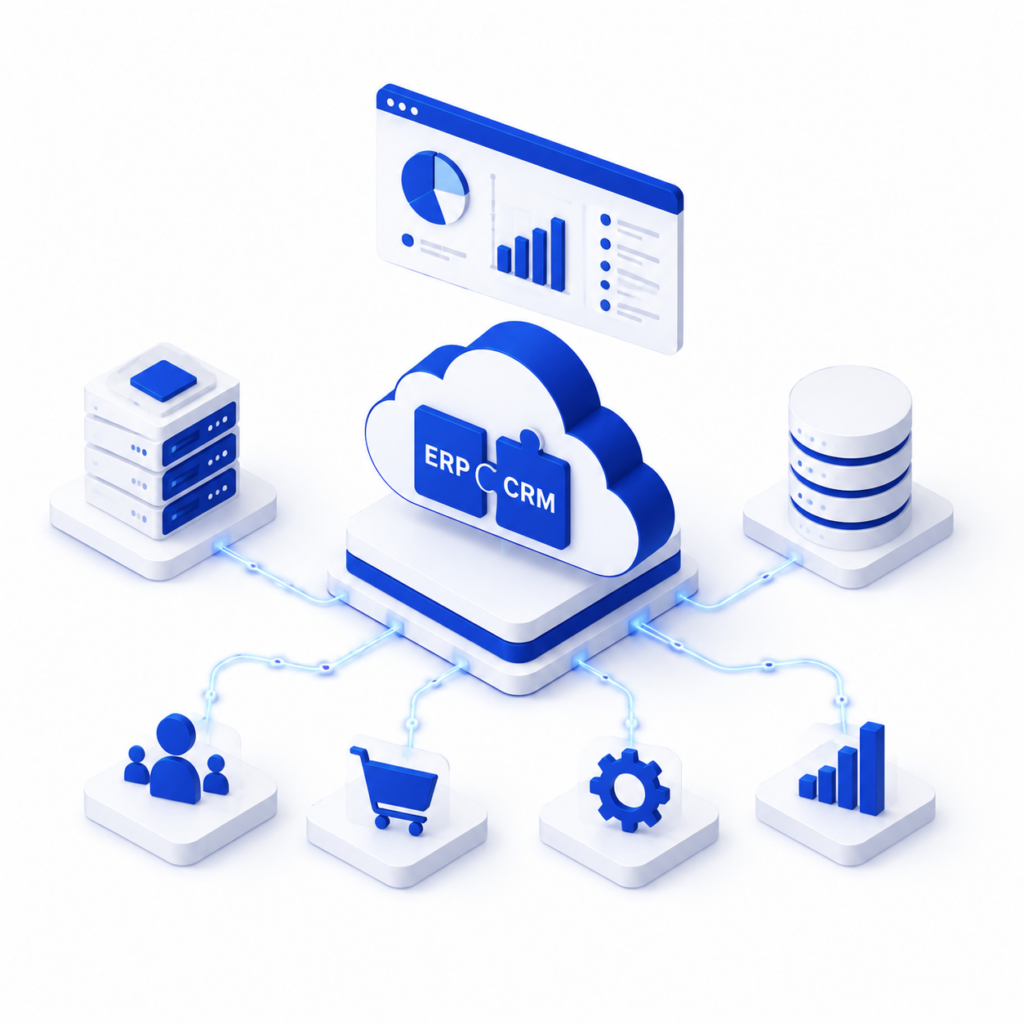
Disconnected systems slow operations, create reporting gaps, and reduce visibility across departments. GYB Commerce delivers ERP & CRM Solutions that centralize business operations, automate workflows, improve customer management, and unify enterprise data into scalable digital ecosystems designed for long term operational growth.
Modern organizations require connected systems capable of managing operations, customer relationships, finance, reporting, and automation through one centralized infrastructure. ERP and CRM platforms improve operational efficiency while eliminating fragmented workflows and disconnected data environments.
Organizations investing in ERP & CRM Solutions often achieve measurable operational improvements:
GYB Commerce develops ERP and CRM systems that align technology infrastructure with operational scalability, workflow automation, and long term digital transformation objectives.
GYB Commerce delivers enterprise ERP & CRM Solutions engineered to centralize operations, improve customer visibility, automate workflows, and support long-term business scalability across complex operational environments.
A distribution company partnered with GYB Commerce to replace fragmented operational systems with a centralized ERP environment. The new platform improved inventory visibility, automated procurement workflows, and reduced reporting delays across departments.
A professional services organization required a scalable CRM system capable of improving customer management and sales visibility. GYB Commerce developed a custom CRM platform that centralized customer data and improved operational reporting accuracy.
An eCommerce business required unified connectivity between inventory systems, fulfillment operations, and customer management workflows. Our Odoo integration services streamlined operational coordination and improved reporting visibility across departments.
We begin by analyzing workflows, operational bottlenecks, reporting gaps, integration requirements, and long term business objectives to define system architecture and implementation priorities.
Our team designs ERP and CRM architecture including workflows, data models, integrations, permission structures, reporting frameworks, and automation logic before development begins.
We create intuitive user experiences and operational workflows designed to improve usability, increase adoption, and simplify day-to-day business processes.
ERP and CRM systems are developed using structured sprint-based execution with secure integrations, workflow automation, reporting modules, and scalable infrastructure planning.
Every system undergoes structured testing including workflow validation, integration testing, performance testing, and quality assurance before deployment.
After deployment, we provide system monitoring, optimization support, training assistance, architecture reviews, and long term technical support to maintain operational stability.
Organizations partner with GYB Commerce because our AI automation solutions prioritize operational architecture, system integration, and measurable business outcomes. The following feedback reflects the impact our automation frameworks deliver across different industries
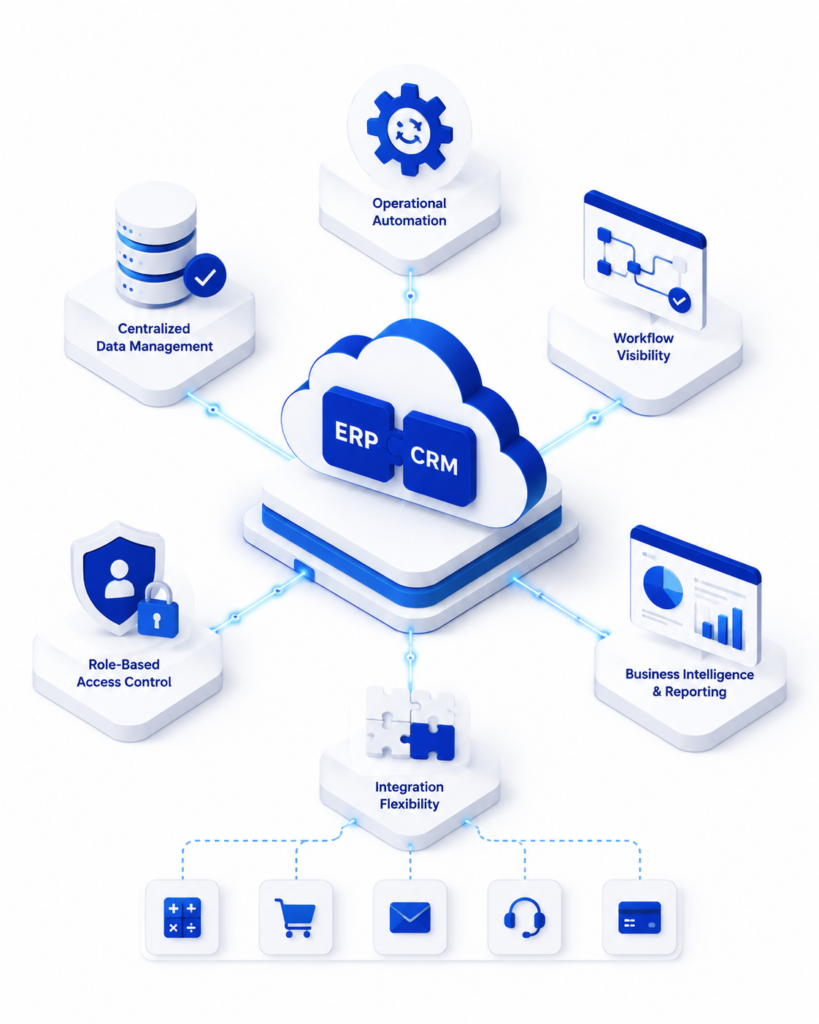
Enterprise ERP & CRM Solutions must support operational scalability, workflow automation, customer visibility, and centralized reporting without creating system fragmentation. GYB Commerce develops business systems engineered for long term operational control and enterprise growth.
Modern ERP and CRM systems automate repetitive operational tasks, reduce manual intervention, and improve process consistency across departments including sales, finance, operations, and customer management.
Centralized business data improves reporting accuracy, forecasting visibility, and decision making. ERP and CRM platforms eliminate disconnected spreadsheets and fragmented reporting environments.
Real-time workflow tracking allows leadership teams to monitor operational performance, customer interactions, sales activity, inventory movement, and reporting metrics from one unified environment.
Enterprise systems require secure permission structures that protect sensitive operational and customer data while enabling controlled collaboration across departments.
Advanced reporting dashboards help organizations measure operational efficiency, revenue performance, workflow bottlenecks, and customer lifecycle activity using real-time business intelligence.
Scalable ERP & CRM Solutions must integrate seamlessly with third-party systems including accounting platforms, eCommerce systems, marketing tools, customer service platforms, and payment gateways.
GYB Commerce develops ERP and CRM ecosystems capable of integrating with modern business infrastructure to improve operational efficiency and data synchronization across enterprise environments.
We design ERP & CRM architecture before development begins. This prevents fragmented workflows, unstable integrations, and reporting inconsistencies as systems scale.
Our systems are engineered around operational requirements, revenue workflows, reporting structures, and long term business objectives rather than generic software configurations.
GYB Commerce develops ERP and CRM platforms capable of supporting growing operational complexity, multi-department coordination, and future scalability requirements.
We implement secure API integrations, controlled data synchronization, and role-based access structures to maintain operational reliability and data integrity.
ERP and CRM systems require continuous optimization. Our team provides ongoing support, architecture reviews, performance improvements, and operational scalability planning.
We follow structured development processes, milestone-driven execution, enterprise documentation standards, and disciplined project governance aligned with enterprise delivery expectations.
Quick answers to the most common questions
ERP systems manage internal business operations such as finance, inventory, procurement, human resources, and supply chain workflows. CRM systems focus on customer relationships, lead tracking, sales management, customer communication, and retention strategies. Businesses often integrate ERP and CRM systems together to centralize operations, improve visibility, automate workflows, and eliminate disconnected business processes across departments.
ERP & CRM Solutions improve operational efficiency, automate repetitive workflows, centralize reporting, and strengthen customer management processes. Businesses use these systems to reduce operational bottlenecks, improve forecasting accuracy, and support long term scalability. Modern ERP and CRM platforms also improve decision making by giving leadership teams real-time visibility into operational performance, customer activity, sales pipelines, and financial reporting.
The four primary types of CRM systems include operational CRM, analytical CRM, collaborative CRM, and strategic CRM systems. Operational CRM platforms automate customer workflows such as lead management and sales automation. Analytical CRM systems focus on reporting and customer insights. Collaborative CRM platforms improve communication across departments, while strategic CRM systems strengthen long term customer retention and relationship management.
Modern ERP systems typically include finance management, inventory management, procurement, supply chain management, reporting, project management, human resources management, and workflow automation modules. Enterprise ERP platforms can also include CRM modules, warehouse management systems, manufacturing management, vendor management, and business intelligence dashboards depending on operational requirements.
Yes. ERP and CRM systems can integrate with accounting software, eCommerce platforms, marketing automation tools, customer support systems, payment gateways, shipping providers, and third-party enterprise applications. GYB Commerce develops secure integration architectures that synchronize operational data across connected systems while maintaining scalability and reporting consistency.
The cost of ERP & CRM development depends on system complexity, workflow customization, integration requirements, reporting infrastructure, user roles, and scalability objectives. Custom enterprise platforms typically require structured architecture planning, phased development, integration engineering, testing, deployment, and post-launch optimization to ensure long term operational stability.
Implementation timelines depend on operational complexity, migration requirements, integration scope, and the number of business workflows involved. Smaller implementations may take a few months, while enterprise ERP & CRM systems often require phased rollouts to ensure operational continuity and successful adoption across departments.
Custom ERP software development allows businesses to build systems aligned directly with operational workflows, reporting structures, compliance requirements, and long term growth objectives. Unlike off-the-shelf platforms, custom ERP systems eliminate unnecessary features, reduce workflow inefficiencies, and improve scalability across evolving business operations.
Legacy systems often create operational inefficiencies, integration limitations, reporting inconsistencies, and security risks that slow business growth. Modern ERP & CRM Solutions improve workflow automation, cloud accessibility, data visibility, reporting accuracy, integration flexibility, and operational scalability while reducing long term maintenance overhead.
Yes. Modern ERP & CRM platforms are commonly deployed using cloud-based infrastructure that supports scalability, remote accessibility, system redundancy, and operational flexibility. Cloud deployments also simplify maintenance, infrastructure scaling, data synchronization, and enterprise collaboration across distributed teams and multiple locations.
ERP & CRM Solutions support industries including healthcare, retail, manufacturing, logistics, financial services, eCommerce, construction, education, and professional services. Organizations operating complex workflows or managing large operational datasets benefit significantly from centralized automation and integrated business management systems.
Excel can help businesses organize customer data at a basic level, but it lacks the automation, reporting, workflow management, scalability, and integration capabilities of a dedicated CRM system. As businesses grow, spreadsheet-based processes often create operational inefficiencies, reporting gaps, and inconsistent customer management workflows.
Modern ERP & CRM systems should support workflow automation, centralized reporting, customer management, role-based permissions, API integrations, operational analytics, cloud accessibility, and scalable architecture. Enterprise systems should also provide flexibility for future integrations, operational growth, and evolving business requirements without requiring major system rebuilds.
Yes. GYB Commerce provides ERP and CRM modernization services that rebuild outdated infrastructure, improve integration architecture, optimize workflows, and migrate legacy systems into scalable modern platforms. Our modernization process focuses on improving operational efficiency while minimizing disruption to ongoing business operations.
Yes. GYB Commerce provides long term ERP & CRM maintenance services including system optimization, integration support, infrastructure monitoring, workflow enhancements, security updates, and scalability planning. Continuous optimization ensures ERP and CRM systems remain reliable, secure, and aligned with evolving operational requirements.
We’re happy to answer any questions you may have and help you determine which of our services best fit your needs.
We Schedule a call at your convenience
We do a discovery and consulting meting
We prepare a proposal
Trend Analysis · 2026 Why AI Startups Are Hiring Forward Deployed Engineers in 2026 Every AI startup from OpenAI to Series-A companies is racing to
Hiring Checklist · 2026 Forward Deployed Engineer Skills Checklist: What to Look For When Hiring The complete 2026 skills checklist for hiring a Forward Deployed
SEGO Teams Up with GYB Commerce for a Digital Makeover Overview The modern man’s lifestyle can survive without the use of smartphones, and they have
What is document capture and how does intelligent OCR processing work? Learn how AI extracts and automates document data.

Reduce customer service costs with automation using AI tools, workflows, and strategies that improve efficiency without sacrificing quality.

What role does automation play in customer service? Learn how automation executes workflows, improves efficiency, and scales support systems.
The right ERP & CRM architecture improves operational visibility, automates workflows, centralizes customer management, and supports scalable business growth. GYB Commerce develops enterprise ERP & CRM Solutions engineered for long term operational efficiency, integration stability, and measurable business performance.