M
Inventory calculations are at the core of effective inventory management. Businesses rely on these calculations to decide how much stock to hold, when to reorder, and how to respond to demand changes. However, as operations grow, these calculations become more complex and difficult to manage manually. This often leads to inaccurate decisions and operational inefficiencies.
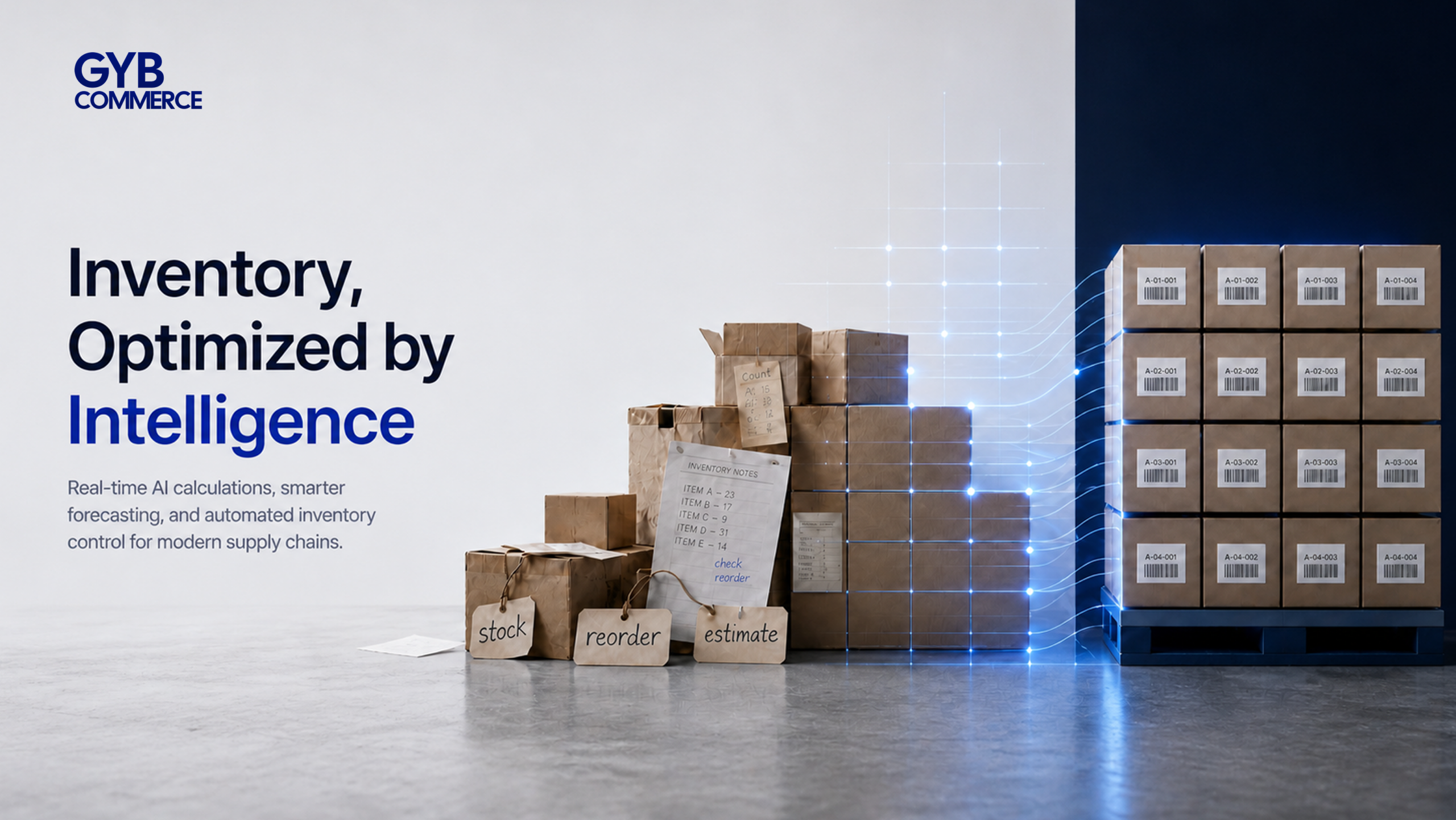
AI changes how inventory calculations are performed by introducing automation and real-time data processing. Instead of relying on static formulas, businesses can use AI to continuously adjust calculations based on changing conditions. As a result, inventory planning becomes more accurate, responsive, and scalable.
Table of Contents
Understanding Inventory Calculations in Supply Chain Operations
Inventory calculations are used to maintain the balance between supply and demand. These calculations guide decisions related to stock levels, replenishment, and order quantities. Without accurate calculations, businesses risk overstocking or running out of products.
In traditional systems, these calculations are often based on fixed formulas. While these formulas provide a starting point, they do not adapt well to changing demand patterns. This is where modern approaches begin to differ.
What Inventory Calculations Include
Inventory calculations typically involve several key components that determine how stock is managed:
- Reorder points based on demand and lead time
- Safety stock to handle uncertainty in supply and demand
- Demand forecasting to estimate future requirements
- Inventory turnover and stock level optimization
These components work together to ensure that inventory remains balanced across the supply chain.
Why Accurate Calculations Matter for Inventory Planning
Accurate inventory calculations directly impact business performance. When calculations are precise, businesses can maintain optimal stock levels without excess inventory. This reduces carrying costs and improves cash flow.
On the other hand, inaccurate calculations lead to stock imbalances. Overstocking ties up capital, while stockouts result in lost sales. Therefore, improving calculation accuracy is essential for efficient inventory management.
Hire GYB Commerce for AI Inventory Forecasting
Limitations of Manual Inventory Calculations
Manual calculations fail in modern supply chains. This is how technology is changing inventory management practices today to replace outdated methods. As data volumes grow and demand patterns become more complex, these methods start to show limitations.
One major issue is the reliance on static formulas. These formulas are often based on historical averages, which do not reflect real-time changes. As a result, calculations quickly become outdated.
Static Formulas and Historical Data Dependency
Traditional methods depend heavily on historical data. While past data provides useful insights, it cannot capture sudden shifts in demand. This makes it difficult to adjust calculations in dynamic environments.
In addition, fixed formulas do not account for multiple variables at once. Factors such as seasonality, promotions, and supply disruptions are often ignored.
Human Error and Delayed Decision Making
Manual calculations are prone to human error. Even small mistakes in data entry or formula setup can lead to incorrect results. Over time, these errors accumulate and affect inventory decisions.
Moreover, manual processes slow down decision-making. Updating calculations takes time, which delays responses to changing conditions.
Scaling Challenges in Complex Supply Chains
As businesses grow, inventory operations become more complex. Managing calculations across multiple products, locations, and suppliers becomes difficult. Manual systems struggle to handle this level of complexity.
This creates inefficiencies and increases the risk of inaccurate inventory planning. At this stage, automation becomes necessary.
How AI Automates Inventory Calculations
AI introduces a new approach to inventory calculations by replacing static methods with adaptive systems. Instead of relying on fixed rules, AI continuously analyzes data and updates calculations automatically.
This allows businesses to respond to changes in demand and supply conditions in real time. As a result, inventory calculations become more accurate and reliable.
Machine Learning in Inventory Forecasting
Machine learning plays a key role in automating inventory calculations. These models learn from historical and real-time data to identify patterns in demand. Over time, they improve their predictions and adapt to new trends.
This enables more accurate forecasting, which directly influences inventory calculations such as reorder points and stock levels.
Dynamic Calculation of Reorder Points and Stock Levels
AI systems calculate reorder points dynamically based on current conditions. Instead of fixed thresholds, these calculations adjust according to demand variability and lead times.
This ensures that inventory levels remain optimal without overcompensating. Businesses can maintain the right balance between availability and cost.
Real-Time Data Processing and Adaptation
AI processes data continuously, allowing calculations to update in real time. This includes changes in sales patterns, supply delays, and market conditions.
As a result, inventory decisions are always based on the most recent data. This improves responsiveness and reduces the risk of errors.
AI-Driven Demand Forecasting for Inventory Optimization
Demand forecasting drives inventory calculations. You can explore how AI is used in inventory management for better forecasting to see this. AI improves this process by analyzing multiple data sources simultaneously.
Unlike traditional methods, AI considers both historical and real-time data. This allows it to capture complex patterns and adjust predictions as conditions change.
Using Historical and Real-Time Data Together
AI combines historical sales data with real-time inputs such as current demand signals. This provides a more complete view of inventory requirements. As a result, forecasts become more accurate and relevant.
Identifying Patterns, Trends, and Seasonality
AI models identify patterns that are not easily visible through manual analysis. These include seasonal trends, demand spikes, and long-term shifts. By recognizing these patterns, AI improves the accuracy of inventory calculations.
This leads to better planning and more efficient inventory management.
AI for Inventory Optimization and Stock Control
Once inventory calculations are automated, the next step is optimization. AI does not only calculate values. It also ensures that inventory levels remain aligned with actual demand. This helps businesses maintain efficiency across the supply chain.
Traditional systems often struggle to balance availability and cost. However, AI continuously adjusts stock levels based on changing conditions. As a result, businesses can operate with more precise inventory control.
Dynamic Safety Stock Optimization
Safety stock acts as a buffer against uncertainty. In manual systems, safety stock is often calculated using fixed assumptions. This can lead to either excess inventory or insufficient coverage.
AI improves this by adjusting safety stock dynamically. It considers factors such as demand variability, lead times, and supply disruptions. This allows businesses to maintain optimal buffer levels without overstocking.
Automated Replenishment Systems
Replenishment decisions are critical to maintaining inventory balance. AI automates this process by triggering restocking actions based on real-time calculations. Instead of relying on manual checks, the system continuously monitors inventory levels.
When stock reaches a calculated threshold, replenishment is initiated automatically. This reduces delays and ensures that inventory remains aligned with demand.
Reducing Stockouts and Overstocking
Stockouts and overstocking are common challenges in inventory management. Both issues result from inaccurate calculations and delayed decisions. AI addresses these problems by improving calculation accuracy and responsiveness.
By continuously updating forecasts and stock levels, AI reduces the likelihood of imbalances. This leads to better product availability and lower inventory costs.
Data Requirements for AI-Based Inventory Calculations
AI systems depend on data to automate inventory calculations effectively. Without accurate and well-structured data, the system cannot generate reliable outputs. Therefore, data quality is a critical factor in successful implementation.
AI integrates data from multiple sources to create a comprehensive view of inventory operations. This allows it to make more accurate calculations and recommendations.
Types of Data Needed for Inventory Automation
- Historical sales data and demand patterns
- Lead times and supplier performance metrics
- Real-time inventory levels across locations
- External demand signals such as market trends
- SKU-level product and usage data
These inputs allow AI systems to calculate inventory metrics with greater precision.
Importance of Data Quality and Integration
Data must be consistent, accurate, and updated regularly. Inconsistent data leads to incorrect calculations and poor decision-making. Therefore, businesses must ensure proper data integration across systems.
When data flows seamlessly between platforms, AI systems can operate more effectively. This improves the accuracy of inventory calculations and overall system performance.
When Businesses Should Automate Inventory Calculations
Not all businesses need automation immediately. However, certain indicators suggest that manual methods are no longer sufficient. Recognizing these signs early helps businesses transition at the right time.
One key indicator is recurring calculation errors. If inventory levels are frequently misaligned with demand, it suggests that existing methods are not accurate enough. Similarly, increasing operational complexity makes manual calculations difficult to manage.
Signs That Indicate the Need for Automation
- Frequent stock imbalances such as stockouts or overstocking
- Growing number of products and SKUs
- High variability in demand patterns
- Dependence on spreadsheets or manual calculations
- Lack of real-time visibility into inventory
When these issues begin to affect performance, automation becomes necessary. AI provides a scalable solution for managing complex inventory calculations.
Choosing the right software matters. Learn how to select the best inventory forecasting system to automate these daily calculations effectively.
Frequently Asked Questions
How to automate optimal inventory calculations with AI?
AI automates inventory calculations by analyzing data such as demand patterns, lead times, and stock levels. It continuously updates calculations in real time. This allows businesses to maintain accurate and responsive inventory planning.
What calculations can AI automate in inventory management?
AI can automate reorder points, safety stock levels, demand forecasts, and replenishment decisions. These calculations are adjusted dynamically based on changing conditions. This improves accuracy and efficiency.
How does AI improve inventory calculation accuracy?
AI uses machine learning to analyze large datasets and identify patterns. It updates calculations continuously instead of relying on static formulas. This reduces errors and improves decision-making.
What data is required for AI inventory calculations?
AI requires data such as historical sales, real-time inventory levels, lead times, and market trends. Accurate and integrated data improves the quality of calculations. Data is essential for system performance.
Can small businesses use AI for inventory calculations?
Small businesses can adopt AI through cloud-based tools and scalable platforms. Many solutions are designed to work without complex infrastructure. This makes AI accessible to businesses of different sizes.
What are the benefits of automating inventory calculations?
Automation improves accuracy, reduces manual errors, and speeds up decision-making. It also helps maintain optimal stock levels and reduce costs. These benefits improve overall inventory performance.
How is AI different from traditional inventory calculation methods?
Traditional methods rely on fixed formulas and manual inputs. AI uses real-time data and predictive models to update calculations dynamically. This allows businesses to respond quickly to changes.
Final Takeaways
AI is transforming how inventory calculations are performed by introducing automation and real-time adaptability. Instead of relying on static formulas, businesses can use AI to continuously adjust calculations based on changing demand and supply conditions. This leads to more accurate planning and improved operational efficiency.
At the same time, successful automation depends on strong data foundations and system integration. When implemented correctly, AI enables better inventory optimization, reduces stock imbalances, and supports scalable operations.
As supply chains become more complex, manual calculation methods become less effective. AI provides a practical solution for managing inventory calculations with greater accuracy and consistency.