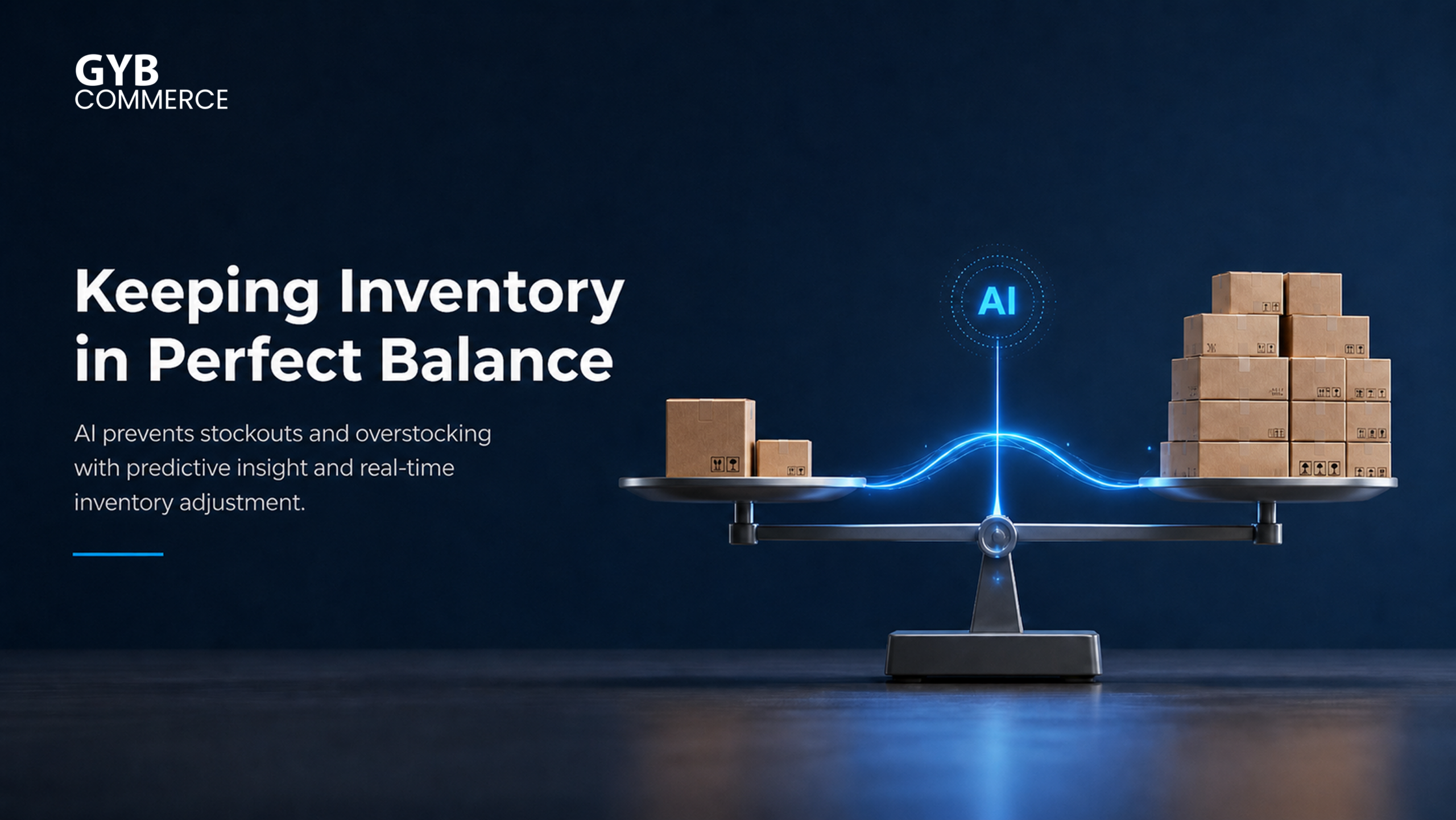
Managing inventory is one of the most complex challenges in modern supply chains. Businesses must balance product availability with cost control. However, stockouts and overstocking often occur at the same time due to systemic inefficiencies. These issues directly impact revenue, customer satisfaction, and operational efficiency.
AI is changing how companies approach this problem. Instead of reacting to demand changes, businesses can now predict and adjust inventory decisions in real time. To understand this shift, it is important to first examine why these problems exist.
Table of Contents
Why Do Stockouts and Overstocking Happen in Supply Chains?
Stockouts and overstocking are not isolated problems. They are symptoms of deeper inefficiencies in inventory management and supply chain coordination. Many businesses rely on outdated methods that cannot handle modern demand complexity.
These issues often originate from inaccurate forecasting, fragmented data, and delayed decision-making. As supply chains become more dynamic, these weaknesses become more visible.
How Do Demand Changes and Poor Forecasting Create Inventory Imbalance?
Demand is no longer stable or predictable. External factors such as market trends, seasonal changes, and economic conditions constantly influence buying behavior. Traditional forecasting methods rely heavily on historical data, which often fails to reflect current demand patterns.
For example, companies may prepare inventory based on previous years’ trends. However, sudden shifts in customer behavior can lead to unexpected demand spikes or drops. This results in stock shortages for high-demand products and excess inventory for slow-moving items.
According to a report, traditional forecasting often ignores real-time signals such as weather patterns, social trends, and economic indicators. This creates blind spots that lead to inaccurate inventory planning.
Why Do Supply Chain Disruptions and Disconnected Data Cause Stock Issues?
Supply chains involve multiple interconnected systems, including procurement, warehousing, and distribution. When these systems operate in isolation, data becomes fragmented. This prevents businesses from having a complete view of inventory operations.
Supplier delays, transportation issues, and inconsistent communication further complicate the situation. Without real-time visibility, businesses cannot respond quickly to disruptions. As a result, they either hold excess safety stock or face unexpected stockouts.
The bullwhip effect also plays a major role. Small changes in demand can create large fluctuations across the supply chain. This leads to over-ordering in some areas and shortages in others.
How Do Manual Processes and Storage Costs Contribute to Overstocking?
Manual inventory management processes are prone to errors and delays. Businesses that rely on spreadsheets or periodic reviews often miss critical changes in demand or stock levels. This reactive approach leads to inefficient decision-making.
High storage costs are another consequence of overstocking. Excess inventory occupies warehouse space and ties up working capital. At the same time, slow-moving stock reduces inventory turnover and impacts profitability.
Without real-time tracking, businesses often identify these issues too late. This creates a cycle where overstocking and stockouts continue to occur simultaneously.
CTA: Hire GYB Commerce for AI Inventory Forecasting Projects
Why Do Traditional Inventory Systems Fail to Prevent Stockouts and Overstocking?
Traditional inventory systems were designed for simpler supply chains. They rely on fixed rules and periodic updates, which are not suitable for dynamic environments. As a result, these systems struggle to maintain accurate inventory levels.
Modern supply chains require continuous monitoring and rapid decision-making. However, legacy systems cannot process large volumes of data in real time. This creates delays in identifying and resolving inventory issues.
Why Are Static Forecasting Models No Longer Effective?
Static models depend on predefined assumptions and historical averages. These models do not adapt to sudden changes in demand or supply conditions. As a result, forecasts quickly become outdated.
In contrast, modern supply chains require systems that can adjust continuously. Without this capability, businesses cannot respond effectively to demand variability.
How Does Lack of Real-Time Visibility Impact Inventory Decisions?
Visibility is essential for accurate inventory management. Traditional systems often provide delayed or incomplete data. This limits the ability to track inventory across multiple locations and channels.
Without real-time insights, businesses cannot detect potential issues early. This leads to reactive decisions, which increase the risk of stock imbalances.
Why Do Traditional Systems Struggle with Demand Volatility?
Demand volatility is a key challenge in today’s market. Rapid changes in customer behavior require systems that can adapt quickly. Traditional systems lack the flexibility to handle such variability.
They also fail to incorporate external factors such as market trends and supply disruptions. This reduces forecasting accuracy and increases uncertainty in inventory planning.
How Does AI Help Prevent Stockouts and Overstocking?
AI addresses inventory problems by replacing reactive systems with predictive and adaptive decision-making. Instead of relying on static rules, AI continuously analyzes data and updates inventory decisions in real time. This allows businesses to maintain balanced stock levels even in volatile environments.
By combining predictive analytics, automation, and real-time visibility, AI creates a more responsive inventory system. This directly reduces the risk of both stock shortages and excess inventory.
How Does AI Improve Demand Forecasting Accuracy?
AI improves accuracy. You can read more about how AI is used in inventory management for better forecasting to understand this.
For example, companies like Amazon use predictive inventory systems to anticipate demand across multiple regions. This allows them to position products closer to customers and reduce stockouts.
Unlike traditional methods, AI models continuously learn and refine predictions. This reduces forecasting errors and ensures that inventory levels remain aligned with actual demand.
How Does AI Enable Real-Time Supply Chain Visibility?
AI integrates data from different parts of the supply chain to create a unified view of operations. This includes inventory levels, supplier performance, and transportation status. With this visibility, businesses can monitor inventory in real time.
Companies such as Walmart use AI to track inventory across stores and distribution centers. This allows them to respond quickly to demand changes and avoid disruptions.
Real-time visibility also helps identify potential issues early. For example, if a shipment is delayed, the system can adjust inventory plans automatically. This prevents unexpected stock shortages.
How Does AI Automate Inventory Replenishment Decisions?
AI automates replenishment by continuously monitoring stock levels and triggering orders when needed. It determines reorder points automatically. Learn how to automate inventory calculations using AI to maintain balance without manual effort.This ensures that inventory is replenished at the right time.
Automation reduces reliance on manual processes and eliminates common errors. Businesses no longer need to depend on periodic reviews or manual calculations. Instead, decisions are made continuously and accurately.
According to a latest study, AI-driven systems can automatically place purchase orders and adjust quantities based on changing demand conditions. This helps maintain optimal stock levels without overordering.
How Does AI Improve Inventory Turnover and Reduce Costs?
AI not only prevents stock imbalances but also improves overall inventory performance. By maintaining optimal stock levels, businesses can increase inventory turnover and reduce carrying costs.
This leads to more efficient use of capital and improved operational performance.
How Does AI Increase Inventory Turnover Rates?
Inventory turnover measures how efficiently stock is sold and replaced. AI improves this by ensuring that inventory aligns closely with demand. Products move faster through the supply chain, reducing idle stock.
For example, Unilever uses AI-driven demand sensing to adjust inventory levels dynamically. This improves product availability while reducing excess stock.
Higher turnover rates indicate better inventory efficiency and lower risk of obsolescence.
How Does AI Reduce Storage Costs and Stock Imbalances?
Excess inventory leads to higher storage costs and inefficient use of warehouse space. AI minimizes this by maintaining optimal stock levels based on real-time demand.
At the same time, it reduces stockouts by ensuring that high-demand products are always available. This balance helps businesses control costs while maintaining service levels.
Data from shows that companies have reduced inventory costs significantly and improved operational efficiency through AI adoption.
How Does AI Improve Customer Satisfaction and Fulfillment?
Customer satisfaction depends on product availability and timely delivery. AI ensures that products are available when customers need them. This improves order fulfillment rates and reduces delays.
Companies like Toyota apply AI in just-in-time inventory systems to ensure that materials arrive exactly when required. This reduces waste while maintaining efficiency.
Better inventory management leads to faster deliveries and improved customer experience.
How Can Businesses Implement AI to Avoid Stockouts and Overstocking?
Adopting AI requires a structured approach. Businesses must ensure that systems are properly integrated and supported by reliable data. Implementation should focus on both technology and process alignment.
A well-executed strategy allows businesses to maximize the benefits of AI in inventory management.
How Can AI Be Integrated with Existing Inventory Systems?
AI systems must connect with existing ERP and inventory management platforms. This ensures seamless data flow across operations. Integration allows AI to access real-time data and make accurate decisions.
Businesses start by integrating software. Find out how to select the best inventory forecasting system to support this transition.
What Role Does Data Quality Play in AI Inventory Systems?
Data is the foundation of AI-driven systems. Accurate and consistent data improves forecasting accuracy and decision-making. Poor data quality can limit the effectiveness of AI.
Businesses should focus on collecting and maintaining high-quality data across all systems. Regular audits and updates are essential for reliable performance.
What Challenges Should Businesses Expect During AI Adoption?
Implementing AI comes with challenges such as system integration, data preparation, and staff training. Businesses may also face initial costs and technical complexities.
However, these challenges can be managed with proper planning and support. Over time, the benefits of AI outweigh the initial investment.
Explore AI inventory forecasting solutions to reduce stock imbalances
Frequently Asked Questions
How does AI help companies avoid stockouts and overstocking?
AI helps companies avoid stockouts and overstocking by using predictive analytics and real-time data. It continuously adjusts inventory levels based on demand and supply conditions. This ensures better balance and accuracy.
What is the role of AI in supply chain inventory management?
AI improves supply chain inventory management by analyzing data, predicting demand, and automating decisions. It enhances visibility and reduces inefficiencies. This leads to better inventory control.
How does AI improve demand forecasting accuracy?
AI improves forecasting by analyzing multiple data sources and identifying patterns. It updates predictions continuously based on new data. This reduces errors and improves planning accuracy.
Can AI reduce inventory costs?
AI reduces costs by optimizing stock levels and minimizing excess inventory. It also improves inventory turnover and reduces storage expenses. These benefits improve overall efficiency.
What industries benefit from AI in inventory management?
Industries such as retail, manufacturing, and logistics benefit from AI. Companies like Amazon and Walmart use AI to improve inventory operations. This helps them maintain efficiency at scale.
How does real-time visibility help prevent stock issues?
Real-time visibility allows businesses to track inventory and supply chain activities continuously. This helps identify issues early and take corrective action. It reduces delays and improves decision-making.
Is AI difficult to implement in inventory systems?
AI implementation requires planning, data preparation, and system integration. While there are challenges, businesses can adopt AI gradually. This makes the transition more manageable.
CTA: Request Free Demo
Final Takeaways
AI is transforming how businesses manage inventory by addressing the root causes of stockouts and overstocking. Instead of relying on static models and delayed data, companies can use AI to make real-time and predictive decisions. This improves accuracy, reduces costs, and enhances operational efficiency.
As supply chains become more complex, traditional systems are no longer sufficient. AI provides a scalable solution that adapts to changing conditions and supports better inventory control. Businesses that adopt AI can achieve more balanced inventory management and improve overall performance.