Choosing the right inventory forecasting system has become critical as supply chains grow more complex. Businesses need accurate demand predictions to avoid stockouts and excess inventory. However, not all systems provide the same level of accuracy or flexibility. Selecting the wrong solution can lead to inefficiencies, higher costs, and poor decision-making.
A well-designed forecasting system helps align inventory with actual demand. It improves planning, reduces waste, and supports long-term growth. Understanding what to look for in a system is the first step toward making the right decision.
Table of Contents
Understanding Inventory Forecasting Systems
Inventory forecasting systems help businesses predict future demand and plan stock levels accordingly. These systems analyze data such as historical sales, market trends, and supply chain variables. The goal is to ensure that inventory is available when needed without holding excess stock.
Accurate forecasting improves both operational efficiency and financial performance. It allows businesses to maintain better control over inventory while responding to changing market conditions.
What Inventory Forecasting Systems Do
At a functional level, forecasting systems convert data into actionable insights. They estimate future demand, calculate optimal stock levels, and support replenishment decisions. This allows businesses to plan inventory more effectively across different locations and channels. These systems calculate required stock levels. Discover how to automate inventory calculations using AI to improve your daily operations.
Modern systems connect data. This reflects how technology is changing inventory management practices today for better visibility.
Why Forecasting Accuracy Impacts Inventory Performance
Forecasting accuracy directly influences inventory outcomes. When forecasts are reliable, businesses can maintain optimal stock levels and reduce unnecessary costs. This improves cash flow and ensures better product availability.
On the other hand, inaccurate forecasts lead to stock imbalances. Overstocking increases carrying costs, while stockouts result in lost sales and customer dissatisfaction. Therefore, accuracy is one of the most important factors when selecting a system.
Key Features to Look for in an Inventory Forecasting System
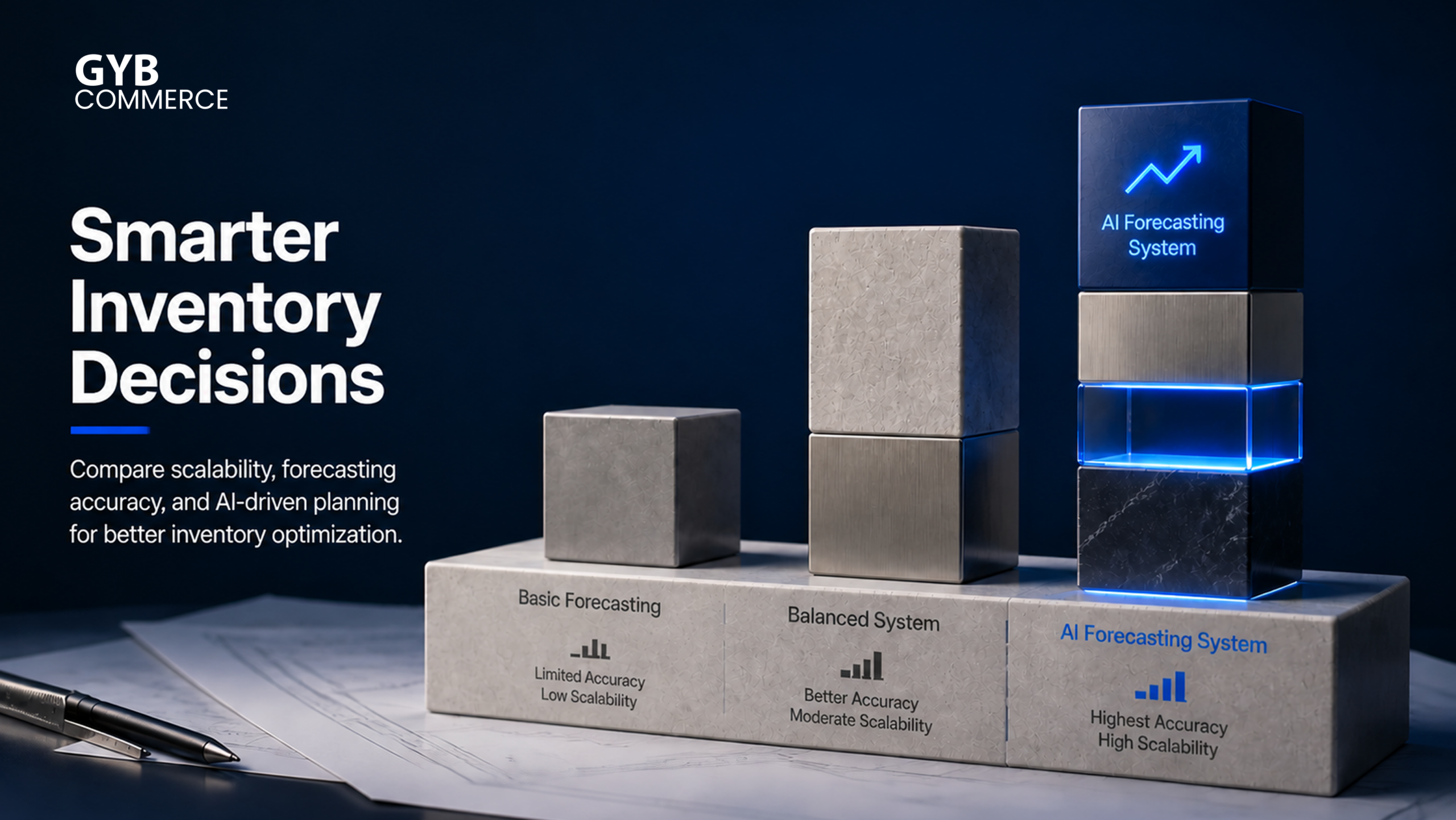
Not all forecasting systems offer the same capabilities. Some provide basic functionality, while others support advanced analytics and automation. Understanding key features helps businesses evaluate which system aligns with their needs.
Demand Forecasting Capabilities
A strong forecasting system should analyze multiple data sources to predict demand accurately. This includes historical sales, seasonal trends, and external factors. Advanced systems use predictive models to improve accuracy over time.
According to , effective systems can distinguish between seasonal and consistent demand patterns and adjust inventory accordingly. This ensures that businesses are prepared for both peaks and slow periods.
Automated Replenishment and Order Planning
Automation is essential for maintaining efficient inventory operations. Forecasting systems should trigger replenishment based on calculated stock levels. This reduces manual intervention and ensures timely restocking.
Automated planning also minimizes errors and improves consistency in inventory decisions. It allows businesses to respond quickly to demand changes.
Real-Time Inventory Tracking and Visibility
Real-time visibility is critical for accurate forecasting. Systems that provide up-to-date inventory data allow businesses to monitor stock levels continuously. This improves responsiveness and decision-making.
With real-time tracking, businesses can identify potential issues early and take corrective action. This reduces the risk of stockouts and operational disruptions.
Reporting and Analytics for Decision Making
Forecasting systems should include reporting and analytics tools that provide actionable insights. These tools help businesses analyze demand trends, inventory performance, and supply chain efficiency.
Detailed reporting supports better decision-making and continuous improvement. It also helps identify patterns that can be used to refine forecasting models.
Integration with ERP and Supply Chain Systems
Integration is a key requirement for modern forecasting systems. The system should connect with ERP platforms, inventory management tools, and supply chain systems. This ensures that data flows seamlessly across operations.
Integrated systems reduce manual data entry and improve consistency. They also provide a single source of truth for inventory and forecasting data.
Role of AI in Modern Inventory Forecasting Systems
AI has significantly improved how forecasting systems operate. Traditional methods rely on static models and limited data. In contrast, AI enables systems to analyze large datasets and adapt to changing conditions.
This shift allows businesses to move from reactive planning to proactive decision-making. AI-driven systems continuously refine forecasts based on new data.
How AI Improves Forecast Accuracy
AI models analyze both historical and real-time data to identify patterns in demand. These models can detect trends that are difficult to identify manually. As a result, forecasting becomes more precise and reliable.
AI also accounts for multiple variables simultaneously. This improves the accuracy of predictions and reduces uncertainty in inventory planning.
Continuous Learning and Real-Time Adaptation
One of the key advantages of AI is its ability to learn continuously. As new data becomes available, the system updates its models and improves performance. This allows forecasts to remain relevant even as conditions change.
Real-time adaptation ensures that inventory decisions are based on the most current information. This improves responsiveness and reduces risks.
Moving Beyond Static Forecasting Models
Traditional forecasting models often rely on fixed assumptions. These models struggle to handle dynamic environments. AI removes this limitation by using adaptive algorithms that adjust to new patterns.
This makes forecasting systems more flexible and scalable. Businesses can handle complex inventory scenarios with greater accuracy.
Common Challenges When Choosing Inventory Forecasting Software
Selecting the right forecasting system is not always straightforward. Many businesses choose tools based on features alone without considering long-term scalability. This often leads to systems that work initially but fail as operations grow.
One major challenge is the abundance of generic software solutions. While these tools offer basic functionality, they often lack the flexibility required for complex inventory environments. As a result, businesses struggle to adapt their systems to changing needs.
Over-Reliance on Generic Software Tools
Off-the-shelf forecasting tools are designed to serve a wide range of use cases. However, this generalization limits their effectiveness in specific business scenarios. They may not fully align with unique demand patterns or operational workflows.
Over time, this mismatch leads to inaccurate forecasts and inefficient inventory planning. Businesses may find themselves working around system limitations instead of improving their processes.
Poor Data Integration and Limited Visibility
Another common issue is poor integration with existing systems. Forecasting tools must connect with ERP, inventory management, and supply chain platforms. Without proper integration, data becomes fragmented and unreliable.
Limited visibility makes it difficult to track inventory in real time. This reduces forecasting accuracy and delays decision-making.
Inflexibility in Scaling Operations
As businesses grow, their inventory requirements become more complex. Many systems are not designed to handle increasing data volumes or expanding product catalogs. This creates bottlenecks in forecasting and planning.
A system that cannot scale effectively will eventually limit business growth. Therefore, scalability is a critical factor when selecting a forecasting solution.
How to Evaluate the Right Inventory Forecasting System for Your Business
Choosing the right system requires a structured evaluation approach. Instead of focusing only on features, businesses should assess how well the system fits their operational needs.
A well-chosen system aligns with both current requirements and future growth plans. It should support efficient decision-making while remaining flexible enough to adapt.
Aligning System Capabilities with Business Needs
The first step is to understand your specific inventory challenges. Different businesses require different forecasting capabilities depending on their industry and scale.
For example, a retail business may prioritize demand variability, while a manufacturing company may focus on production planning. The system should address these specific requirements.
Assessing Data Readiness and Infrastructure
Data plays a central role in forecasting accuracy. Before selecting a system, businesses must evaluate their data quality and availability. Incomplete or inconsistent data can limit the effectiveness of any forecasting solution.
It is also important to ensure that the existing infrastructure can support system integration. This includes compatibility with current platforms and data sources.
Considering Scalability and Customization
A forecasting system should be able to grow with the business. This includes handling increased data volumes, additional products, and expanded operations.
Customization is equally important. Businesses often have unique workflows that require tailored solutions. Systems that allow customization provide greater flexibility and long-term value.
Why Custom AI Forecasting Systems Are Gaining Advantage
As businesses face more complex inventory challenges, custom AI solutions are becoming more relevant. Unlike generic tools, these systems are designed to match specific business requirements.
Custom AI forecasting systems provide greater control, accuracy, and scalability. They allow businesses to build solutions that align with their operations rather than adapting to predefined software limitations.
Limitations of Off-the-Shelf Forecasting Tools
Standard forecasting tools often rely on fixed models and limited configurations. While they may work for basic scenarios, they struggle with complex demand patterns and large datasets.
These tools also limit the ability to customize forecasting logic. This reduces their effectiveness in dynamic environments.
Benefits of Tailored AI Forecasting Solutions
Custom AI systems offer several advantages over generic tools:
- Higher forecasting accuracy through tailored models
- Better integration with existing systems and workflows
- Improved scalability for growing operations
- Greater flexibility in handling complex inventory scenarios
These benefits make custom solutions a preferred choice for businesses seeking long-term efficiency.
How GYB Commerce Builds Scalable Forecasting Systems
GYB Commerce focuses on building AI-driven forecasting systems that align with real business needs. Instead of offering generic tools, the approach centers on creating tailored solutions that integrate seamlessly with existing operations.
These systems are designed to handle complex inventory environments while maintaining accuracy and scalability. By leveraging advanced analytics and real-time data processing, businesses can achieve more reliable forecasting and improved inventory control.
Explore AI inventory forecasting solutions to see how scalable systems work in practice
When Businesses Should Upgrade Their Forecasting Systems
Many businesses continue using outdated forecasting methods until inefficiencies become too significant to ignore. Recognizing the right time to upgrade is essential for maintaining operational efficiency.
Several indicators suggest that current systems are no longer effective. Addressing these issues early can prevent larger operational challenges.
Signs of Forecasting Errors and Stock Imbalance
Inaccurate forecasts cause imbalances. Read how AI helps companies avoid stockouts and overstocking to fix these specific issues.
Improving forecasting systems helps reduce these imbalances and improve overall inventory performance.
Growth in Product Complexity and Demand Variability
As businesses expand, managing inventory becomes more complex. Increased product variety and changing demand patterns require more advanced forecasting capabilities.
Systems that cannot handle this complexity will limit operational efficiency.
Need for Real-Time and Predictive Decision Making
Modern supply chains require real-time insights and predictive capabilities. Businesses need systems that can respond quickly to changes and support proactive decision-making.
Upgrading to advanced forecasting systems enables better responsiveness and improved planning.
Request Free AI Inventory Forecasting Consultation
Frequently Asked Questions
How to select the best inventory forecasting system for a business?
Selecting the best inventory forecasting system involves evaluating features, scalability, and data integration capabilities. Businesses should focus on how well the system aligns with their operational needs and growth plans.
What features should an inventory forecasting system include?
A good system should include demand forecasting, real-time tracking, automated replenishment, analytics, and integration capabilities. These features ensure accurate and efficient inventory management.
How does AI improve inventory forecasting systems?
AI improves forecasting by analyzing large datasets and identifying patterns. It continuously updates predictions based on new data, leading to more accurate and reliable forecasts.
Why do businesses struggle with forecasting accuracy?
Businesses often struggle due to poor data quality, limited system capabilities, and reliance on static models. These factors reduce the effectiveness of forecasting systems.
Are custom forecasting systems better than standard software?
Custom systems offer greater flexibility and accuracy because they are tailored to specific business needs. They also provide better scalability compared to generic software tools.
When should a company upgrade its forecasting system?
Companies should upgrade when they experience frequent stock imbalances, growing complexity, or lack of real-time insights. These signs indicate that current systems are no longer sufficient.
How does GYB Commerce help with inventory forecasting?
GYB Commerce provides tailored AI forecasting systems designed to improve accuracy and scalability. These solutions integrate with existing operations and support data-driven decision-making.
Final Takeaways
Selecting the right inventory forecasting system is essential for maintaining accuracy, efficiency, and scalability. Businesses must look beyond basic features and evaluate how well a system supports their specific needs. A well-chosen solution improves forecasting accuracy, reduces inventory costs, and enhances overall performance.
At the same time, relying on generic tools can limit growth and flexibility. As inventory operations become more complex, businesses require systems that can adapt and scale. Custom AI forecasting solutions provide a practical path toward achieving these goals.
By choosing the right system, businesses can move toward more data-driven inventory management and build a stronger, more resilient supply chain.