
You open Netflix and instantly see shows that match your taste. You browse Amazon and find products that feel surprisingly relevant. These suggestions are not random. They are the result of structured systems working behind the scenes.
However, most users only see the output, not the process. The real question is, how do recommendation engines actually decide what to show you? Understanding this reveals how modern digital platforms guide user behavior.
At a fundamental level, recommendation engines transform raw data into personalized suggestions. They analyze interactions, identify patterns, and filter massive choices into a small, relevant set.
Table of Contents
How Recommendation Engines Work at a High Level
From Data to Personalized Suggestions
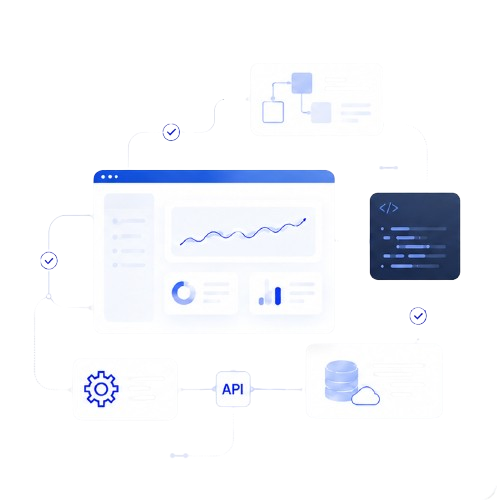
A recommendation engine follows a structured pipeline. It starts with collecting data, then processes it, learns patterns, and finally delivers personalized recommendations. Each step builds on the previous one.
At first, the system gathers user behavior data such as clicks, searches, and purchases. Then, it analyzes this data using machine learning models to understand preferences. Finally, it filters and ranks items to generate relevant suggestions. This pipeline defines what a recommendation engine is at its core.
In simple terms, the system answers one key question. What is the user most likely to engage with next?
Why This Process Feels Instant
Although the system involves multiple steps, the output feels immediate. This is because recommendation engines are designed to operate at scale and speed.
Some parts of the system work in advance, such as model training and data preparation. Other parts happen in real time, especially when generating final recommendations for a user.
For example, platforms like YouTube must process millions of users simultaneously. Therefore, they split the workload into stages to ensure fast response times without sacrificing accuracy.
As a result, users experience smooth and responsive recommendations, even though the system behind them is highly complex.
Step 1: Data Collection and User Signals
Implicit and Explicit Data
Every recommendation engine starts with data collection. Without data, the system cannot learn or make predictions. Therefore, capturing user signals is the first and most important step.
There are two main types of data. Implicit data comes from user actions, while explicit data comes from user input. Both provide valuable insights into user preferences.
Implicit data includes everyday interactions that users perform naturally. Explicit data reflects what users intentionally share about their preferences.
Some common data signals include:
- clicks, search queries, and browsing behavior
- watch time, purchase history, and session activity
- ratings, reviews, and likes or dislikes
These signals help the system understand what users are interested in, even when they do not explicitly say it.
User-Item Interactions
Once data is collected, it is organized as interactions between users and items. These interactions form the foundation of recommendation systems.
For example, when a user watches a video or buys a product, it creates a connection between that user and the item. Over time, these interactions build a pattern of preferences.
The system then compares these patterns across users. If multiple users behave similarly, the system can predict what they might like next.
In other words, recommendation engines learn from behavior, not assumptions. The more interactions they process, the better they become at predicting relevance.
Step 2: Data Storage and Processing
Where Data Is Stored
Once data is collected, it needs to be stored in systems that can handle large volumes efficiently. As user interactions grow, the amount of data increases rapidly.
Most recommendation systems rely on structured storage systems. These may include data warehouses for structured data, data lakes for unstructured data, or hybrid lakehouse systems.
Modern platforms also use fast databases such as NoSQL systems to retrieve data quickly. This is important because recommendations often need to be generated in real time.
Preparing Data for Analysis
Raw data cannot be used directly. It must be cleaned, structured, and organized before analysis. This step ensures that the system works with reliable and consistent information.
For example, duplicate records are removed, missing values are handled, and data is formatted correctly. Then, the system prepares features that can be used by machine learning models.
As a result, the data becomes usable for identifying patterns and generating insights. Without proper preparation, even large datasets can lead to poor recommendations.
Step 3: Learning Patterns With Machine Learning
Identifying Similarity Between Users and Items
After data preparation, the system begins learning patterns. This is where machine learning plays a central role. It helps identify relationships between users and items.
The system calculates similarity scores to understand which users behave similarly and which items are related. These similarities can be based on shared interactions or item characteristics.
For example, if two users interact with similar products, the system groups them together. This allows it to recommend items liked by one user to another.
Models Used in Recommendation Systems
Different models are used depending on the complexity of the system. Some systems use simple statistical techniques, while others rely on advanced machine learning models.
One common method is matrix factorization. It breaks down large user-item interaction data into smaller patterns called latent factors. These factors represent hidden preferences.
More advanced systems may use deep learning models to capture complex relationships. However, the goal remains the same, to predict what a user is likely to engage with next.
Step 4: Candidate Selection (Narrowing Down Options)
From Millions to Hundreds
In large platforms, the number of available items can be massive. It is not practical to evaluate every item for every user in real time. Therefore, systems use a candidate selection step.
This step reduces the number of possible items from millions to a manageable set. It identifies items that are most likely relevant based on initial filtering.
This process is often called candidate generation. It ensures that only promising options move to the next stage.
Why This Step Is Necessary
Without this step, the system would become too slow. Evaluating every item would require too much computation and time.
By narrowing down the options early, the system improves efficiency while maintaining relevance. This is essential for platforms operating at scale.
As a result, users receive recommendations quickly, even when the system handles millions of items.
Step 5: Ranking and Personalization
How Items Are Ranked
After candidate selection, the system ranks the remaining items. This step determines the order in which recommendations are shown to the user. The core AI recommendation algorithm makes these final ranking decisions.
Each item is assigned a relevance score based on predicted user interest. The system uses multiple signals to calculate this score.
Some common ranking signals include:
- past user behavior and interaction history
- similarity between users and items
- contextual factors such as time and session
These signals help the system decide which items should appear at the top.
Final Output to the User
Once ranking is complete, the system selects the top items and presents them to the user. These are the recommendations you see on platforms.
The output is not static. It changes based on user behavior and context. This makes the experience dynamic and personalized.
As a result, users see content that aligns closely with their current interests and needs.
Step 6: Continuous Learning and Feedback Loop
How Systems Improve Over Time
A recommendation engine does not stop learning after delivering results. It continuously updates itself based on user interactions.
When users click, ignore, or engage with recommendations, the system collects new data. This feedback helps refine future predictions.
Over time, the system becomes more accurate as it processes more interactions.
A/B Testing and Optimization
To improve performance, platforms test different recommendation strategies. This is often done through A/B testing.
Different versions of the recommendation system are shown to different user groups. Their behavior is then analyzed to determine which version performs better.
This process allows continuous optimization. It ensures that the system evolves as user preferences and behaviors change.
Types of Recommendation Engines (Where They Fit)
Collaborative Filtering in Practice
Collaborative filtering uses patterns from multiple users. It identifies users with similar behavior and recommends items based on shared preferences.
This approach works well when there is a large amount of interaction data available.
Content-Based Systems in Action
Content-based systems focus on item characteristics. They recommend items similar to what a user has interacted with before.
This method is useful when user data is limited but item data is available.
Hybrid Systems in Real Platforms
Hybrid systems combine both approaches. They use user behavior and item features together to improve accuracy.
Most modern platforms, including Netflix, rely on hybrid models for better performance.
Real-World Example of Recommendation Flow
YouTube
When you open YouTube, the system first selects a pool of relevant videos. Then, it ranks them based on your past behavior and engagement patterns.
Finally, it presents a personalized feed that updates as you interact with the platform.
Amazon
Amazon follows a similar process. It analyzes browsing history, purchase behavior, and product relationships.
Then, it generates product recommendations that are likely to match user preferences and buying intent.
Why Recommendation Systems Feel So Accurate
Data Volume Advantage
Large platforms process massive amounts of data. This allows them to identify patterns with greater accuracy.
The more data available, the better the system can predict user preferences.
Continuous Learning
Recommendation systems continuously update their models. They adapt to changes in user behavior over time.
This ensures that recommendations remain relevant and aligned with user interests. Implementing advanced AI recommendation engine solutions gives businesses this exact advantage.
Frequently Asked Questions
How do recommendation engines work step by step?
Recommendation engines follow a structured process that includes data collection, storage, analysis, filtering, and ranking. Each step builds on the previous one.
This pipeline transforms raw data into personalized suggestions. The system continuously improves as it processes more user interactions.
What data do recommendation engines use?
Recommendation engines use both implicit and explicit data. Implicit data includes clicks, browsing behavior, and purchases, while explicit data includes ratings and reviews.
They also use contextual and item data to improve accuracy and relevance.
How do recommendation systems rank items?
Recommendation systems assign scores to items based on predicted user interest. These scores are calculated using behavior, similarity, and contextual signals.
The system then ranks items and displays the most relevant ones at the top.
Are recommendation engines real-time?
Many recommendation systems operate using a combination of real-time and batch processing. Some parts are precomputed, while others are generated instantly.
This hybrid approach ensures both speed and accuracy.
What makes recommendation engines accurate?
Accuracy depends on data quality, model design, and continuous learning. Systems improve as they process more interactions and refine their predictions.
Well-structured data and effective algorithms lead to better recommendations. You can see these principles in action by exploring real-world recommendation engine examples that you use every day.
Final Takeaways
Recommendation engines work through a structured pipeline that transforms user data into personalized suggestions. Each stage, from data collection to ranking, plays a critical role.
These systems rely on machine learning, similarity analysis, and continuous feedback to improve over time. As a result, they become more accurate with increased data and interaction.
Understanding how recommendation engines work helps you see beyond the surface. It reveals the complexity behind seemingly simple suggestions and prepares you for deeper system-level insights.