Every business processes documents. Invoices, receipts, contracts, customer forms, internal records. On the surface, this looks like routine work. In reality, it defines how fast your operations move and how much profit you retain.
For years, businesses relied on Optical Character Recognition to digitize documents. It reduced manual typing but did not eliminate inefficiencies. Today, AI-powered document processing is changing that equation. It does not just extract text. It understands, organizes, and moves data across systems automatically. This shift is not about technology adoption. It is about operational control, cost reduction, and scalability in modern business environments.
Table of Contents
What Is Traditional OCR And Where Does It Still Work?
Optical Character Recognition, commonly known as OCR, converts printed or scanned text into machine-readable data. It works by analyzing patterns in characters and matching them to predefined templates.
Traditional OCR performs well in controlled environments. If your documents are clean, structured, and consistent, it delivers acceptable results. This is why it has been widely used for processing invoices, receipts, and standardized forms.
However, its effectiveness depends heavily on document quality. Any deviation from expected formats reduces accuracy. This creates a dependency on clean inputs and manual verification.
How Does Traditional OCR Actually Process Documents?
Traditional OCR follows a fixed pipeline. Each step is designed to convert visual data into text, but none of them truly understand the content.
- Image capture converts physical documents into digital format
- Preprocessing enhances clarity by adjusting brightness and removing noise
- Text detection identifies areas containing text
- Character segmentation splits text into lines, words, and characters
- Character recognition matches each symbol with stored patterns
- Output converts recognized characters into editable text
This process works efficiently when documents follow predictable structures. The system performs pattern matching, not interpretation. Understanding what document capture is helps clarify how AI changes this rigid pipeline.
Where Does Traditional OCR Break Down In Real Business Environments?
Real business data is rarely clean or predictable. This is where traditional OCR starts to fail.
Poor scan quality is a common issue. Blurry images, shadows, or skewed documents reduce recognition accuracy. Even small distortions can lead to incorrect outputs.
Handwritten text introduces another layer of complexity. Traditional OCR struggles with variability in handwriting styles. It cannot adapt beyond its predefined patterns.
Multi-format documents create additional challenges. Businesses often deal with PDFs, images, emails, and mixed layouts. OCR systems require consistent formatting, which rarely exists in real workflows.
Language variability also impacts performance. Different fonts, symbols, and multilingual content reduce accuracy further. This leads to manual corrections, which defeat the purpose of automation.
The result is a system that appears automated but still depends on human intervention. This creates hidden inefficiencies that compound over time.
What Is AI-Powered Document Capture And Why Is It Replacing OCR?
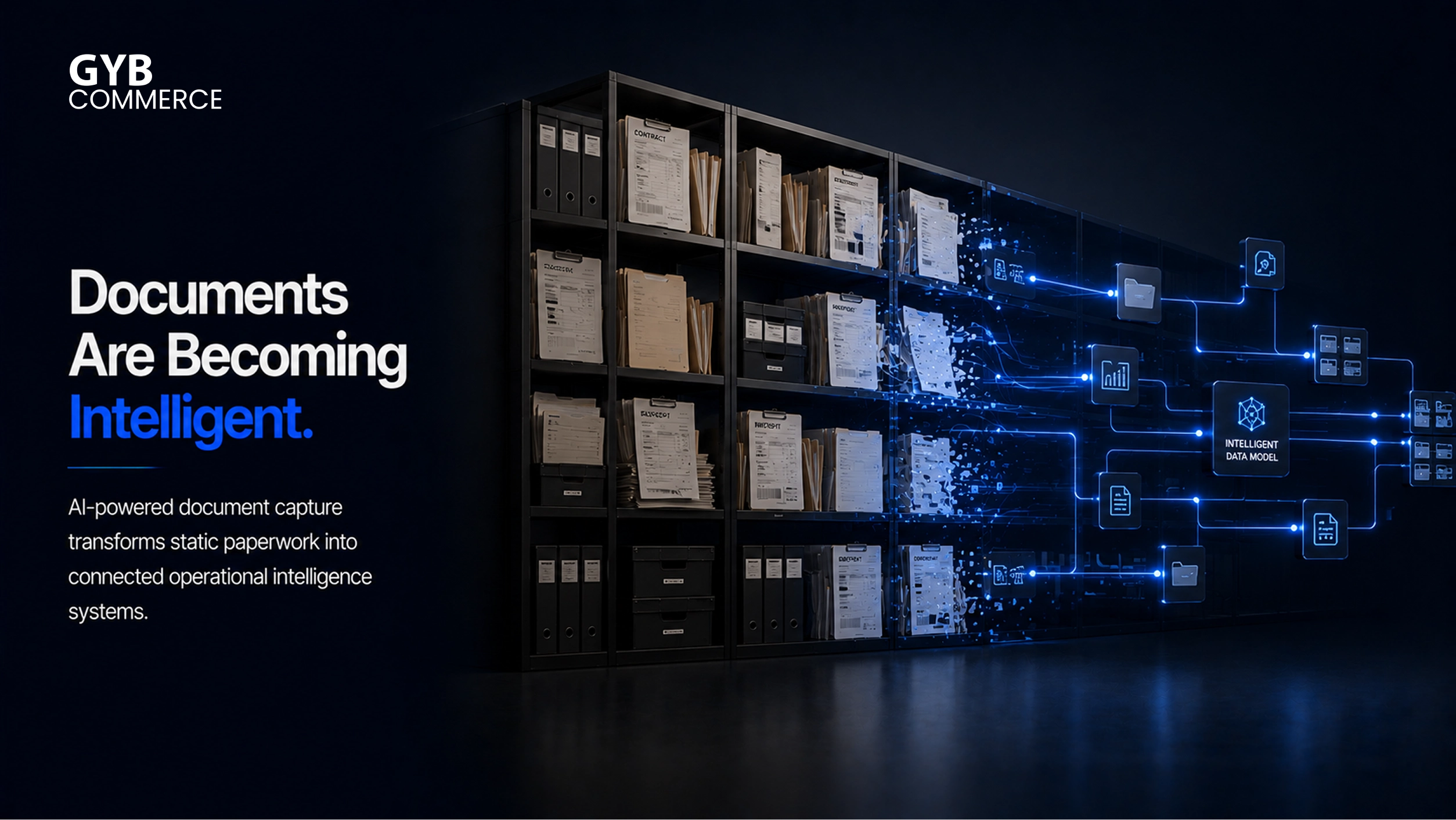
AI-powered document capture goes beyond text extraction. It combines machine learning, deep learning, and Natural Language Processing to interpret documents the way humans do.
Instead of matching characters to templates, AI models analyze patterns, context, and relationships between data points. This allows the system to extract structured information, not just raw text.
For businesses, this changes how documents flow through operations. Data moves directly into systems like CRM, ERP, or accounting platforms without manual input. This reduces delays and eliminates repetitive tasks.
How AI Understands Documents Instead Of Just Reading Them
Traditional OCR reads characters. AI understands meaning.
AI systems identify key fields such as names, dates, invoice numbers, and totals. They recognize relationships between these elements and map them into structured formats.
This context awareness enables accurate data extraction even when documents vary in layout. A receipt from one vendor may look completely different from another, yet AI can still extract the required information.
Pattern recognition allows continuous improvement. The system learns from new data and refines its accuracy over time. This makes it adaptable to real business environments.
How Generative AI Is Changing Document Processing Completely
Generative AI introduces a new layer of intelligence. It does not just extract or classify data. It can reconstruct and interpret incomplete or unclear information.
Using transformer-based models and deep neural networks, generative systems can process low-quality scans, handwritten text, and complex layouts with higher accuracy. They predict missing elements based on context and historical patterns.
This capability transforms document processing from a rigid system into an adaptive one. Businesses no longer need perfectly formatted inputs. The system adjusts to the data instead.
As a result, AI-powered document processing reduces manual effort, improves accuracy, and accelerates workflows. It shifts document handling from a support function to a strategic advantage.
Traditional OCR vs AI-Powered OCR: What Are The Real Differences That Impact ROI?
The difference between traditional OCR and AI-powered document processing is not technical. It is financial. It directly affects cost, speed, and how efficiently your business scales.
Most businesses evaluate tools based on upfront cost. The real impact shows up later in error rates, manual effort, and operational delays. This is where the gap becomes clear.
Accuracy And Error Cost
Traditional OCR operates on pattern matching. It works well only when inputs are perfect. In real environments, even small inconsistencies create errors that require manual correction.
This is where the 1-10-100 rule becomes relevant. A small error at the data entry stage costs little to fix. Once it moves through systems, the cost multiplies. If left unresolved, it can impact billing, reporting, and customer experience. This compounded cost explains why manual data entry is still costing your business more than you think in 2026.
AI-powered systems reduce this risk significantly. They validate data using context, not just character matching. This leads to higher accuracy across varied document types.
Instead of fixing errors after they occur, AI minimizes them at the source. That shift alone changes the cost structure of operations.
Speed And Automation
Traditional OCR is fast at extracting text, but it stops there. The data still needs to be reviewed, validated, and manually transferred into other systems.
This creates delays between extraction and action. In high-volume environments, these delays compound quickly.
AI-powered document processing removes these gaps. Data flows directly into connected systems such as CRM or accounting platforms. Workflows trigger automatically without human involvement.
This enables real-time processing. A document enters the system and completes its journey without waiting for manual steps.
Scalability And Business Growth
Traditional OCR scales linearly. More documents require more people to manage validation and corrections. This increases operational cost alongside growth.
This is the scalability trap. As your business grows, your overhead grows at the same pace.
AI-powered systems scale differently. Once deployed, they handle increased volume without proportional increases in cost. Whether processing 100 documents or 10,000, the system performs consistently.
This creates a separation between growth and operational expense. It allows businesses to scale without building larger teams for repetitive work.
Cost Structure And Long-Term ROI
Traditional OCR appears cost-effective initially. The software is cheaper, and setup is simple. However, hidden costs accumulate over time.
Manual validation, error correction, and process delays increase operational expenses. These costs are not always visible, but they impact margins directly.
AI-powered document processing requires a higher initial investment. However, it reduces long-term costs by eliminating repetitive work and improving accuracy.
The return on investment comes from efficiency. Fewer errors, faster processing, and reduced dependency on manual tasks lead to measurable savings.
Which Solution Should You Choose Based On Your Business Model?
The decision between traditional OCR and AI-powered solutions depends on how your business operates.
When Traditional OCR Is Still Enough
Traditional OCR remains useful in specific scenarios. If your operations are simple and predictable, it can still deliver value.
- You process structured documents with consistent formats
- Your document volume is low
- Accuracy requirements are not critical
- Manual verification is manageable
In these cases, OCR can support basic digitization without major investment.
When AI-Powered OCR Becomes A Necessity
AI becomes essential when complexity increases. As soon as variability, volume, or speed becomes a factor, traditional OCR starts creating bottlenecks.
- You handle large volumes of documents daily
- Your data comes from multiple formats and sources
- Accuracy directly impacts revenue or compliance
- You require real-time processing
- Your teams spend time on repetitive data entry tasks
At this stage, AI is no longer an upgrade. It becomes a requirement for maintaining operational efficiency.
5 Questions To Decide Between OCR And AI Document Processing
Choosing the right solution becomes easier when you evaluate your workflow directly.
- What types of documents do you process daily
- How important is accuracy in your operations
- How quickly do you need data to move through your systems
- Do your current tools integrate or operate in isolation
- Are you planning to scale your operations in the next 12 to 24 months
The answers to these questions reveal whether your current system can support future growth.
How AI-Powered Document Processing Fits Into Modern Business Systems
Modern businesses do not operate on a single tool. They rely on multiple systems working together.
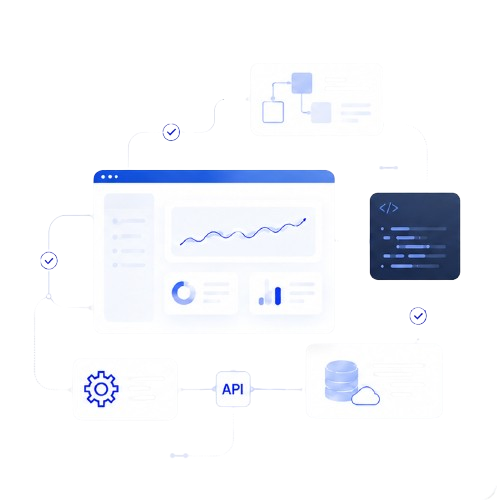
AI-powered document processing integrates directly with platforms such as CRM, ERP, and accounting software. Using APIs and automation tools like n8n, data flows seamlessly between systems.
This creates an automated pipeline. A document enters once and moves across the entire workflow without manual intervention.
The result is faster decision-making. Teams no longer wait for data. It is available instantly, structured, and ready for use.
What Happens If You Keep Using Traditional OCR In 2026?
Sticking with traditional OCR creates long-term limitations. These are not always visible at the start, but they grow over time.
Manual validation becomes a permanent requirement. Errors continue to pass through systems. Teams spend time fixing issues instead of focusing on growth.
This leads to operational bottlenecks. As volume increases, processes slow down instead of improving.
Over time, this creates what can be called an invisible tax. It is not a direct expense, but it reduces efficiency, increases cost, and limits scalability.
Businesses that delay this transition often find themselves reacting to problems instead of preventing them.
Discover Intelligent OCR Solutions
Frequently Asked Questions
What Is The Difference Between Traditional OCR And AI Powered OCR?
Traditional OCR extracts text based on predefined patterns. AI-powered OCR understands context and extracts structured data. This makes AI more accurate and adaptable.
Is AI OCR More Accurate Than Traditional OCR For Business Documents?
Yes. AI systems use context, pattern recognition, and learning models to improve accuracy. They handle variations in format, language, and quality more effectively.
Can AI Document Processing Replace Manual Data Entry Completely?
In most workflows, yes. AI can automate data extraction, validation, and transfer. However, some edge cases may still require minimal human review.
?What Types Of Businesses Benefit Most From AI OCR Solutions?
Businesses handling large volumes of documents benefit the most. This includes finance, healthcare, logistics, retail, and customer support operations.
Is AI Powered OCR Expensive To Implement For Small Businesses?
The upfront cost can be higher than traditional OCR. However, the long-term savings from reduced manual work and improved efficiency often justify the investment.
How Does AI Handle Handwritten Or Low Quality Documents?
AI uses deep learning and pattern recognition to interpret unclear text. It can process handwritten and low-quality inputs with higher accuracy than traditional OCR.
How Long Does It Take To Implement AI Document Processing Systems?
Implementation timelines vary based on complexity. Basic systems can be deployed within weeks, while advanced integrations may take longer.
The Real Question Is Not OCR vs AI It Is How Fast You Want To Scale
The choice is not about technology preference. It is about how your business handles growth.
Traditional OCR solves a small part of the problem. It converts text but leaves the rest of the workflow unchanged. AI-powered systems redesign the entire process.
As businesses move faster and data volumes increase, manual dependencies become limitations. The longer they remain, the more they impact performance.
The real question is simple. Do you want to manage data, or do you want your systems to run it for you?