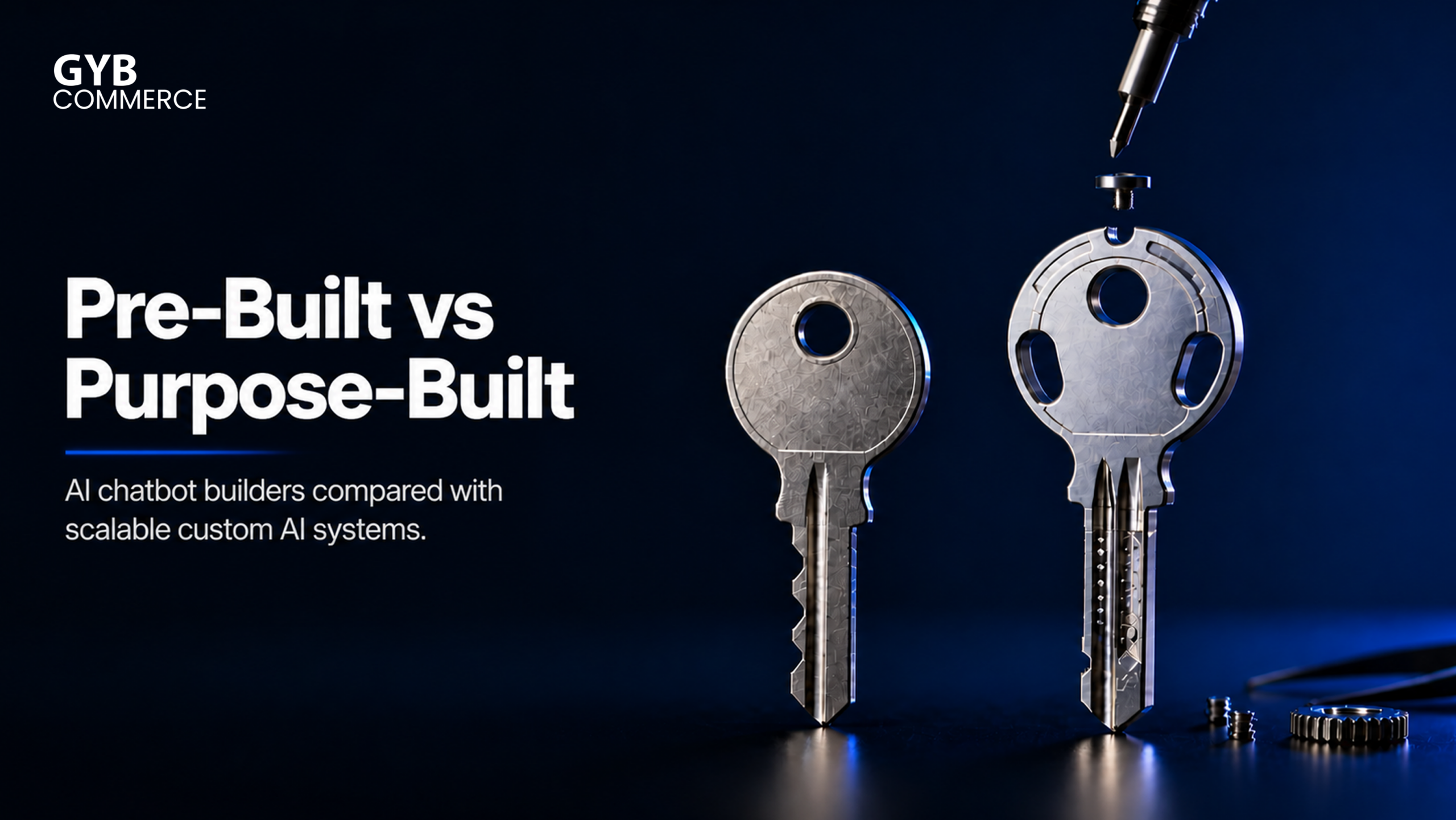
Choosing between an AI chatbot builder and custom development can shape how your chatbot performs over time. Many businesses start with simple tools because they are easy to set up. However, as requirements grow, these tools often become restrictive.
This comparison breaks down both approaches in a practical way. It focuses on how they differ in flexibility, cost, scalability, and long-term value. By the end, you will have a clear idea of which option fits your business.
Table of Contents
What Is an AI Chatbot Builder and Custom Development?
What Is an AI Chatbot Builder?
An AI chatbot builder is a no-code or low-code platform that allows users to create chatbots without programming. These tools are designed for speed and simplicity. They usually come with pre-built templates and visual editors.
Platforms like Landbot and ManyChat are commonly used for this purpose. They allow businesses to launch chatbots quickly with minimal effort. This makes them suitable for basic use cases.
However, these builders operate within predefined limits. Customization options depend on what the platform allows. As a result, flexibility can become a challenge over time.
What Is Custom AI Chatbot Development?
Custom AI chatbot development involves building a chatbot from scratch using programming languages and frameworks. This approach provides full control over how the chatbot behaves. It allows businesses to design workflows based on their exact needs.
Custom development also supports deeper integration with systems like CRM and databases. This makes it suitable for businesses that require advanced functionality. Unlike builders, it is not limited by platform constraints.
Although it requires more effort initially, it offers long-term flexibility. Businesses can scale and adapt the chatbot as requirements evolve.
How AI Chatbot Builder vs Custom Development Works
How AI Chatbot Builders Work
AI chatbot builders rely on predefined workflows and templates. Users create conversation flows using drag-and-drop interfaces. This simplifies the development process significantly.
Most builders include basic Natural Language Processing capabilities. However, these features are often limited to simple intent recognition. Complex scenarios can be difficult to handle.
Builders are ideal for quick deployment. They allow businesses to test ideas without investing heavily in development.
How Custom AI Chatbot Development Works
Custom chatbot development follows a structured process. It starts with defining goals and designing conversation flows. Then, developers build and train the chatbot using real data.
This approach uses technologies like Natural Language Processing and Machine Learning. It also involves API integration for real-time functionality. These elements allow the chatbot to handle complex interactions.
Unlike builders, custom chatbots are designed for performance and scalability. They can adapt to changing business needs over time.
Key Differences Between AI Chatbot Builder vs Custom Development
Development Speed and Ease of Use
AI chatbot builders are designed for speed. A basic chatbot can be created within hours or days. This makes them attractive for businesses that need quick solutions.
Custom development takes more time. It involves planning, development, and testing. However, this process ensures better long-term performance.
Cost Structure and Investment
AI chatbot builders usually follow a subscription model. The initial cost is low, which makes them accessible. However, costs increase as usage grows.
Custom development requires higher upfront investment. It includes development and setup costs. Over time, this approach can provide better value.
The cost difference between these two approaches is significant. Our AI chatbot development cost guide breaks down real pricing ranges for both paths so you can compare them accurately.
Customization and Flexibility
Builders offer limited customization. Users can only work within platform features. This restricts how the chatbot can evolve.
Custom chatbots provide full flexibility. Businesses can design workflows, integrations, and features without restrictions. This is important for complex use cases.
Scalability and Long-Term Growth
AI chatbot builders are suitable for small-scale use. As complexity increases, they may struggle to keep up. This can lead to performance issues.
Custom chatbots are built for scalability. They can handle increased traffic and complex workflows. This makes them suitable for growing businesses.
Integration with Business Systems
Integration is often limited in chatbot builders. They support only predefined connections. This can restrict functionality.
Custom chatbots support deep integration. They can connect with CRM, ERP, and other systems. This improves automation and efficiency.
AI Capabilities and Performance
Builders rely on basic AI features. They are suitable for simple interactions. However, they may not handle complex queries effectively.
Custom chatbots use advanced AI models. They support contextual understanding and dynamic responses. This leads to better performance and accuracy.
Cost Comparison: AI Chatbot Builder vs Custom Development
Understanding cost is important before choosing between an AI chatbot builder and custom development. While one may seem cheaper at first, the long-term impact can be very different.
Initial Cost Differences
AI chatbot builders usually have a low entry cost. Many platforms offer free plans or affordable subscriptions. This makes them attractive for startups and small businesses.
Custom chatbot development requires a higher upfront investment. It includes design, development, and integration. However, this investment is focused on building a tailored solution.
Long-Term Cost and ROI
Subscription costs in chatbot builders increase over time. As usage grows, businesses often need to upgrade plans. This leads to higher recurring expenses.
Custom chatbots do not rely on monthly subscriptions in the same way. Once developed, the main costs are maintenance and updates. Over time, this can result in better return on investment.
If long-term scalability is a priority, custom development becomes more cost-efficient.
Hidden Costs to Consider
AI chatbot builders often come with hidden limitations. Features may be locked behind higher-tier plans. Usage limits can also increase costs unexpectedly.
Custom development also has ongoing costs. These include maintenance, hosting, and updates. However, these costs are more predictable and controllable.
When Should You Choose an AI Chatbot Builder?
Not every business needs a custom chatbot from the start. In many cases, a chatbot builder is enough.
Best Use Cases for AI Chatbot Builders
AI chatbot builders work well for simple and focused use cases. They are useful when speed and ease of setup matter more than flexibility.
- Small businesses with limited technical resources
- Simple FAQs and customer support queries
- Lead generation and basic automation
These use cases do not require complex logic or deep integrations. Builders provide a quick way to get started.
Limitations of AI Chatbot Builders
Despite their advantages, builders come with clear limitations. These limitations become more visible as the business grows.
Customization is restricted by platform features. Integration options are limited. Scaling beyond simple workflows can become difficult.
Over time, these constraints can slow down growth. Businesses may need to rebuild their chatbot using a different approach.
When Does Custom AI Chatbot Development Make More Sense?
As business requirements grow, the need for flexibility increases. This is where custom development becomes important. Choosing custom means owning the entire build process. Our guide on how to build an AI chatbot from scratch walks through every technical step involved.
Best Use Cases for Custom Development
Custom AI chatbot development is ideal for businesses with complex requirements. It supports advanced workflows and integrations.
- Enterprise-level automation
- Integration with CRM, ERP, and internal systems
- High-volume customer interactions
These scenarios require more than basic chatbot functionality. Custom development allows full control over performance and scalability.
Why Businesses Outgrow AI Chatbot Builders
Many businesses start with chatbot builders but later face limitations. These tools are not designed for complex or evolving needs.
As workflows become more advanced, builders struggle to keep up. Integration requirements increase. Performance expectations also rise.
See how custom chatbot systems are built for scale!
Hybrid Approach: AI Chatbot Builder to Custom Development
Not every decision has to be immediate. Many businesses follow a hybrid approach.
Using Builders for MVP Development
AI chatbot builders are useful for testing ideas. They allow quick deployment with minimal investment. This helps validate use cases early.
Custom chatbots also give you full control over training, which matters especially for specialized industries. See how we approach industry-specific chatbot training for those scenarios.
Businesses can experiment with conversation flows and user interactions. This reduces initial risk.
Transitioning to Custom Chatbots
Once the chatbot proves its value, transitioning to custom development becomes easier. At this stage, requirements are clearer.
Custom solutions allow scaling, deeper integrations, and improved performance. This ensures long-term growth without limitations.
How to Choose Between AI Chatbot Builder vs Custom Development
Choosing the right approach depends on multiple factors. It is not just about cost or speed.
Key Factors to Evaluate
Business goals play a major role in decision-making. A simple use case may not require custom development. However, complex workflows will.
Budget also affects the choice. Short-term affordability and long-term value should both be considered. Integration requirements are equally important.
Questions to Ask Before Deciding
Before making a decision, it helps to evaluate key questions:
- How complex are the workflows?
- Will integrations be required?
- How quickly will the business scale?
These questions help clarify which approach is more suitable.
Frequently Asked Questions
What is the difference between AI chatbot builder vs custom development?
AI chatbot builders focus on ease of use and quick deployment. They are designed for simple use cases. Custom development offers full control and supports advanced workflows.
Which option is more cost-effective in the long run?
AI chatbot builders are cheaper initially. However, costs increase with usage and feature upgrades. This can make them expensive over time.
Can AI chatbot builders handle complex workflows?
AI chatbot builders are not designed for complex workflows. They work best for simple automation and predefined responses.
For advanced use cases, custom development is more suitable. It allows greater control and flexibility.
Do I need coding skills for custom chatbot development?
Custom chatbot development requires technical expertise. It involves programming, integration, and data handling. Businesses without technical teams usually work with development partners. This ensures proper implementation.
Can I switch from an AI chatbot builder to custom development later?
Yes, many businesses start with chatbot builders and later move to custom solutions. This approach helps validate ideas before investing heavily.
However, migration may require rebuilding the chatbot. Planning early can reduce future effort.
Which option is best for small businesses?
AI chatbot builders are suitable for small businesses with simple needs. They provide quick setup and low initial cost. As the business grows, custom development may become necessary. It supports scalability and advanced functionality.
How do integrations differ between builders and custom chatbots?
AI chatbot builders offer limited integrations. They rely on predefined connections. Custom chatbots support deep integration with internal systems. This improves automation and efficiency.
Final Takeaways
Choosing between an AI chatbot builder and custom development depends on business goals and growth plans. Builders are useful for quick deployment and simple use cases. They help businesses get started without heavy investment.
Custom AI chatbot development provides flexibility, scalability, and long-term value. It supports complex workflows and deeper integrations. For businesses planning to scale, it becomes the more reliable option over time.