AI search is gaining attention across industries. Many businesses feel pressure to adopt it quickly, assuming it will improve results. However, not every system benefits from adding AI.
In reality, search performance depends more on system design than technology choice. For some businesses, traditional search still works well. For others, limitations appear as complexity grows.
Why Not Every Business Needs AI Search
Assumption vs Reality
It is easy to assume that AI search is the next logical step. However, this assumption often ignores actual system needs. In many cases, traditional search delivers consistent and predictable results.
Simple systems with structured data and clear queries do not require advanced models. In fact, adding AI in such cases can introduce unnecessary complexity. This often leads to higher costs without meaningful improvement.
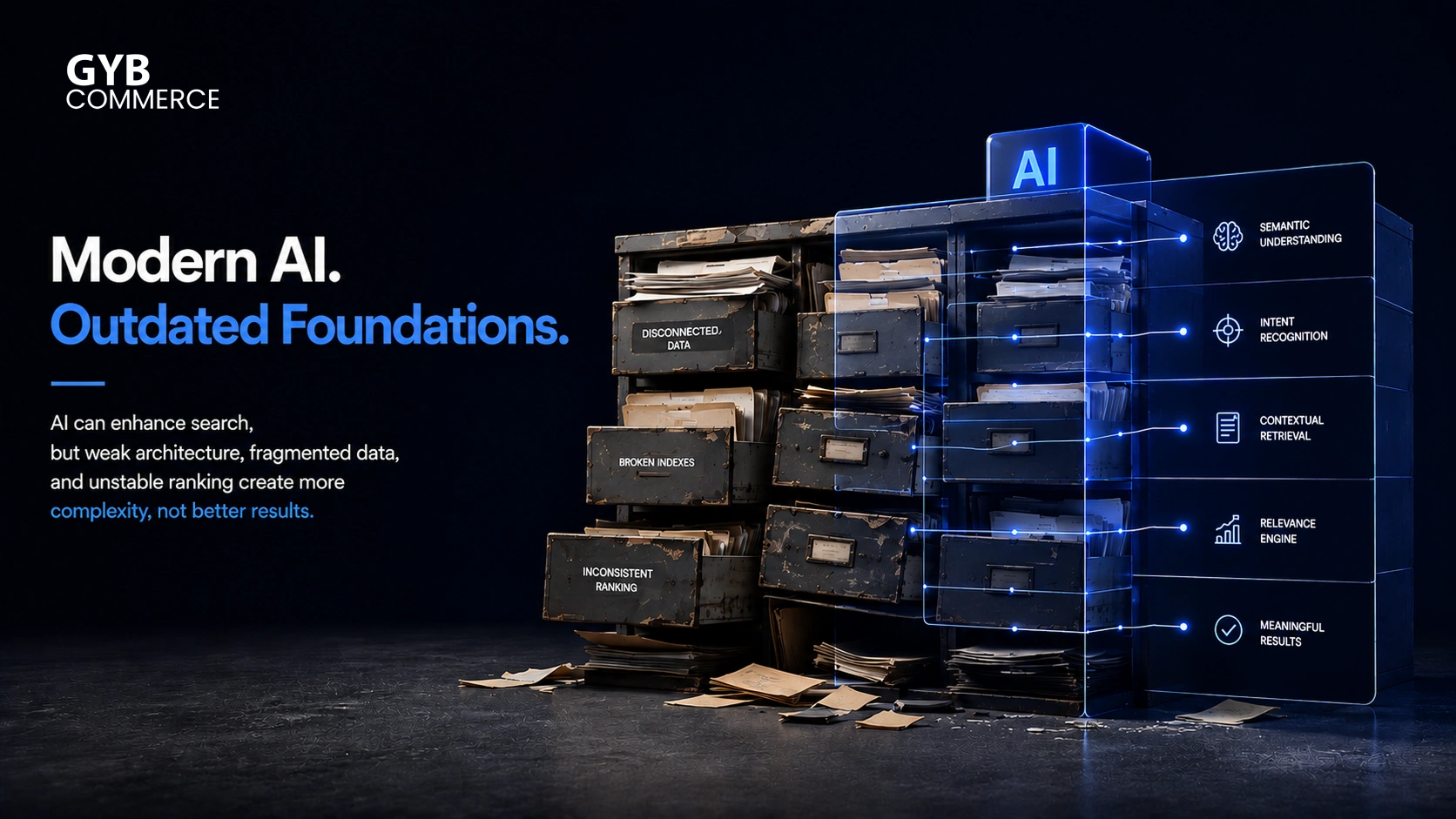
This is exactly why adding AI to search doesn’t automatically improve results in poorly planned systems.
When Simplicity Works Better
Traditional systems perform best when the environment is controlled. Users search with clear intent and data remains well organized. This reduces the need for interpretation or advanced processing.
You may not need AI search if:
- Your data is structured and easy to index
- Users search with clear and specific queries
- Search volume remains relatively low
In these scenarios, traditional systems remain efficient and reliable.
Where Traditional Search Still Performs Well
Controlled Search Environments
Traditional search engines rely on keyword matching and indexing. While this approach has limitations, it performs well in controlled environments. Systems with predictable patterns benefit the most from this setup.
For example, internal tools, small product catalogs, or documentation systems often work effectively with traditional search. Users already know what they are looking for. This reduces the need for deeper interpretation.
Real-World System Behavior
Even advanced platforms like Google and Microsoft continue to rely on structured ranking systems. AI is layered on top, not used in isolation.
This shows that traditional methods still play a critical role. They provide stability and predictability in search performance.
When Search Starts Breaking Down
Growth Introduces Complexity
As systems grow, traditional search begins to show limitations. This usually happens when data becomes unstructured or user behavior becomes unpredictable. At this point, keyword matching alone is no longer sufficient.
Users start asking broader or more conversational queries. They expect the system to understand intent rather than match exact terms. This creates a gap between what users want and what the system delivers.
Early Warning Signs
Certain signals indicate that search performance is declining. These signals often appear before major failures occur. Identifying them early helps prevent larger issues.
Common signs of breakdown include:
- Irrelevant results despite correct keywords
- Difficulty handling long or conversational queries
- Increasing search abandonment rates
These issues indicate that the system is reaching its limits. Ignoring these limits shows exactly how poor search systems quietly kill conversions and revenue over time.
The Role of User Intent in Search Performance
Shift from Keywords to Meaning
Search is no longer just about matching words. It is about understanding what the user is trying to achieve. This shift is where traditional systems begin to struggle.
Modern platforms like Perplexity AI and Bing focus on interpreting intent rather than relying on keywords alone. They analyze context, behavior, and relationships between terms.
Impact on Search Experience
As systems move toward intent understanding, results become more flexible. Users receive answers that align with their goals rather than exact queries. This improves overall experience.
However, this also increases system complexity. Businesses must decide whether this level of capability is necessary for their use case.
How Data Complexity Changes the Decision
From Structured to Fragmented Data
The structure of your data plays a major role in deciding whether AI search is needed. Clean and organized data supports traditional systems. However, real-world data is rarely that simple.
As data grows, it becomes harder to maintain consistency. Different formats, missing fields, and fragmented sources create challenges. Traditional indexing struggles to keep up with this complexity.
When Complexity Requires Adaptation
Certain data conditions make traditional systems less effective. These conditions increase the need for more advanced interpretation. AI search becomes more relevant in such scenarios.
When data becomes:
- Unstructured or semi-structured
- Spread across multiple systems
- Frequently updated or inconsistent
AI search starts becoming more useful. It can interpret patterns that traditional systems cannot handle effectively.
Understanding the Trade-Off Between Simplicity and Capability
Balancing System Priorities
Every search system involves trade-offs. Traditional search offers simplicity and stability. AI search offers flexibility and deeper understanding. The right choice depends on your priorities.
If your goal is speed and predictability, traditional systems may be enough. However, if your focus is relevance and user experience, AI becomes more valuable.
Making an Informed Decision
This decision should be based on actual system needs, not trends. Businesses often adopt AI too early or without proper evaluation. This leads to unnecessary complexity.
A clear understanding of your system helps avoid this mistake. It ensures that the chosen approach aligns with real requirements.
When AI Search Becomes Necessary at Scale
Complex Systems Require Deeper Understanding
As systems grow, search requirements change significantly. Larger datasets, diverse content, and unpredictable queries increase complexity. At this stage, traditional search begins to lose effectiveness.
AI search becomes useful when systems must interpret meaning instead of matching keywords. It connects queries with relevant results even when language varies. This improves search accuracy in complex environments.
Clear Indicators of Need
There are specific conditions where AI search becomes necessary. These conditions reflect limitations in traditional systems. Identifying them helps make better decisions.
You should consider AI search when:
- Users rely on vague or conversational queries
- Content is large, unstructured, or constantly changing
- Relevance issues start affecting user experience
These signals indicate that traditional search is no longer sufficient.
Decision Framework for Evaluating Search Needs
Evaluating Current System Performance
A structured evaluation helps determine whether AI search is required. Instead of guessing, businesses should analyze how their current system performs. This provides clarity and reduces unnecessary risk.
Start by observing how users interact with search. Look for patterns that indicate friction or inefficiency. These patterns reveal underlying system limitations.
Key Evaluation Signals
Certain indicators highlight whether your system needs improvement. These signals are practical and measurable. They help identify gaps in performance.
A simple evaluation framework includes:
- Frequent query reformulations by users
- Low relevance in top search results
- High search abandonment rates
If these issues are common, the system may require a more advanced approach.
Operational Readiness for AI Search Systems
System Requirements Before Adoption
Even when AI search is needed, implementation requires preparation. Many systems fail because they are not ready. Readiness is a critical factor in success.
AI search depends on structured pipelines and integrated systems. Without these, performance remains inconsistent. Preparation ensures smoother implementation.
Readiness Indicators
Before adopting AI search, certain conditions should be met. These conditions improve the chances of success. They also reduce implementation risks.
Organizations should ensure:
- Data is accessible and reasonably structured
- Systems support integration across platforms
- Teams can maintain and optimize the system
Without these elements, AI search may not deliver expected results. Consulting with expert AI powered search engine development services helps evaluate your true readiness.
Cost, Complexity, and Long-Term Impact
Understanding the Investment
AI search introduces new layers of cost and complexity. These include infrastructure, model management, and system maintenance. Businesses must evaluate whether the benefits justify these costs.
In some cases, improving existing systems may be more effective. AI is not always the most efficient solution. The decision depends on long-term goals.
Key Considerations Before Adoption
Several factors influence the overall impact of AI search. These factors affect both performance and sustainability. Ignoring them can lead to poor outcomes.
Important considerations include:
- Infrastructure costs for processing and storage
- Continuous model updates and monitoring
- Time required to achieve stable performance
These elements shape the long-term value of AI search.
How Leading Platforms Approach AI Search
Hybrid Search Systems in Practice
Major platforms do not rely entirely on AI. Instead, they combine traditional and AI-based approaches. This creates a balanced system that improves reliability.
For example, Google integrates AI features while maintaining structured ranking systems. Similarly, Microsoft enhances search without removing traditional foundations.
Different Approaches to Implementation
Some platforms focus more on AI-driven responses. Others prioritize stability and control. Each approach reflects different system needs.
Platforms like Perplexity AI emphasize AI-generated answers. Meanwhile, hybrid systems maintain a balance between performance and predictability.
Making the Right Decision for Your Business
Avoiding Trend-Driven Decisions
The decision to adopt AI search should be based on real needs. Many businesses follow trends without evaluating their systems. This often leads to unnecessary complexity.
A careful assessment helps avoid this mistake. It ensures that decisions are grounded in practical requirements.
Aligning Search with Business Goals
Search systems should support how users interact with information. The goal is not to adopt new technology, but to improve outcomes. This requires alignment between system capabilities and business objectives.
In some cases, traditional search remains sufficient. In others, AI becomes essential for maintaining relevance. The key is understanding where your system stands.
Frequently Asked Questions
Do all businesses need an AI search engine?
Not all businesses require AI search systems. If your data is structured and queries are predictable, traditional search often performs well. Adding AI in such cases may increase complexity without improving results.
AI becomes more relevant as systems grow in size and complexity. The decision should always depend on actual system needs.
When should a business move to AI search?
A business should consider AI search when traditional systems fail to deliver relevant results. This often happens when queries become more conversational or data becomes unstructured.
If users struggle to find information efficiently, it indicates a limitation. At that point, AI can improve interpretation and relevance.
Is AI search more expensive than traditional search?
AI search typically involves higher costs due to infrastructure and maintenance requirements. It requires processing power, model updates, and continuous monitoring.
However, the value depends on the improvement it brings. In complex systems, the benefits may justify the investment.
Can AI search replace traditional search completely?
AI search does not fully replace traditional systems. Most platforms combine both approaches to balance performance and reliability. Traditional methods still handle structured queries effectively.
AI enhances search by improving intent understanding. It works alongside existing systems rather than replacing them entirely.
How can I evaluate if my search system needs improvement?
You can evaluate your system by analyzing user behavior and search performance. Indicators such as irrelevant results, repeated queries, and high abandonment rates highlight issues.
These signals show whether users are finding what they need. If problems persist, a more advanced approach may be required.
Final Takeaways
AI search is not necessary for every system. Its value depends on data complexity, user behavior, and system scale. Understanding these factors helps make better decisions.
Traditional search remains effective in controlled environments. However, as complexity increases, its limitations become more visible.
A structured evaluation ensures the right approach. Systems that align with actual needs perform more effectively over time.