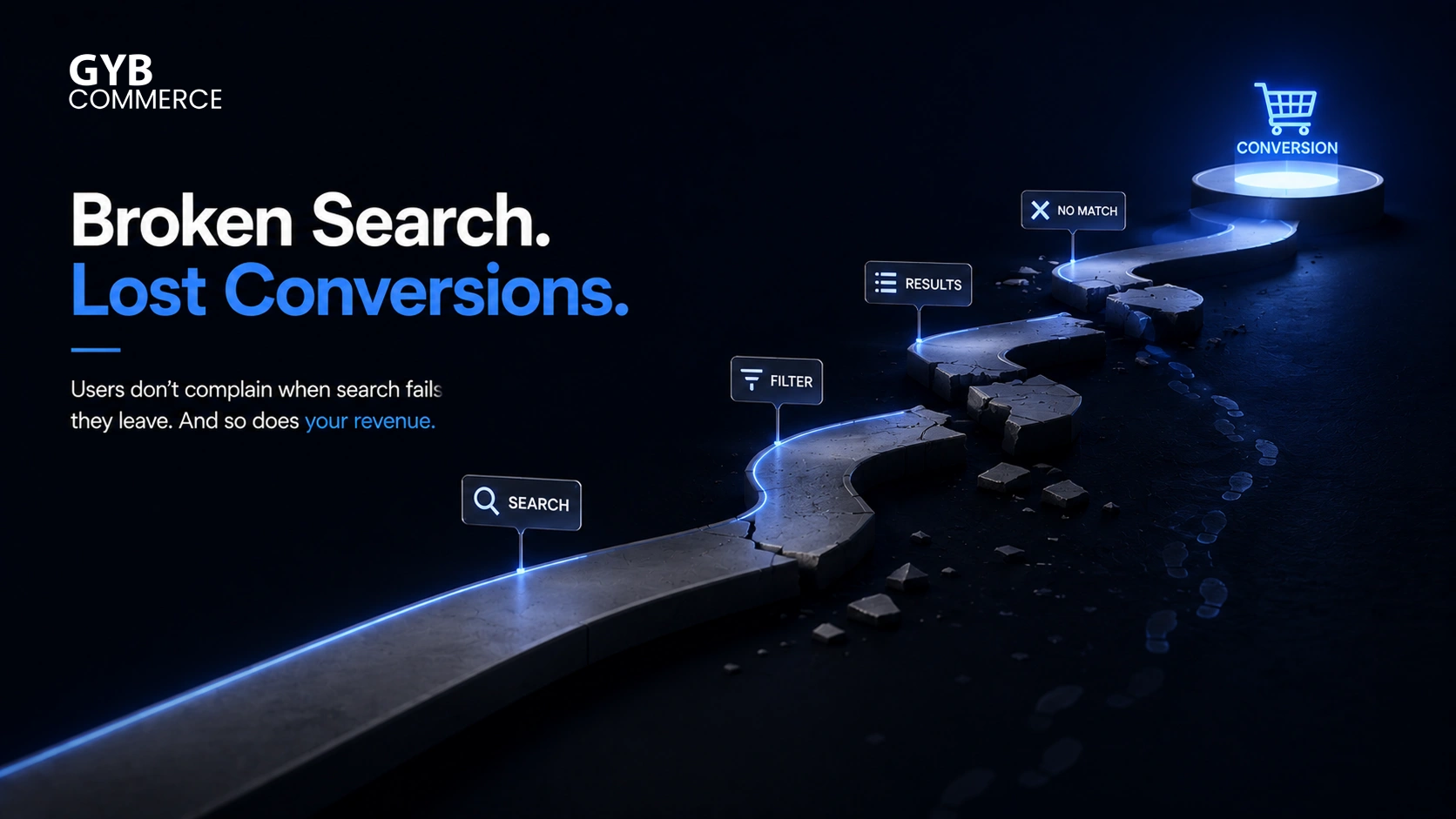
Users do not complain when search fails. They leave. A visitor lands on your site with clear intent, searches for something specific, and expects quick results. However, when those results feel irrelevant or confusing, hesitation begins. They try again, but friction builds. Eventually, they exit without taking action.
This behavior happens silently across thousands of sessions. Poor search does not just frustrate users, it interrupts the entire customer journey. As a result, traffic that should convert turns into lost opportunities. Revenue declines without an obvious cause, which makes the problem even harder to detect.
Table of Contents
Why Poor Search Directly Impacts Conversion Rates
Search as the Core of User Journey
Search sits at the center of intent-driven behavior. When users search, they are no longer casually browsing, they are actively trying to find something specific. This makes search one of the most critical points in the conversion process. It connects what users want with what your business offers, and any failure at this stage breaks that connection.
Because of this, search directly influences how quickly users discover options, how confidently they evaluate them, and whether they take action. Platforms like Google have trained users to expect instant and accurate results. So when your system fails to meet those expectations, even slightly, the impact is immediate.
When Search Fails, Conversions Collapse
When search does not deliver relevant results, users experience friction almost instantly. They begin to question whether the platform understands their needs or if the desired result even exists. This uncertainty slows decision-making and reduces trust, which directly affects conversions.
In many cases, users encounter repeated issues such as irrelevant results, slow responses, or confusing layouts. These small failures compound quickly. Insights from Forrester Research and HubSpot consistently show that even minor friction in user experience can lead to significant drops in conversion rates. So, search failure is not a surface-level issue, it is a direct revenue blocker. This makes businesses wonder do you actually need an AI search engine to solve this friction.
The Hidden Conversion Killers Inside Poor Search Systems
Irrelevant Results Break Trust
When users search and receive unrelated results, confusion begins immediately. They start questioning whether they are using the system correctly or whether the platform can meet their needs. This doubt weakens trust, which is a key factor in conversion behavior.
Over time, repeated exposure to irrelevant results reduces engagement. Users are less likely to explore further or return in the future. This creates a long-term impact that goes beyond a single lost conversion.
Slow Search Increases Drop-Off
Speed plays a critical role in search experience. Users expect results to appear instantly, and any delay creates frustration. Even a small lag can make the system feel unreliable, which increases the likelihood of abandonment.
Performance tools like Google PageSpeed Insights highlight how speed affects user behavior. As response time increases, engagement drops. As engagement drops, conversions follow the same pattern.
Poor Filtering Creates Decision Fatigue
When users cannot narrow down results effectively, they are forced to process too many options. This creates cognitive overload, which slows down decision-making. Instead of helping users move forward, the system creates friction.
As users spend more time trying to refine results, frustration increases. Eventually, they abandon the process entirely. This is not because they are not interested, but because the system makes it difficult to proceed.
No Personalization Means Missed Intent
Every user interacts with search differently. However, generic search systems treat all users the same, ignoring preferences and past behavior. This reduces the system’s ability to surface relevant results.
Without personalization, even accurate content may not appear at the right time. As a result, users miss what they are looking for, and conversion opportunities are lost. This creates a gap between available value and actual outcomes. This occurs frequently and explains why search engines fail to understand user intent without proper configuration.
How Poor Search Affects Different Business Models
E-commerce Conversion Loss
In e-commerce environments, search directly impacts product discovery. Users rely on search to quickly find items that match their needs. When this process fails, the entire purchase journey is disrupted.
Users who cannot find relevant products do not continue browsing. They do not add items to their cart or complete purchases. This results in immediate revenue loss, even if the traffic volume is high.
B2B Lead Generation Drop-Off
In B2B systems, search helps users find information that supports decision-making. This includes service pages, case studies, and detailed resources. When search fails, users struggle to access this information.
As a result, trust decreases and engagement drops. Users are less likely to fill out forms or initiate contact. This reduces the number of qualified leads entering the pipeline.
Service-Based Businesses and Missed Opportunities
Service-based websites depend on clarity and ease of navigation. Users need to understand offerings quickly in order to take action. Search plays a key role in guiding this process.
When search does not perform well, users hesitate. They cannot find what they need, so they leave without making inquiries. This leads to missed opportunities that are difficult to track.
The Real Cost of Poor Search, Beyond Just Metrics
Lost Revenue Per Session
Every failed search represents a lost opportunity. A user arrives with intent, searches for something specific, and expects a clear path forward. However, when that path breaks, the session ends without conversion. This loss is not always visible in reports, but it accumulates over time.
Even a small percentage of failed searches can translate into significant revenue loss. When multiplied across thousands of users, the impact becomes substantial. This is why poor search is not just a usability issue, it directly affects financial performance.
Increased Customer Acquisition Costs
When conversion rates drop, acquisition costs rise. Businesses continue to invest in traffic through ads, SEO, or campaigns. However, if users do not convert, the return on that investment decreases.
This creates a cycle where more money is spent to achieve the same results. Over time, this reduces efficiency and profitability. Poor search quietly inflates customer acquisition costs without being immediately obvious.
Long-Term Brand Damage
User experience shapes perception. When users repeatedly fail to find what they need, they associate that frustration with the brand. This reduces trust and makes them less likely to return.
Unlike direct revenue loss, brand damage builds slowly. However, its impact is long-lasting. Users who leave due to poor experience often do not come back, which affects retention and long-term growth.
Signs Your Website Search Is Hurting Conversions
Behavioral Indicators in User Activity
Search issues often appear in user behavior before they are identified in analytics. These signals reflect friction in the user journey. Recognizing them early helps prevent deeper problems.
Common signs include:
- users repeating similar searches multiple times
- high bounce rates after search interactions
- low engagement with search results
- users exiting quickly after viewing results
These patterns indicate that users are not finding what they need.
Conversion-Specific Warning Signals
Some signals are directly tied to conversion performance. These indicators show how search failures affect outcomes. They are often overlooked because they blend into broader metrics.
You may notice:
- high traffic but low conversion rates
- drop-offs between search and action steps
- reduced form submissions or purchases
These signs suggest that search is creating friction in the conversion process.
How to Identify Search-Related Conversion Issues
Using Heatmaps and Analytics Tools
Understanding user behavior requires the right tools. Heatmap analysis helps visualize how users interact with search results. It shows where users click, scroll, and drop off.
Analytics tools provide deeper insights into search performance. They help track engagement, session duration, and conversion paths. Together, these tools reveal where the system is failing.
Tracking Search Behavior and Drop-Off Points
Search behavior tells a story. By analyzing queries, refinements, and exits, businesses can identify patterns. These patterns highlight where users struggle.
Tracking user flow from search to action is critical. It helps pinpoint exact stages where users abandon the journey. Once identified, these friction points can be addressed more effectively.
Fixing the Gap Between Search and Conversion
Improve Relevance with Better Data Structuring
Search accuracy depends on data quality. Structured data helps systems understand relationships between content and queries. This improves the relevance of results.
By organizing and tagging data effectively, businesses can reduce mismatches. This creates a smoother connection between user intent and available content.
Optimize Speed and Performance
Search must feel instant. Delays create friction and reduce engagement. Optimizing performance ensures that users receive results quickly and reliably.
This involves improving backend processing, reducing load times, and ensuring efficient indexing. Faster systems lead to better user experiences and higher conversions.
Align Search with User Intent
Understanding intent is critical for improving search outcomes. Systems must move beyond keyword matching and focus on meaning. This allows them to deliver more accurate results.
By analyzing user behavior and query patterns, businesses can refine search logic. This alignment improves both relevance and satisfaction.
Enhance UI and Search Experience
Search is not just about results, it is also about presentation. A clear and intuitive interface helps users navigate results more effectively. This reduces confusion and improves decision-making.
Improving layout, accessibility, and mobile responsiveness ensures a smoother experience. When users can interact easily with search, they are more likely to convert.
Best Practices to Improve Conversion Through Search
Practical Improvements That Drive Results
Improving search requires consistent effort. Small changes can have a significant impact when applied correctly. The focus should remain on reducing friction and improving relevance.
Effective practices include:
- refining site architecture for better navigation
- using A/B testing to evaluate changes
- improving filters and sorting options
- optimizing mobile search experience
- continuously analyzing user behavior
These steps help align search performance with conversion goals. Upgrading to custom AI powered search engine development services can automate these critical improvements.
Frequently Asked Questions
Why does poor search reduce conversion rates?
Poor search reduces conversion rates because it breaks the connection between user intent and results. When users cannot find what they need, they lose confidence and leave the site. This prevents them from completing actions such as purchases or form submissions.
How does website speed affect conversions?
Website speed directly impacts user experience. Slow search responses create frustration and increase drop-offs. Users expect instant results, and delays reduce engagement, which ultimately lowers conversion rates.
What is a good website conversion rate?
A good conversion rate varies by industry, but it generally reflects how effectively a website turns visitors into customers or leads. However, even a strong rate can decline if search performance is poor and users face friction.
How to improve website conversion rate using search?
Improving conversion rate through search involves enhancing relevance, speed, and usability. By aligning results with user intent and reducing friction, businesses can guide users more effectively toward action.
Why is my conversion rate low even with traffic?
Low conversion rates despite high traffic often indicate issues in user experience. Poor search performance is a common cause, as it prevents users from finding what they need and completing their journey.
What tools help analyze search performance?
Tools such as heatmaps and analytics platforms help analyze search performance. They provide insights into user behavior, engagement, and drop-off points, which help identify areas for improvement.
How does user experience impact conversions?
User experience shapes how easily users can interact with a website. A smooth experience encourages engagement and action, while friction, especially in search, leads to abandonment and lower conversions.
Final Takeaways
Poor search is one of the most overlooked causes of low conversion rates. It affects how users discover, evaluate, and act on information. When search fails, the entire journey breaks.
The impact goes beyond metrics. It affects revenue, costs, and long-term brand perception. Businesses that ignore this problem continue to lose opportunities without realizing it.
Improving search is not just a technical upgrade. It is a direct investment in better user experience and stronger business outcomes.