
Google Cloud Development Company

Build Scalable Applications with a Google Cloud Development Company
Modern digital platforms require infrastructure capable of handling distributed workloads, large datasets, and continuous deployment cycles. GYB Commerce operates as a Google Cloud development company that designs cloud-native architecture, develops enterprise applications on Google Cloud Platform, and delivers Google Cloud migration services for organizations modernizing legacy infrastructure. Our engineers build scalable platforms using containerized environments, data analytics tools, and automated DevOps workflows that allow businesses to deploy applications faster while maintaining stable and secure cloud environments.
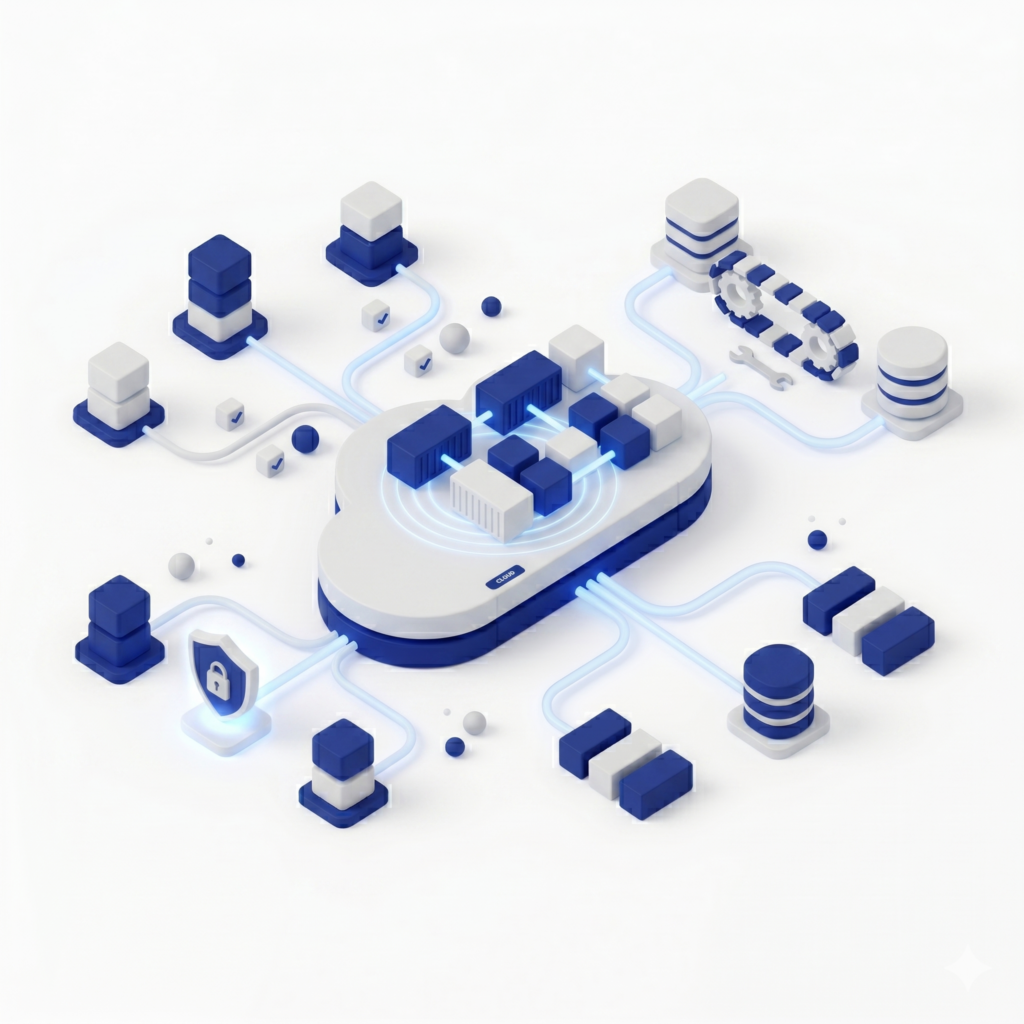
What Google Cloud Development Enables for Modern Enterprises
Organizations increasingly rely on cloud-native platforms to accelerate product delivery and process large-scale data workloads. A Google Cloud development company helps enterprises build scalable applications, migrate workloads to Google Cloud infrastructure, and operate resilient digital platforms supported by automated cloud operations and modern cloud architecture.
Capabilities enabled through Google Cloud development
Cloud-native application development on Google Cloud Platform
Migration of enterprise workloads using Google Cloud migration services
Containerized deployments with Kubernetes and Docker environments
Real-time analytics platforms using BigQuery and Dataflow pipelines
Infrastructure automation through DevOps engineering frameworks
Managed Google Cloud platform services for stable enterprise operations
Google Cloud Architecture and Application Development
Cloud-Native Application Development on Google Cloud
Cloud-native development focuses on building applications specifically designed for distributed cloud environments. Engineers develop scalable platforms on Google Cloud Platform that support microservices architecture, automated scaling, and reliable deployment across globally distributed infrastructure environments.
Containerized Platforms with Kubernetes and Docker
Containerization enables applications to run consistently across infrastructure environments without configuration conflicts. Engineers deploy containerized workloads using Kubernetes orchestration and Docker containers, allowing applications to scale efficiently across clusters operating within Google Cloud infrastructure.
Serverless Application Development
Serverless architecture enables applications to execute event-driven workloads without maintaining underlying infrastructure resources. Developers deploy event-driven services that automatically scale with application demand while reducing operational complexity across Google Cloud application environments.
API Integration and Microservices Architecture
Modern digital platforms rely on microservices architecture that connects distributed application components through APIs. Engineers integrate Google Cloud APIs and microservices frameworks that allow organizations to build modular systems capable of scaling independently across cloud environments.
Google Cloud Migration Services for Enterprise Platforms
Cloud Migration Strategy and Infrastructure Assessment
Successful migration begins with evaluating existing infrastructure, application dependencies, and operational requirements. Engineers design migration strategies that align enterprise workloads with Google Cloud architecture while minimizing operational disruption during the migration process.
Workload Migration to Google Cloud Platform
Application workloads migrate from legacy infrastructure or alternative cloud providers into Google Cloud environments. Engineers transfer compute resources, networking configurations, and operational workflows while maintaining system reliability and application performance.
Database and Data Platform Migration
Enterprise applications often rely on complex data platforms that require structured migration processes. Engineers migrate relational databases, analytics platforms, and large datasets into Google Cloud environments while maintaining data integrity and operational continuity.
Application Modernization During Migration
Legacy applications frequently require architectural updates when migrating to Google Cloud infrastructure. Developers modernize application components into cloud-native services that leverage scalable compute resources, distributed systems, and automated infrastructure frameworks.
Core Google Cloud Platform Services We Implement
Google Cloud provides a comprehensive ecosystem of infrastructure, analytics, and development services that support enterprise application platforms. GYB Commerce engineers implement core Google Cloud technologies that enable scalable infrastructure and high-performance cloud environments.
Core Google Cloud technologies we implement
- Google Kubernetes Engine for container orchestration
- BigQuery platforms for enterprise data analytics
- Dataflow pipelines for large-scale data processing
- Firebase platforms for mobile and web applications
- Cloud Vision API, Natural Language API, and Translation API integrations
- Cloud-native development environments on Google Cloud
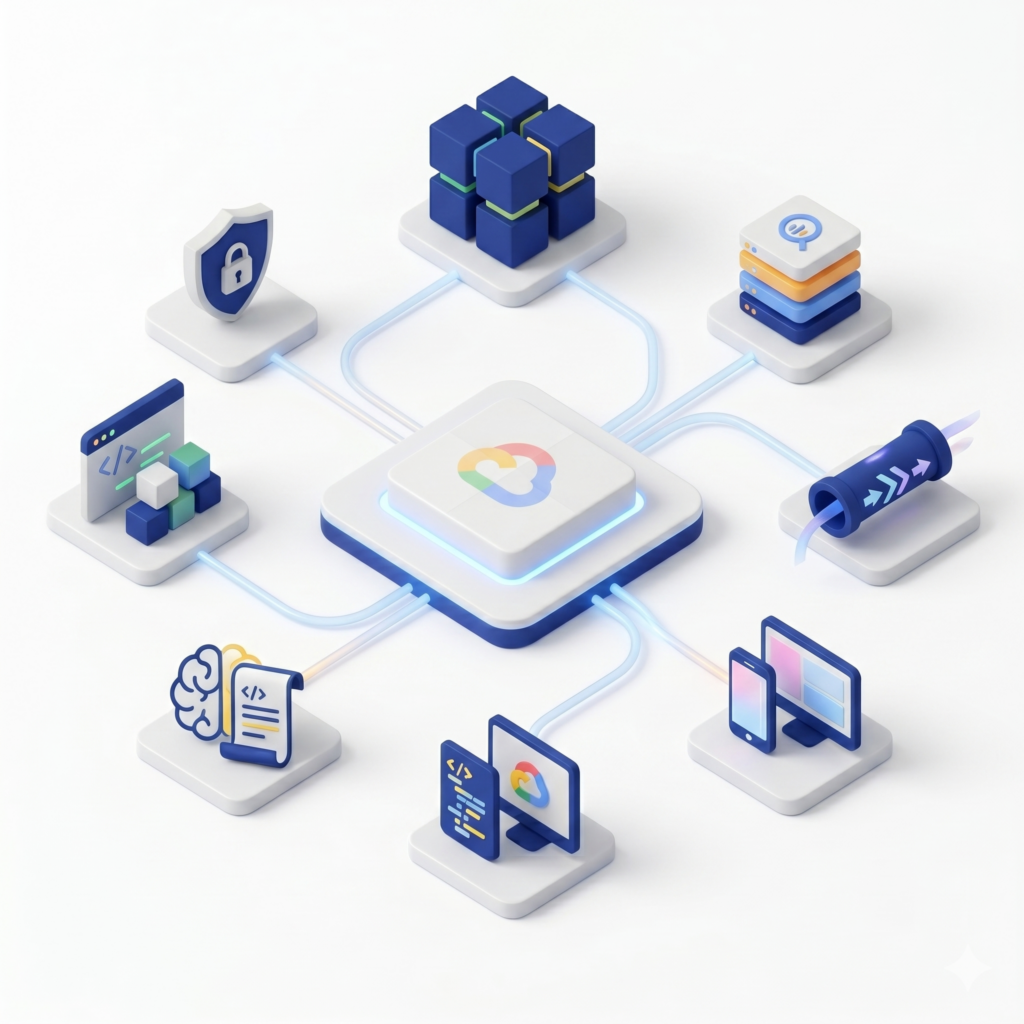
Modern application platforms depend on automated infrastructure and continuous deployment pipelines to maintain reliability and development velocity. A Google Cloud development company integrates DevOps engineering frameworks with Google Cloud Platform infrastructure so development teams deploy software consistently across production environments. Engineers automate provisioning workflows, manage container orchestration platforms, and integrate CI/CD pipelines that allow organizations to release new features while maintaining stable cloud environments.
Infrastructure Automation and Deployment Pipelines
Infrastructure automation ensures Google Cloud resources deploy consistently across development, staging, and production environments. Engineers implement infrastructure automation frameworks that define compute resources, networking systems, and data platforms through configuration templates. This approach eliminates manual configuration errors while maintaining consistent cloud environments across enterprise infrastructure deployments.
Container Orchestration with Kubernetes
Container orchestration platforms coordinate application workloads across distributed infrastructure clusters. Engineers deploy Kubernetes clusters on Google Cloud infrastructure that manage container scheduling, automated scaling, and resource allocation. Consequently, applications scale efficiently during traffic surges while maintaining stable performance across multiple deployment regions.
Continuous Integration and Continuous Deployment
Continuous integration and continuous deployment pipelines automate application testing, packaging, and release workflows across cloud environments. Developers integrate CI/CD frameworks that build application code, execute automated tests, and deploy application updates across Google Cloud infrastructure. Therefore, organizations accelerate release cycles while maintaining consistent software quality across production environments.
Monitoring and Operational Observability
Operational observability provides real-time insights into infrastructure health and application performance across cloud environments. Engineers implement monitoring dashboards and alerting systems that track compute usage, network performance, and application behavior across Google Cloud platforms. These systems allow engineering teams to detect issues early and maintain reliable production environments.
Data-driven platforms rely on advanced analytics systems capable of processing large volumes of structured and unstructured data. Google Cloud provides powerful analytics technologies that support enterprise reporting systems, predictive analytics platforms, and real-time data processing environments. A Google Cloud development company implements these technologies to help organizations analyze business data and extract meaningful insights from large datasets.
BigQuery Data Platforms for Enterprise Analytics
BigQuery enables organizations to analyze massive datasets without managing underlying infrastructure resources. Engineers build enterprise data platforms that centralize analytics workloads on BigQuery infrastructure, enabling fast query processing across terabytes or petabytes of data. As a result, organizations gain access to powerful data analytics systems capable of supporting strategic business decision making.
Data Pipelines with Dataflow
Data pipelines coordinate the movement and transformation of information across analytics platforms and operational systems. Engineers implement Dataflow pipelines that process streaming data, transform datasets, and deliver information to analytics platforms in real time. These pipelines support scalable data processing environments capable of handling continuously generated enterprise data streams.
Machine Learning and Predictive Analytics
Machine learning platforms allow organizations to build predictive models capable of identifying patterns within business data. Engineers deploy machine learning workflows on Google Cloud infrastructure that analyze historical datasets and generate predictive insights for operational decision making. Consequently, organizations gain the ability to forecast demand, detect anomalies, and automate analytical processes.
Real-Time Data Processing Systems
Modern digital platforms frequently rely on real-time analytics to respond quickly to changing business conditions. Engineers design data processing architectures that ingest streaming data from applications, analyze incoming information, and generate insights that support operational systems. These architectures enable organizations to monitor user behavior, system performance, and business metrics continuously.
Cloud infrastructure requires continuous monitoring, operational management, and performance optimization after deployment. Managed Google Cloud platform services ensure enterprise cloud environments remain secure, reliable, and cost efficient as application workloads evolve. GYB Commerce provides managed services that oversee infrastructure operations, monitor resource usage, and maintain stable cloud platforms that support enterprise applications.
Infrastructure Monitoring and Platform Operations
Continuous monitoring ensures cloud infrastructure operates reliably across production environments. Engineers implement monitoring systems that track infrastructure metrics, application performance indicators, and resource utilization patterns across Google Cloud environments. These monitoring frameworks allow organizations to maintain operational visibility while responding quickly to potential performance issues.
Resource Optimization and Cloud Cost Management
Cloud environments can become inefficient when infrastructure resources are not actively optimized. Engineers analyze infrastructure utilization patterns and adjust compute resources, storage configurations, and networking systems to maintain efficient cloud operations. This optimization process allows organizations to scale infrastructure capacity while controlling operational costs across cloud platforms.
Security and Compliance Management
Enterprise cloud environments require strong security frameworks that protect infrastructure resources and sensitive business data. Engineers implement identity management systems, encryption mechanisms, and access control policies that secure applications operating on Google Cloud infrastructure. These security frameworks also support compliance with enterprise governance and regulatory requirements.
Continuous Infrastructure Management
Cloud platforms require continuous operational oversight to maintain reliability and performance. Managed Google Cloud services provide infrastructure maintenance, system updates, and incident response processes that maintain stable environments for enterprise applications. As a result, organizations can focus on product development while cloud infrastructure remains actively managed by experienced engineering teams.

Monitoring, Security, and Infrastructure Optimization
Enterprise cloud infrastructure requires proactive monitoring and security frameworks to maintain reliable operations. A Google Cloud development company implements monitoring platforms, security systems, and performance optimization frameworks that protect applications and maintain stable infrastructure across distributed cloud environments.
Real-Time Infrastructure Monitoring
Monitoring platforms track infrastructure metrics including compute usage, network traffic, and storage performance across Google Cloud environments. Engineers configure monitoring dashboards that provide visibility into system health while enabling rapid responses to infrastructure anomalies.
Cloud Security Architecture
Cloud security architecture ensures enterprise applications operate within protected infrastructure environments. Engineers implement security frameworks that include identity management, access control policies, and network segmentation systems. These frameworks protect sensitive workloads while maintaining secure application operations across Google Cloud infrastructure.
High Availability and Resilient Infrastructure
Enterprise applications require infrastructure designed to maintain service availability during hardware failures or network disruptions. Engineers deploy multi-region cloud environments that distribute application workloads across geographically separated infrastructure zones. This design ensures business platforms remain operational even during unexpected infrastructure incidents.
Performance Optimization of Cloud Workloads
Infrastructure optimization focuses on improving application performance while maintaining efficient resource utilization. Engineers analyze infrastructure metrics and refine compute resources, storage systems, and network configurations to maintain optimal application performance across Google Cloud environments.
Benefits of Working with a Google Cloud Development Company
Organizations working with a Google Cloud development company gain access to specialized cloud engineering expertise that accelerates infrastructure deployment and improves operational performance.
Engineering Capability
Google Cloud Architecture Design
Google Cloud Migration Services
DevOps Automation on Google Cloud
BigQuery Data Analytics Platforms
Managed Google Cloud Platform Services
Technical Impact
Scalable cloud infrastructure
Structured workload migration
Automated deployments and pipelines
High-performance data processing
Continuous monitoring and operations
Business Outcome
Reliable enterprise application platforms
Reduced infrastructure complexity
Faster software release cycles
Data-driven business insights
Stable long-term cloud environments
Case Studies
Google Cloud Development
Scaling a SaaS Platform on Google Cloud
A SaaS company required infrastructure capable of supporting rapid user growth and increasing application traffic. GYB Commerce deployed containerized workloads on Kubernetes clusters within Google Cloud infrastructure. Automated scaling policies allowed the platform to handle sudden traffic spikes while maintaining stable application performance.
Migrating Enterprise Infrastructure to Google Cloud
A large enterprise organization required migration from legacy on-premise systems to Google Cloud infrastructure. Engineers designed a phased migration strategy that transferred application workloads, databases, and operational systems into Google Cloud environments. The migration improved system reliability while reducing infrastructure maintenance costs.
Building Data Analytics Platforms with BigQuery
A data-driven organization required a scalable analytics environment capable of processing large business datasets. Engineers implemented a BigQuery data platform supported by automated data pipelines and real-time processing systems. The solution enabled the organization to generate analytical insights faster while supporting advanced reporting capabilities.
Why Choose GYB Commerce for Google Cloud Development
Organizations require cloud engineering partners capable of designing scalable infrastructure, managing cloud platforms, and supporting enterprise software development. GYB Commerce provides Google Cloud development services that enable organizations to build resilient digital platforms and modern cloud-native applications.
Architecture-First Cloud Engineering
Our engineers design infrastructure architecture before deploying applications on Google Cloud environments. This architecture-first approach ensures cloud platforms support scalability, performance, and long-term infrastructure growth.
Enterprise-Scale Google Cloud Expertise
GYB Commerce engineering teams implement Google Cloud infrastructure across SaaS platforms, enterprise systems, and large-scale digital platforms. This experience allows organizations to deploy reliable cloud environments quickly while maintaining operational stability.
End-to-End Google Cloud Development and Migration
Our services cover the full cloud lifecycle including infrastructure architecture, application development, migration services, DevOps automation, and managed platform operations. Organizations therefore gain a single engineering partner capable of supporting their entire cloud transformation journey.
What Clients Say About Working With Us


Frequently Asked Questions
Quick answers to the most common questions
What does a Google Cloud development company do?
A Google Cloud development company designs, develops, and manages applications built on Google Cloud Platform infrastructure. Services typically include application development, cloud migration, DevOps automation, infrastructure optimization, and managed Google Cloud operations.
How do Google Cloud migration services work?
Google Cloud migration services involve assessing existing infrastructure, designing a migration strategy, transferring workloads to Google Cloud environments, and optimizing applications for cloud-native performance. Migration strategies ensure minimal downtime while maintaining application functionality.
What services are included in Google Cloud development?
Google Cloud development services typically include cloud-native application development, infrastructure architecture design, DevOps automation, migration services, analytics platform implementation, and managed cloud operations.
How secure is Google Cloud infrastructure?
Google Cloud provides multiple security layers including identity management systems, encryption frameworks, and network security controls. Proper configuration and monitoring ensure enterprise applications operate within secure cloud environments.
What tools are used in Google Cloud development?
Common Google Cloud development tools include Kubernetes for container orchestration, BigQuery for analytics, Dataflow for data pipelines, Firebase for application platforms, and multiple Google Cloud APIs for AI and machine learning capabilities.
How long does Google Cloud migration take?
Migration timelines depend on application complexity, infrastructure dependencies, and data volume. Smaller systems may migrate within weeks, while large enterprise environments often require phased migration strategies over several months.
Do Google Cloud development companies provide managed services?
Yes, most Google Cloud development companies provide managed services that include infrastructure monitoring, security management, performance optimization, and operational support for cloud environments.
Partner with Us for Comprehensive IT
We’re happy to answer any questions you may have and help you determine which of our services best fit your needs.
Your benefits:
- Client-oriented
- Independent
- Competent
- Results-driven
- Problem-solving
- Transparent
What happens next?
We Schedule a call at your convenience
We do a discovery and consulting meting
We prepare a proposal
Schedule a Free Consultation
Technologies that we use.
Ready to reduce your technology cost?

Our success stories

SEGO- Upgrade Your Life
SEGO Teams Up with GYB Commerce for a Digital Makeover Overview The modern man’s lifestyle can survive without the use of smartphones, and they have
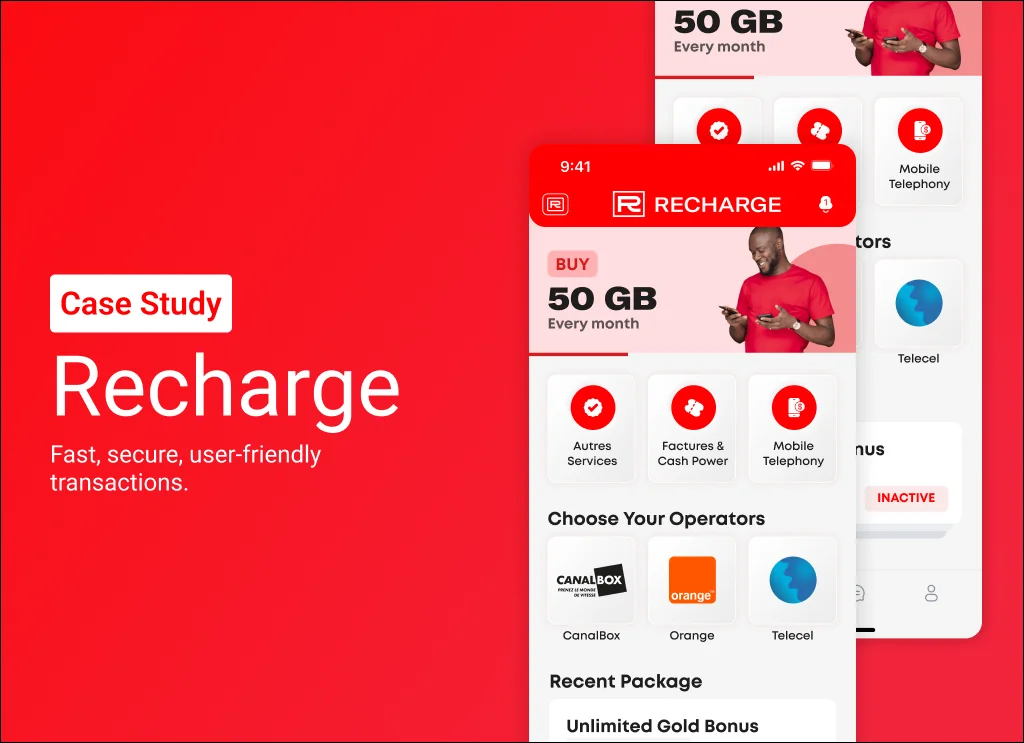
Recharge
Recharge App – Streamlining Mobile Top-Ups & Empowering Connectivity Overview Recharge App simplifies the process of topping up cellular network packages. It offers users an
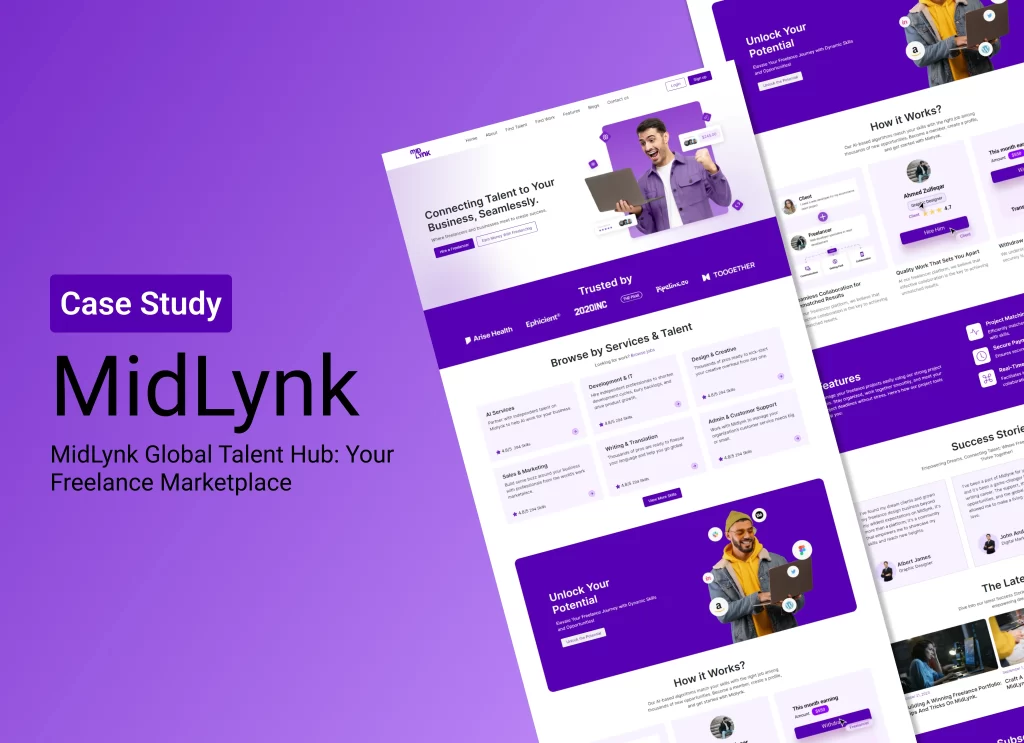
MidLynk – Your Freelance Marketplace
MidLynk – Connecting Talent with Endless Opportunities Overview MidLynk represents a transformative leap forward in the freelancing ecosystem, connecting clients and freelancers in a dynamic,
GYB Commerce blogs

Top Ecommerce Scalability Challenges And How Modern Commerce Platforms Solve Them
Many ecommerce platforms perform perfectly until rapid growth exposes the limitations hidden beneath the surface. Traffic isn’t what breaks an ecommerce business. Poor architecture does.

Marketplace Vs B2B Vs Traditional Ecommerce: Choosing The Right Business Model
The success of an ecommerce business often depends more on its core framework than the actual products it sells. Many founders invest heavily in software

How ERP CRM Integration Improve Ecommerce Operations And Customer Experience
Growing ecommerce businesses often struggle because their systems operate independently instead of working together. Every order touches multiple departments. Disconnected systems slow everything down. Modern
Google Cloud Infrastructure That Powers Enterprise Innovation
Modern organizations require cloud infrastructure capable of supporting scalable applications, advanced analytics, and continuous software development. GYB Commerce designs and manages Google Cloud environments that transform cloud infrastructure into a stable foundation for enterprise innovation and long-term digital growth.