





Hire iOS Developers with Architecture-Level Technical Alignment
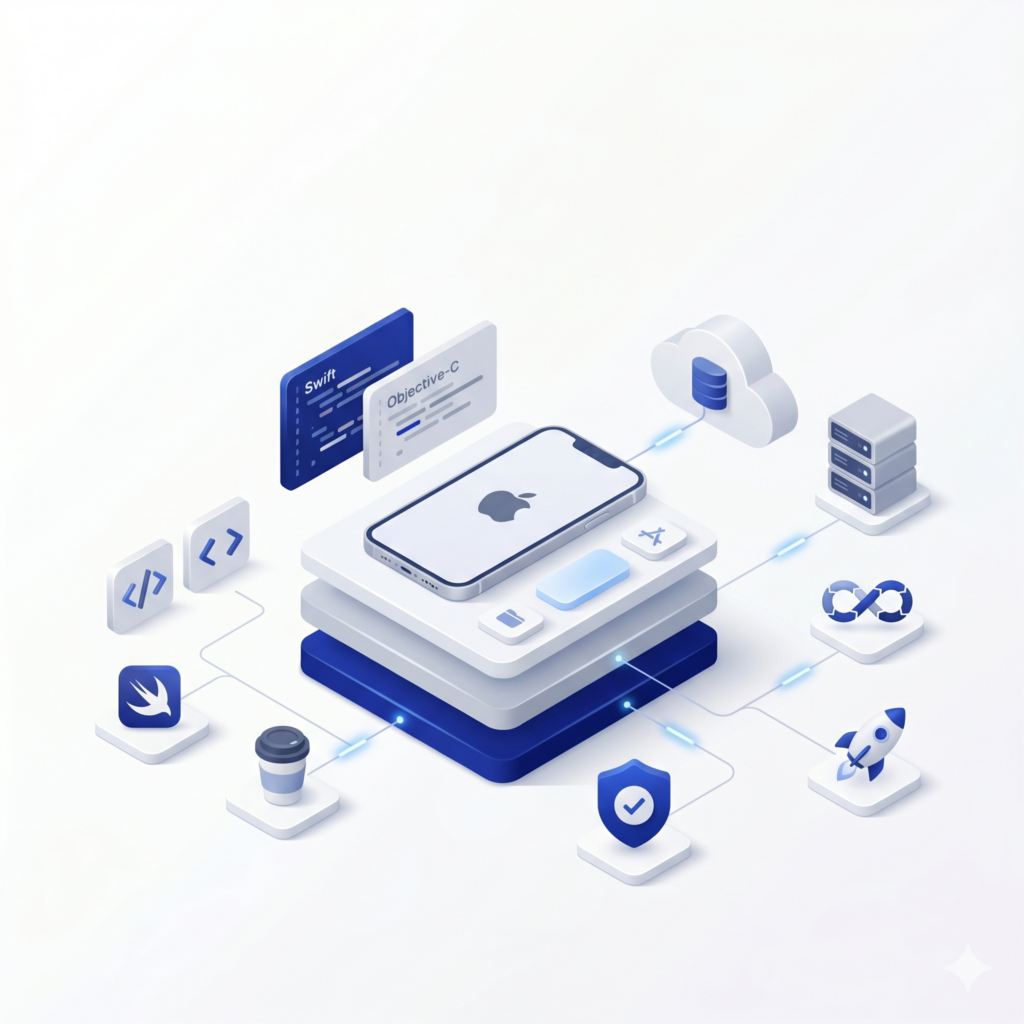
Most companies attempt to hire iOS developers based on resumes and portfolios alone. That approach often leads to architectural drift, unstable releases, and fragmented ownership across the iOS ecosystem. GYB Commerce operates differently. We match technically sound iOS developers to your system architecture, delivery model, and long-term product roadmap. Our engineers work across Swift and Objective-C while aligning with your backend, DevOps workflows, and App Store governance standards from day one.
What You Gain When You Hire iOS Developers from GYB Commerce
Hiring mobile engineers without structured alignment creates downstream instability in performance, releases, and compliance. We prevent that risk by integrating every iOS developer into your architecture before feature execution begins.
When you hire iOS developers from GYB Commerce, you gain:
Architecture-aware onboarding aligned with your mobile and backend systems
Controlled integration into Agile development cycles and DevOps pipelines
Clean, production-ready code structured for long-term maintainability
Governance across App Store deployment and release workflows
Scalable team augmentation without operational disruption
Our approach ensures developers do not operate as isolated contributors but as accountable components of your delivery ecosystem.
Technical Capabilities of Our iOS Developers
Swift and Objective-C Production Engineering
Our iOS developers build high-performance applications using modern Swift patterns while maintaining deep experience in legacy Objective-C systems. This dual capability allows structured modernization without destabilizing existing production environments. Engineers evaluate memory behavior, concurrency models, and architectural trade-offs before implementation begins.
UIKit and SwiftUI System Architecture
User interface execution requires structured separation between presentation logic and business rules. Our engineers design modular UI layers using UIKit and SwiftUI while maintaining predictable state management across devices. This prevents UI fragmentation as application complexity scales.
App Store Deployment and Compliance Governance
Publishing an app requires more than code compilation. Our developers align with structured App Store deployment workflows, including provisioning, certificate management, metadata compliance, and release validation. Controlled deployment cycles reduce rejection risk and ensure predictable rollout management.
Performance Optimization Across the iOS Ecosystem
Applications must remain stable under real-world conditions. Our engineers optimize rendering performance, memory allocation, background execution, and network behavior to ensure runtime efficiency across the entire iOS ecosystem. Performance testing is integrated into development rather than treated as a post-build exercise.
Our Technical Vetting and Selection Model
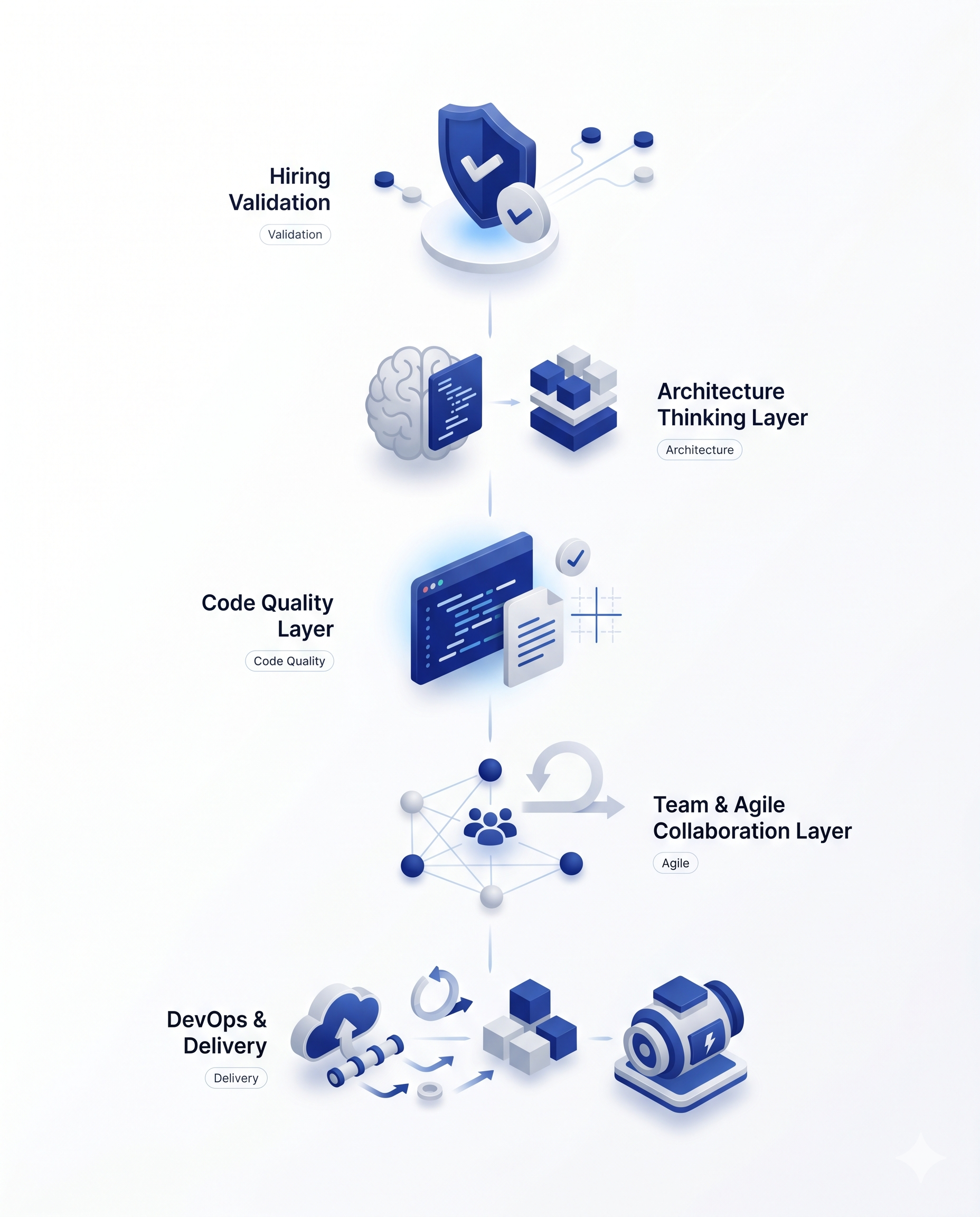
Hiring iOS developers without structured validation creates long-term risk. Our technical vetting process evaluates engineering depth, architectural reasoning, and communication discipline before onboarding occurs.
Our selection framework includes:
- Architecture-level technical interviews focused on real-world problem solving
- Code evaluation for structure, readability, and performance discipline
- Assessment of collaboration within Agile development environments
- Validation of DevOps alignment and release governance experience
- Controlled onboarding into live or staged project environments
We do not supply resumes. We deliver engineers who integrate into your architecture and support measurable delivery outcomes.
Engagement Models When You Hire iOS Developers
Different products require different delivery structures. When companies hire iOS developers without defining governance and accountability boundaries, execution becomes inconsistent and ownership gaps emerge.
Dedicated iOS Developer
A dedicated iOS developer integrates directly into your internal engineering workflows while remaining aligned with GYB Commerce oversight standards. This model supports focused feature execution, structured sprint participation, and controlled performance accountability without long recruitment cycles.
iOS Team Augmentation
Our Team augmentation model strengthens your existing mobile department by embedding highly skilled iOS developers into active projects. Engineers align with your Agile ceremonies, code repositories, and release governance frameworks while maintaining architectural discipline.
Full iOS Development Pod
For complex systems, we assemble a structured pod including iOS engineers, QA specialists, and technical oversight leads. This model supports parallel development streams while preserving accountability across backend integration, DevOps alignment, and App Store readiness.
Remote Hiring with Governance Oversight
GYB Commerce enables remote hiring without sacrificing delivery control. Engineers integrate seamlessly into distributed teams while following structured reporting, sprint validation, and performance monitoring standards to ensure predictable execution.
Delivery Accountability and Code Quality Standards
Hiring talent without defined engineering controls leads to inconsistent releases and unstable product evolution. We embed governance into every engagement from day one.
Our iOS developers operate within structured Agile development cycles supported by measurable sprint objectives and documented technical decisions. Integration with DevOps pipelines ensures automated build validation, regression control, and structured release management.
Code quality discipline includes architectural review checkpoints, peer validation workflows, and measurable performance benchmarks. We evaluate memory behavior, network efficiency, and UI responsiveness before each release milestone.
Long-term maintainability is treated as a strategic requirement rather than a secondary consideration. Documentation, modular structure, and test coverage planning ensure the system scales without structural debt.
In-House Hiring vs. GYB Commerce iOS Developer Model
Many organizations underestimate the structural impact of how they hire iOS developers. Recruitment speed alone does not determine delivery success. Governance, architectural alignment, and performance accountability shape long-term outcomes.
Below is a structured comparison:
Evaluation Factor
Time to Productivity
Technical Vetting Depth
App Store Governance
DevOps & CI/CD
Alignment
Code Ownership & Documentation
Scalability Model
Long-Term Maintainability
In-House Hiring
2–4 months onboarding and ramp-up
Internal interviews vary by team maturity
Often reactive after submission issues
Requires internal
setup and monitoring
Depends on internal process maturity
Slow hiring cycles
Depends on individual discipline
Generic Freelance Marketplace
Fast onboarding but limited system alignment
Resume and basic screening focused
Developer-dependent, inconsistent
Rarely integrated into
pipeline governance
Frequently undocumented
Contractor replacement risk
Often inconsistent
GYB Commerce Model
Structured onboarding within weeks aligned to architecture
Architecture-level evaluation and delivery assessment
Structured App Store deployment workflows
Pre-aligned with Agile
development and DevOps standards
Enforced modular documentation and maintainability standards
Governance-controlled team augmentation
Architecture-first engineering discipline
Case Study
Multi-Region Retail Platform Strengthened Through Structured iOS Hiring
Business Context
A retail technology company operating across North America required additional iOS capacity to support rapid feature expansion. Internal hiring delays slowed roadmap execution and increased deployment inconsistencies across regional releases.
Technical Constraints
The product relied on complex backend integrations, real-time inventory updates, and structured App Store rollout coordination. Existing contractors introduced architectural inconsistency and fragmented state management patterns.
Architecture Strategy
We embedded senior iOS developers with expertise in Swift and Objective-C modernization. Engineers aligned with existing service layers, implemented modular UI separation, and standardized state management conventions.
Implementation Approach
Developers integrated into sprint cycles within two weeks under governance oversight. Structured code review checkpoints and performance monitoring frameworks stabilized release cadence and reduced defect escalation.
Measured Outcomes
Within five months, feature velocity increased by 37 percent while post-release defect rates declined by 42 percent. App Store approval timelines shortened due to disciplined compliance validation and predictable deployment governance.
Why GYB Commerce Is the Strategic Partner When You Hire iOS Developers
System-Level Technical Alignment Before Onboarding
We evaluate your architecture, backend dependencies, and release workflows before assigning engineers. This prevents misalignment that often surfaces months after rushed hiring decisions.
Governance-Controlled Talent Scaling
Scaling up or down requires structured continuity planning. Our model ensures that knowledge transfer, documentation, and sprint reporting remain consistent during team expansion or contraction.
Long-Term Product Thinking Instead of Transactional Staffing
We treat every hiring engagement as a product evolution initiative rather than a temporary staffing assignment. Architectural clarity and maintainability remain central throughout collaboration.
Transparent Performance and Delivery Reporting
Clients receive structured reporting aligned with sprint KPIs, performance metrics, and release readiness indicators. This visibility ensures that technical output aligns with strategic business objectives.
What Clients Say About Working With Us
Frequently Asked Questions
Quick answers to the most common questions
How do we hire iOS developers through GYB Commerce?
To hire iOS developers, we begin with an architecture assessment and delivery scope review. This ensures candidate alignment with your backend systems, compliance requirements, and sprint governance model before onboarding begins.
How much does it cost to hire an iOS app developer?
The cost to hire an iOS app developer depends on architectural complexity, integration depth, and required seniority level. Structured governance and long-term collaboration models influence overall investment more than hourly rate comparisons.
Can we hire remote iOS developers without losing delivery control?
Remote hiring remains effective when supported by structured sprint reporting, DevOps integration, and documented technical decision-making. Our governance model ensures seamless integration across distributed teams without operational instability.
Do your iOS developers work with both Swift and Objective-C?
Our engineers build modern applications in Swift while maintaining deep expertise in Objective-C for legacy modernization initiatives. This dual capability supports stable refactoring and incremental architecture upgrades.
How do you ensure App Store deployment stability?
Deployment stability depends on certificate governance, compliance validation, and controlled release workflows. Our engineers align development with structured App Store deployment processes to minimize rejection risks and version inconsistencies.
Can we scale the team up or down during development?
Team scaling is managed through documented knowledge transfer and modular task distribution. This ensures that expansion or reduction does not disrupt sprint velocity or architectural clarity.
What happens if a developer does not meet expectations?
Performance monitoring and structured evaluation checkpoints identify alignment issues early. If necessary, we initiate a controlled replacement process to preserve delivery continuity and technical stability.
Do you support NDAs and intellectual property protection?
All engagements operate under formal confidentiality agreements and intellectual property transfer provisions. Code ownership, documentation rights, and deployment credentials remain fully protected under structured legal frameworks.
Partner with Us for Comprehensive IT
We’re happy to answer any questions you may have and help you determine which of our services best fit your needs.
Your benefits:
- Client-oriented
- Independent
- Competent
- Results-driven
- Problem-solving
- Transparent
What happens next?
We Schedule a call at your convenience
We do a discovery and consulting meting
We prepare a proposal
Schedule a Free Consultation
Technologies that we use.
Ready to reduce your technology cost?
Our success stories
SEGO- Upgrade Your Life
SEGO Teams Up with GYB Commerce for a Digital Makeover Overview The modern man’s lifestyle can survive without the use of smartphones, and they have
Recharge
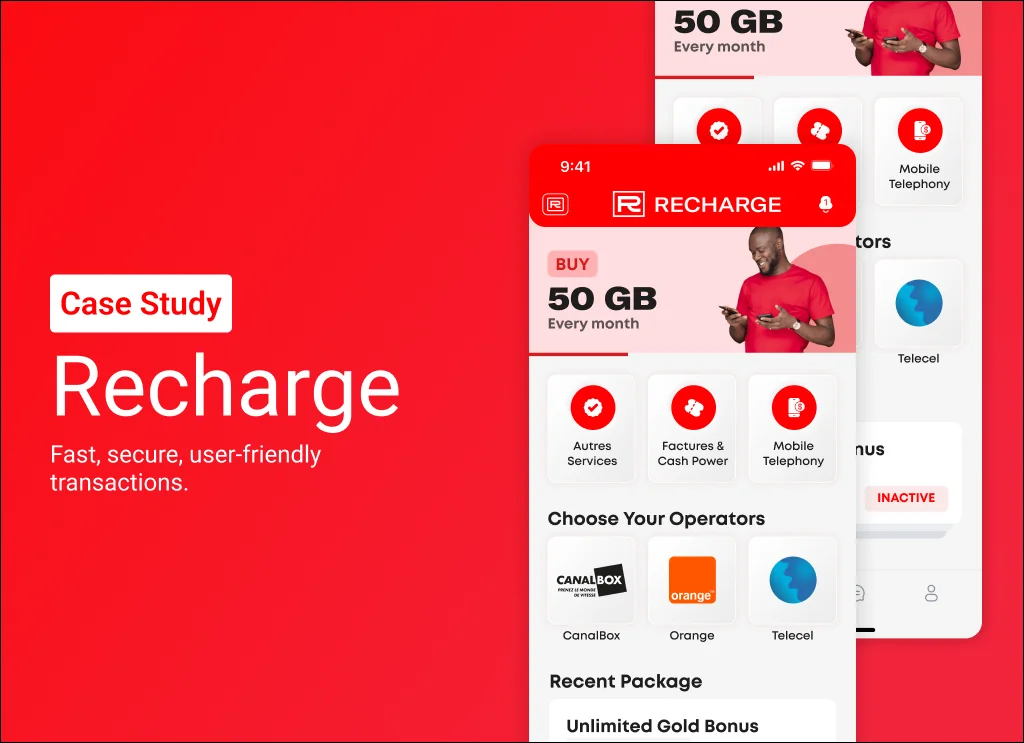
Recharge App – Streamlining Mobile Top-Ups & Empowering Connectivity Overview Recharge App simplifies the process of topping up cellular network packages. It offers users an
MidLynk – Your Freelance Marketplace
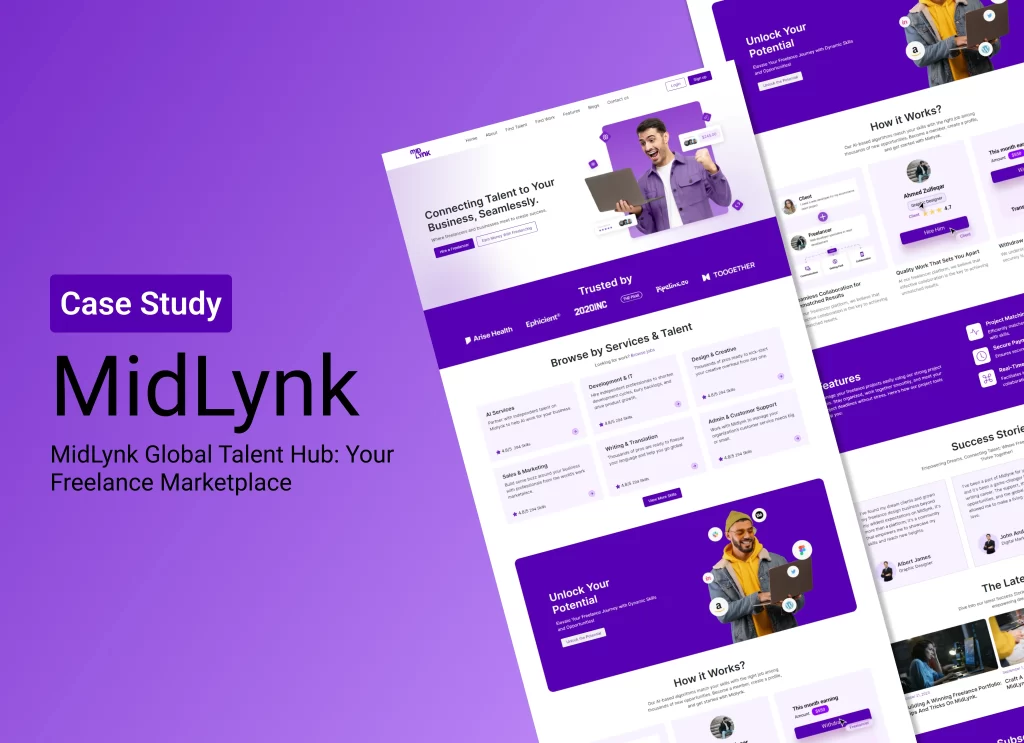
MidLynk – Connecting Talent with Endless Opportunities Overview MidLynk represents a transformative leap forward in the freelancing ecosystem, connecting clients and freelancers in a dynamic,

GYB Commerce blogs

CodeOps: A Smarter Way to Develop Software
Fundamentally, CodeOps is the concept of reusability applied to writing code, removing the burden of reinventing the wheel every time you write a line of

Meet Devin: Your New AI Companion in a World of Possibilities
Cognition has just launched Devin, a revolutionary AI software engineer, aiming to reshape how software development works. Devin’s arrival marks a new era in AI,

Choosing the Right Technology Partner: Key Headings to Consider
Finding the right technology partner for your agency may be a game-changer. But with so many alternatives available, how do you recognize which one is
Structured iOS Talent Built for Sustainable Product Growth
Hiring mobile engineers without governance creates instability that compounds over time. When you hire iOS developers from GYB Commerce, you gain technically disciplined professionals aligned with architecture, release control, and long-term scalability objectives.